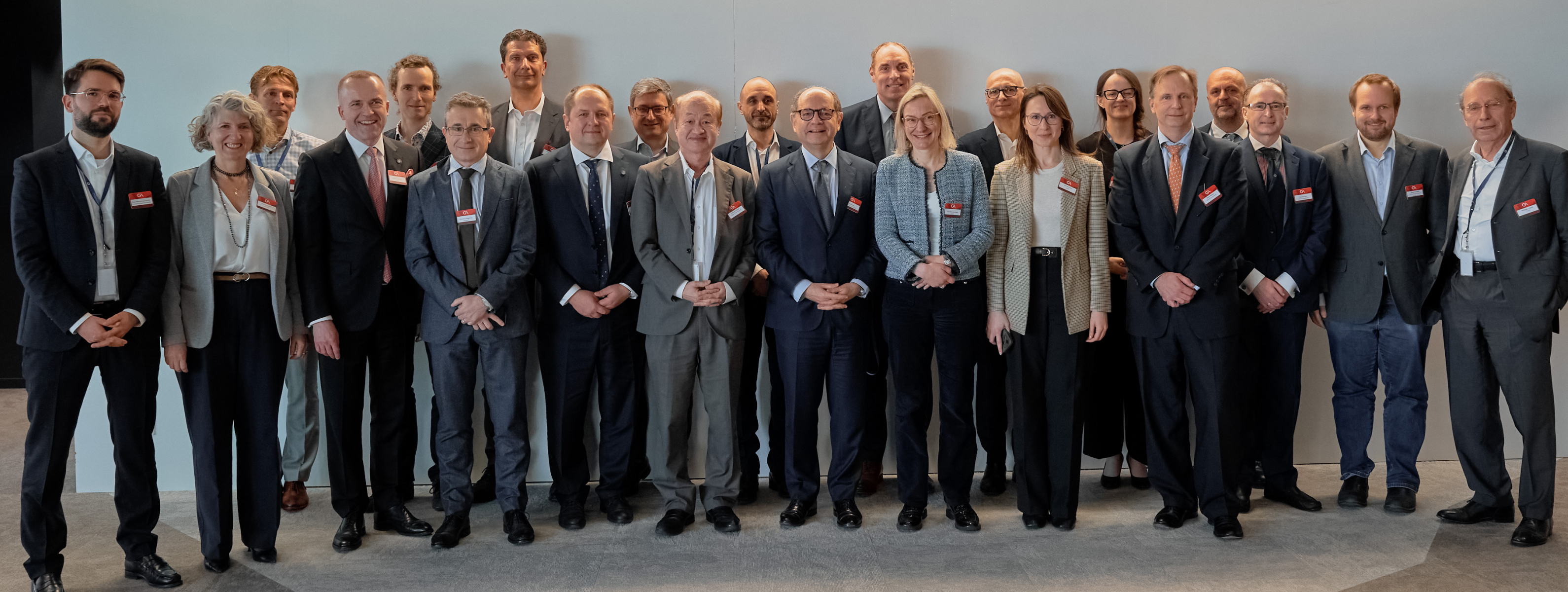




The Geneva Association’s 2026 Economic Forum brought together Chief Economists and Chief Strategy Officers from insurance companies in Europe, North America, and Asia. The Forum focused on the economic implications of Artificial Intelligence (AI), examining how its evolving capabilities are creating new opportunities for productivity and innovation, while also considering how uneven adoption and associated uncertainties may reshape labour markets, financial systems, and insurance business models.
Building on this, participants explored the conditions required to translate AI’s potential into tangible macroeconomic gains, as well as some of the downside risks that societies must navigate, including the potential displacement of workers. While AI adoption is accelerating – enabling more tasks to be automated and increasingly enhancing worker productivity – realising the long-run efficiency benefits will depend on significant changes to corporate workflows and organisational structures.
In terms of AI in the insurance sector, insurers are moving beyond pilot projects to scale applications across the value chain, while addressing challenges related to data governance, ethical use, insurability, and the evolution of risk assessment models. Generative AI has been a key catalyst for recent innovation; now Agentic AI tools – which autonomously set goals and tasks, make decisions, and execute multi-step tasks in real time, with limited human intervention – are also being deployed in selected insurance operations.
Besides AI and digitalisation, economies are having to adjust to other transformational forces. These include adapting to the structural shift from fossil fuel-based energy and industrial systems to low-carbon, sustainable alternatives, as well as continued, increased spending on national security. The Economic Forum explored the role insurers can play as institutional investors in mobilising household and corporate savings towards productive assets that enable digital transformation, the green transition, and increased defence spending.
Unlocking this potential for more effective financial intermediation will require coordinated fiscal, regulatory, and institutional reforms, particularly in regions such as Europe where bank-based financing remains dominant. Strengthening capital allocation frameworks and encouraging diversified sources of finance will be critical to insurers effectively contributing to these structural changes.