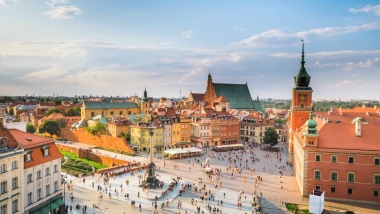
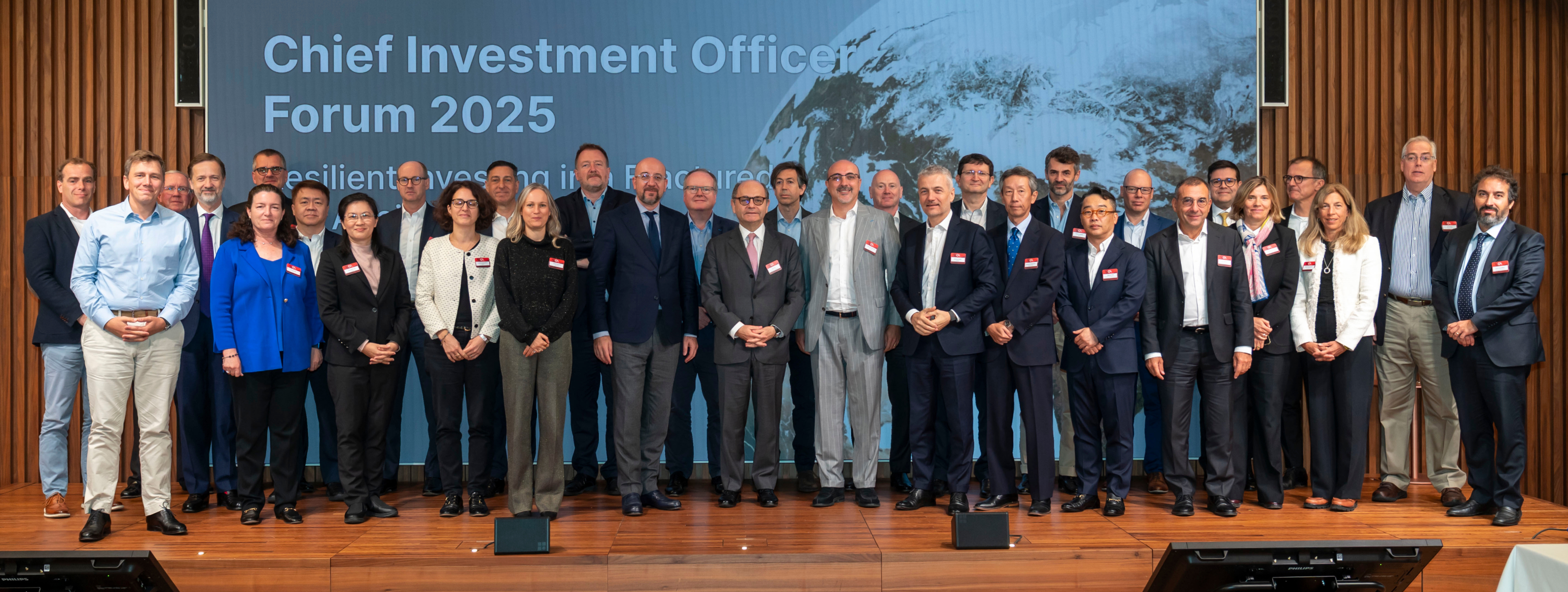

The Geneva Association held its 2025 Chief Investment Officer (CIO) Forum on October 8–9, generously hosted by Francesco Martorana, Chief Investment Officer of Generali, at the iconic Procuratie Vecchie overlooking Piazza San Marco in Venice.
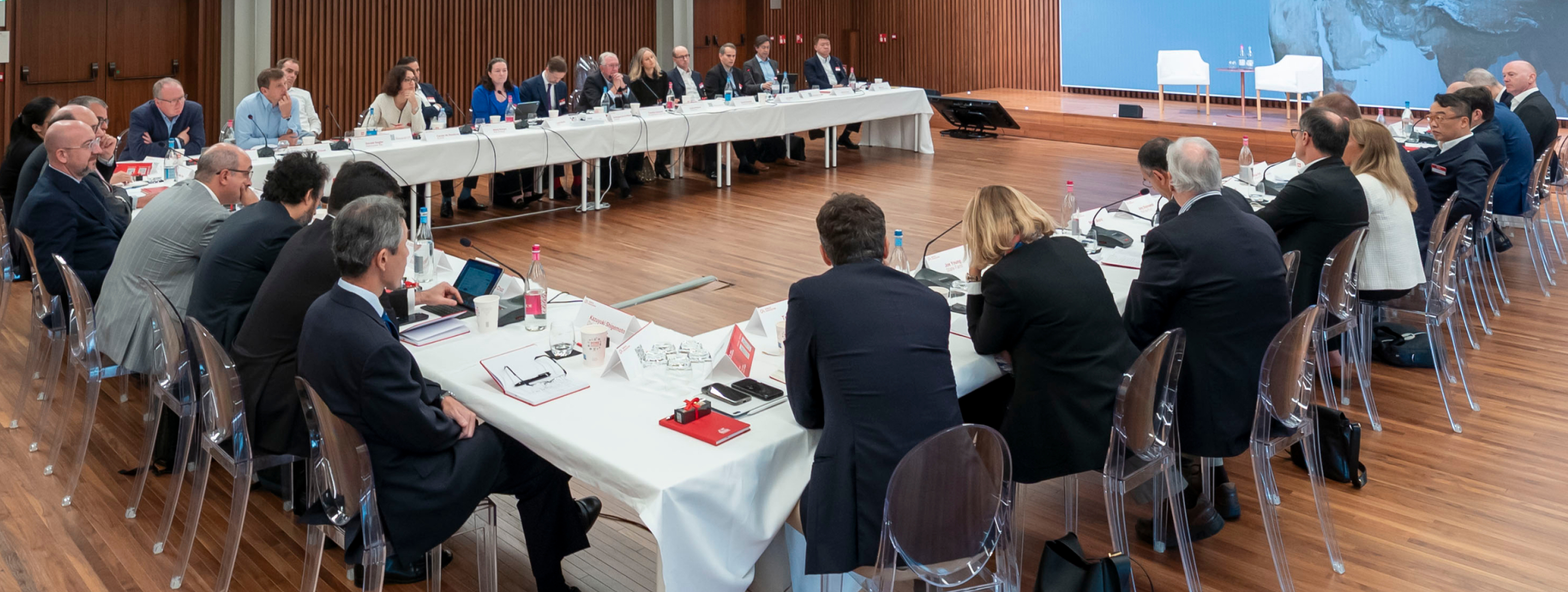
This year’s Forum brought together 27 insurance CIOs from around the world, collectively managing well over USD 10 trillion in assets. The event served as a globally unique platform for senior insurance investment leaders to exchange perspectives on geopolitics, macroeconomics, sustainability and the evolving structure of global capital markets.
Here are some of the highlights and takeaways from the discussions:
Geopolitical Outlook: Navigating a new era of social change and industrial policy

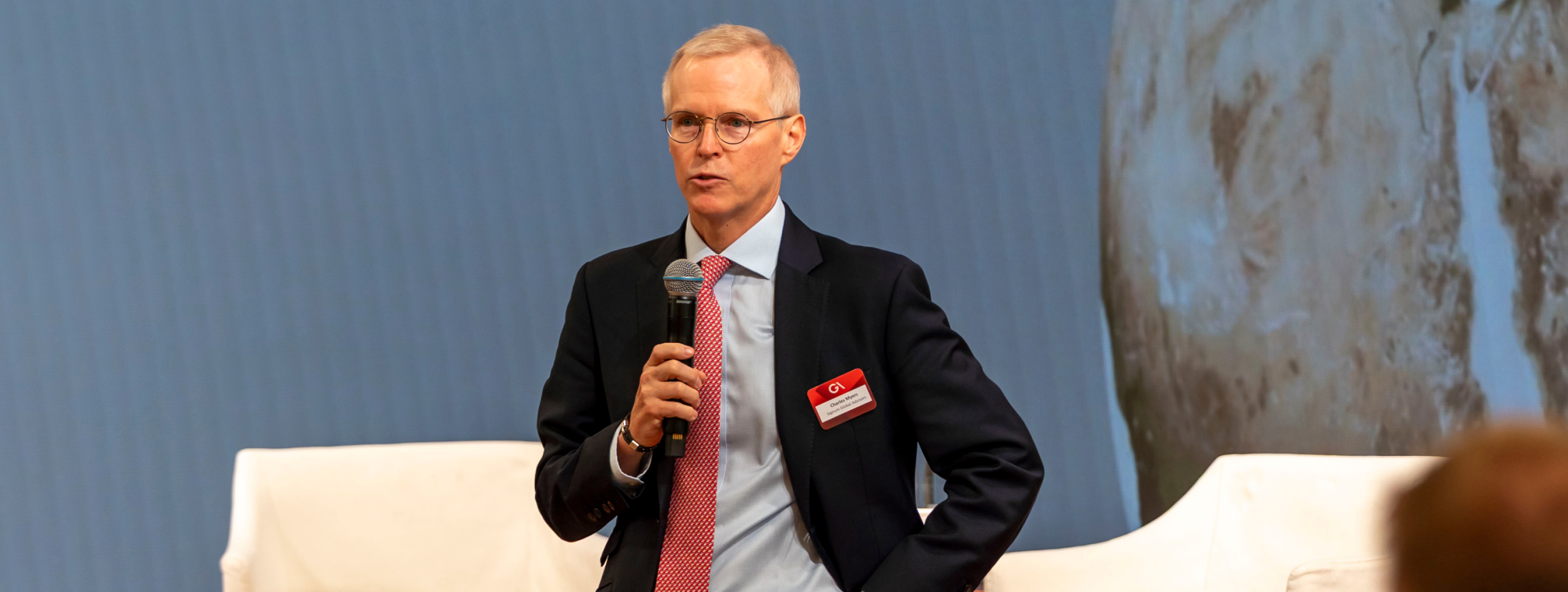
Charles Meyers, Chairman, Signum Global Advisors
The Forum opened with a keynote by Charles Myers, Chairman of Signum Global Advisors, an expert on geopolitical risk and macro strategy.
Mr Myers painted a vivid picture of how profoundly the world has changed over the past decade. He pointed to income inequality and immigration as central forces behind the growing social polarisation seen across advanced economies. Governments, he noted, are increasingly rediscovering industrial policy as a geo-strategic tool, using state intervention to strengthen key sectors such as microchips and renewable energy. Despite current challenges, Myers expressed optimism about the resilience of the U.S. economy. He emphasised that U.S. institutions remain robust, highlighting the Federal Reserve’s independence, and that the economy has historically proven capable of weathering political cycles. While massive fiscal stimulus continues to support U.S. growth, Myers cautioned that tariff-induced inflation and volatile long-term Treasury yields could become sources of turbulence, especially as questions mount over the sustainability of U.S. government debt. The key takeaway: In a fragmented and politically charged environment, investors should remain alert to both macroeconomic resilience and hidden structural risks.

Investing in a Fragmented World: Agility as a competitive edge

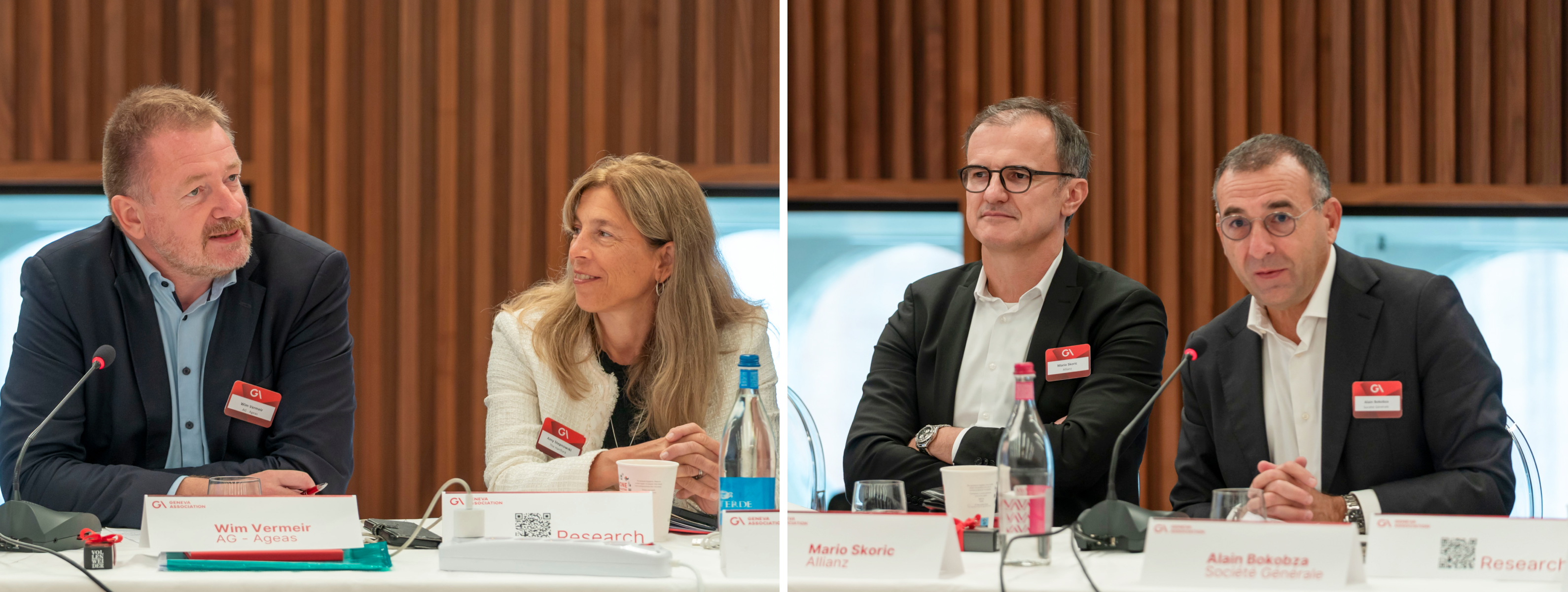
Wim Vermeir, CIO, Ageas; Amy Stepnowski, CIO, The Hartford; Mario Skoric, CEO, Allianz Investment Management; Alain Bokobza, Head of Global Asset Allocation, Société Générale
This panel moderated by Amy Stepnowski (The Hartford) brought together Alain Bokobza (Société Générale), Mario Skoric (Allianz) and Wim Vermeir (Ageas Group) to explore what it means to invest wisely in an increasingly fragmented global economy. As traditional globalisation gives way to a multipolar world, characterised by regionalization, trade blocs and localised supply chains, agility and flexibility in asset allocation are more important than ever. At the same time, CIOs should maintain their ability to look past political turbulence. Currency dynamics also featured prominently in the discussion. While the U.S. dollar’s gradual devaluation may persist, the euro could emerge as a relative winner. Nevertheless, the U.S. is expected to retain its ‘exceptionalism‘ in equity markets, driven by innovation, deep liquidity and dominant technology players. The panel also addressed the evolving ESG investment debate. Speakers suggested a shift away from abstract frameworks toward a pragmatic focus on financing the real economy, e.g. infrastructure.
Fireside chat with Charles Michel: Europe’s path to strategic autonomy

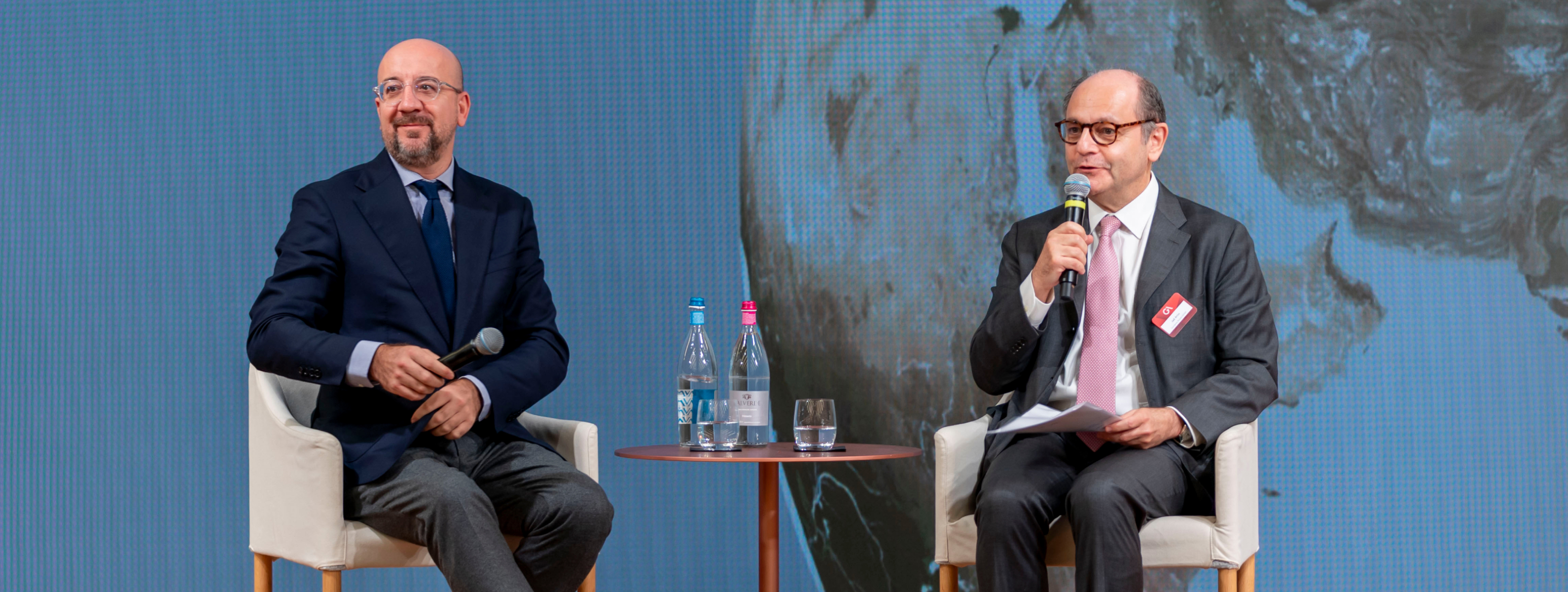
Charles Michel, former President of the European Council (2019-2024); Jad Ariss, Managing Director, Geneva Association
One of the Forum’s highlights was a candid fireside chat between Charles Michel, former President of the European Council and Prime Minister of Belgium, and Jad Ariss, Managing Director of the Geneva Association. From a European vantage point, President Michel reflected on three profound shifts reshaping the geopolitical landscape:
- The rise of China, transforming from strategic partner to systemic rival
- The erosion of the international rules-based order; and
- The evolving priorities of the U.S., reflecting deeper social and political transformations.
To safeguard Europe’s sovereignty and strategic autonomy, President Michel outlined a three-part agenda:
- Enhancing economic competitiveness through a true Capital Markets Union, a European Sovereign Fund (potentially managed by the European Investment Bank) and smarter regulation
- Strengthening defense capabilities amid an increasingly uncertain transatlantic alliance; and
- Rebalancing international partnerships, finding a (more) realistic equilibrium between values and interests in a more regionalised world.
President Michel also offered personal reflections on leadership and diplomacy, sharing impressions from his engagements with European and global heads of state.
The Longevity Challenge: Rethinking products and portfolios

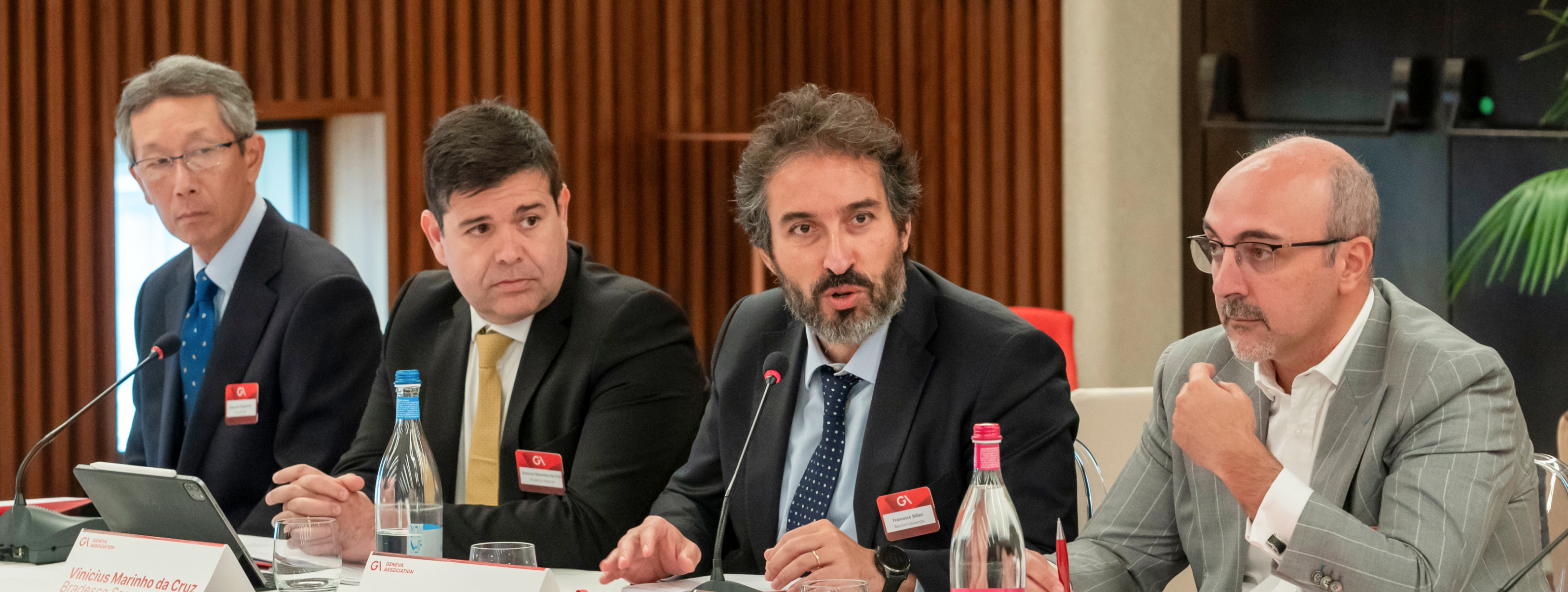
Kazuyuki Shigemoto, Chief General Manager, Dai-ichi Life; Vinicius Marinho da Cruz, Group CFO, Bradesco Seguros; Francesco Martorana, CIO, Generali; Francesco Billari, Professor and Dean, Bocconi University
A session moderated by Francesco Martorana and featuring Professor Francesco Billari (Dean, Università Bocconi), Vinicius Marinho da Cruz (Bradesco Seguros) and Kazuyuki Shigemoto (Dai-ichi Life) explored how increasing longevity is reshaping insurance and investment strategies worldwide. The panel contrasted the demographic realities of Europe and Japan, characterised by low interest rates and aging populations, with those of Brazil, where high interest rates and a younger demographic present very different challenges. In Japan, life insurers face a 60-year liability horizon, while government bonds extend only to 40 years. This structural mismatch is pushing insurers to transfer more market risk to policyholders. In Brazil, the focus is on product affordability and financial inclusion. Reaching customers at earlier life stages and improving financial education are key to building sustainable longevity coverage. In Europe, hybrid solutions are emerging, such as health insurance products bundled with savings plans, alongside efforts to promote self-funded pension schemes as public systems come under strain. The discussion underscored that longevity is both a risk and an opportunity: a challenge for liability management, but also a powerful driver of innovation across product design and societal impact.
Private Assets on the Rise: From niche to necessity?

Mark Konyn, CIO, AIA Group; Leslie Barbi, CIO, RGA; Dominique Carrel-Billard, Head of Real & Alterntive Assets, Amundi; Timothy Schmidt, CIO, Prudential Financial
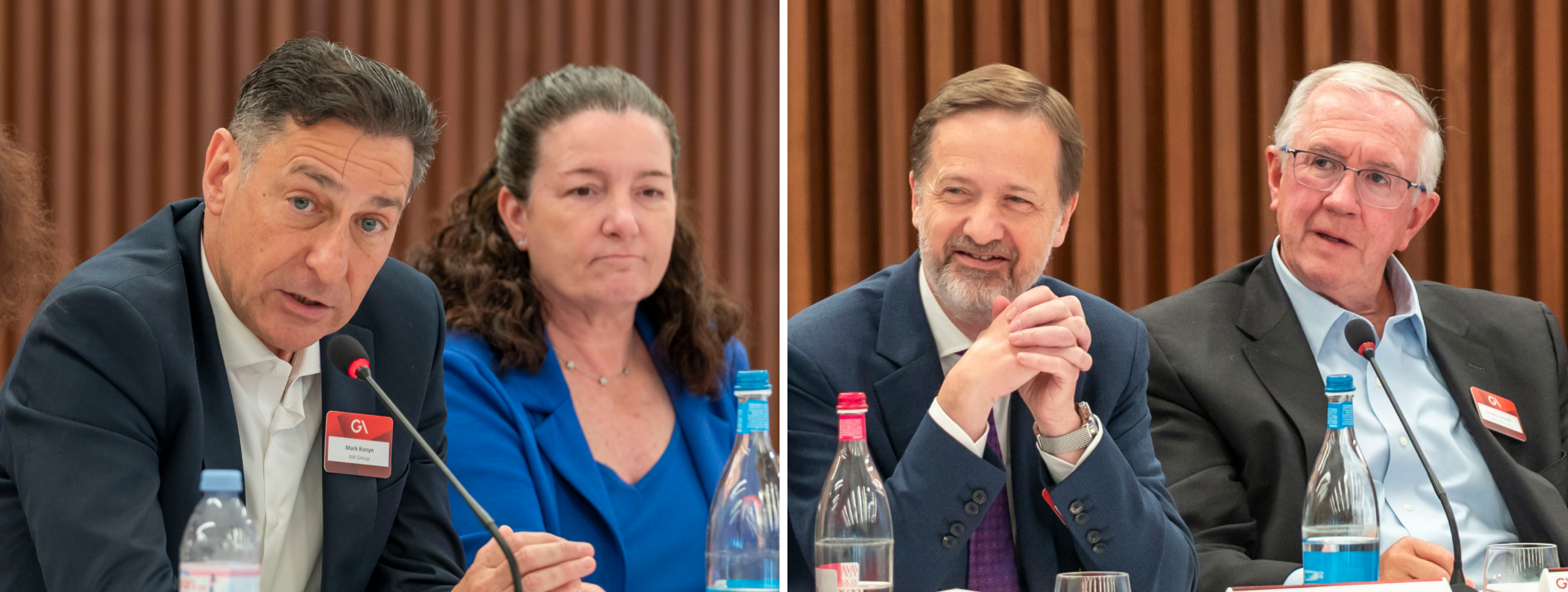
A panel on the expanding universe of private assets was hosted by Leslie Barbi (Reinsurance Group of America) and featured panellists Dominique Carrel-Billiard (Amundi), Timothy Schmidt (Prudential Financial) and Mark Konyn (AIA). They explored why private equity, private credit, real estate and infrastructure are increasingly attractive for investors, including insurance companies, seeking improved risk-adjusted returns and diversification, while solvency rules for the banking sector restrict lending capacity. The U.S. remains the epicenter of private markets, accounting for roughly 80% of global private assets, thanks to its mature ecosystem and proven track record of supporting stable liabilities. Europe, by contrast, still faces regulatory headwinds that constrain institutional access. Asia presents an interesting growth story, with Risk-Based Capital regimes and IFRS 17 acting as catalysts for private market development. While concerns about liquidity and valuation transparency persist, policymakers increasingly recognise that private capital has a role to play in financing the real economy, particularly in infrastructure and green energy.
Roundtable: The evolving asset owner-asset manager relationship

The Forum concluded, as in previous years, with a CIO roundtable focused on the internal challenges faced by insurance investment leaders. Moderated by Francesco Martorana, the roundtable’s central theme was how the relationship between asset owners and asset managers can evolve beyond a transactional model. Participants discussed the distinction between an asset manager as a strategic partner versus a service provider, emphasising the need for deeper alignment around capital efficiency and liability-driven outcomes. As insurers navigate complex balance sheets under evolving solvency, accounting and sustainability rules, asset managers must demonstrate a true understanding of insurers’ unique realities.
The session also revisited ESG integration, which remains a top-of-mind issue amid policy uncertainty and political backlash, particularly in the U.S. Despite turbulence, some CIOs reaffirmed their commitment to long-term sustainability objectives as a driver of resilient value creation.
Final reflections

The 2025 CIO Forum reaffirmed the vital role of collaboration and strategic dialogue among the world’s leading insurance investors. In an age of geopolitical fragmentation and demographic transition, the ability to think collectively and act decisively is more important than ever.
A sincere thank you to Generali and Francesco Martorana for their gracious hospitality in Venice, and to all participants for the rich discussions and their candour and forward thinking.