Climate Change & Environment
Geneva Association. 2026.
Expediting Sectoral Decarbonisation: Strategic Implications for the Insurance Industry.
Authors: Maryam Golnaraghi and Zhelyan Vichev.
April, 2026.
Decarbonisation is advancing across high-emitting sectors, including energy, transport, heavy industry, data centres and buildings, through a combination of efficiency improvements, electrification, low- and zero-carbon energy solutions, carbon capture utilisation and storage (CCUS), and other transition strategies.
The deployment of decarbonisation technologies and projects exposes companies to a wide range of emerging risks, including technology, construction, supply-chain, liability, regulatory and stranded-asset risks.
Four conditions are essential to support insurability and investment in sectoral decarbonisation: stable policy and regulatory frameworks, cross-sector collaboration, integration of climate resilience into decarbonisation strategies, and credible carbon markets.
Insurers can support the transition by engaging early in project development, strengthening risk assessment and project design, and developing innovative risk-sharing and risk-transfer solutions.
This report examines how decarbonisation is progressing across key high-emitting sectors and the role insurers can play in supporting this transition. It finds that while companies are accelerating efforts to reduce emissions through a range of technologies and strategies, the transition creates new and evolving risks that must be managed effectively. The report highlights several conditions that are essential for insurability and argues that insurers can play an important role in enabling investment and supporting the deployment of low-carbon solutions.
The transition to a low-carbon economy is reshaping risk profiles across multiple industries. New technologies, evolving business models, changing regulatory frameworks and emerging liability exposures are creating new insurance needs and changing patterns of risk. Understanding how sectors are decarbonising can help insurers develop the expertise, products and services needed to support clients while identifying new growth opportunities.
For companies, successful decarbonisation requires managing a wide range of risks associated with new technologies, infrastructure and supply chains. For insurers, the transition creates opportunities to support clients through risk assessment, risk engineering, innovative insurance solutions and investment capabilities. Insurers that engage early can help improve project design, strengthen resilience and enhance the bankability and insurability of decarbonisation projects.
The report identifies four common requirements for improving insurability across sectors. These are stable and predictable policy and regulatory frameworks, stronger collaboration among project developers, investors, insurers and governments, integration of climate resilience into decarbonisation strategies, and the development of credible carbon markets and carbon-credit systems. Together, these conditions can help reduce uncertainty, support risk sharing and unlock investment in low-carbon technologies and infrastructure.
Insurers can support sectoral decarbonisation by engaging earlier in project development, improving risk assessment and mitigation, developing innovative risk-sharing mechanisms and supporting the creation of standards that enable projects to scale. The report suggests that insurers are increasingly positioned not only as providers of risk transfer, but also as strategic partners that help facilitate investment, improve resilience and support the deployment of emerging low-carbon technologies.
Maryam Golnaraghi, Director Climate Change & Environment, Geneva Association
Contributing author: Zhelyan Vichev, Former Junior Research Analyst, Geneva Association
Sectoral decarbonisation is entering a more decisive phase. What was once a long-term ambition is now a strategic imperative, and it is being shaped by geopolitical volatility, energy security concerns, and intensifying climate risks. Governments are recalibrating transition strategies to prioritise resilience, industrial competitiveness, and secure access to critical materials, alongside emissions reduction.
Recent geopolitical disruption in the Middle East has underscored a fundamental reality: energy security and the energy transition are inseparable. Systems built on diversified, domestic, low-carbon energy, supported by long-duration storage, robust infrastructure, and efficiency, are inherently more resilient to external shocks. At the same time, these same shocks can disrupt critical mineral supply chains and delay the deployment of clean technologies, highlighting the fragility of current transition pathways and the need for robust supply chains.
The challenge is particularly acute in hard-to-abate sectors – including energy, transport, heavy industry, data centres and buildings – which together account for a significant share of global emissions. These sectors are characterised by high energy intensity, long-lived assets, system dependencies, and limited near-term alternatives for deep decarbonisation.
Despite these structural constraints, momentum is building. Global investment in low-carbon energy systems has reached record levels, supported by public-private partnerships to secure access to critical minerals and rare earth, maturing carbon markets, and sectoral collaboration platforms. However, progress remains uneven, and the scale of transformation required far exceeds current deployment rates.
The central question is no longer whether decarbonisation will occur, but whether it can be accelerated and scaled in a way that is economically viable, resilient, and insurable.
For the insurance industry, this transition will redefine risk landscapes across sectors, reshape demand for insurance products and services, and position insurers as critical enablers of risk management and capital deployment. Understanding sector-specific pathways and systemic constraints is therefore essential to supporting clients while capturing emerging opportunities.
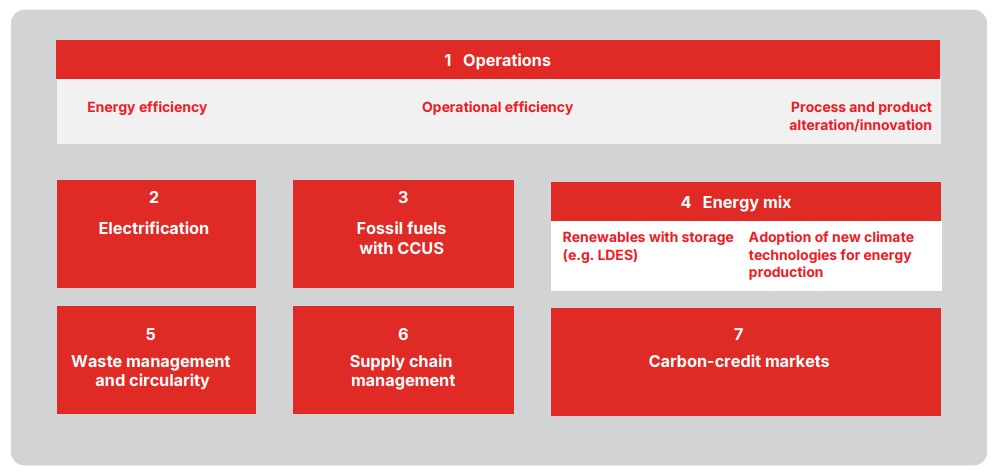
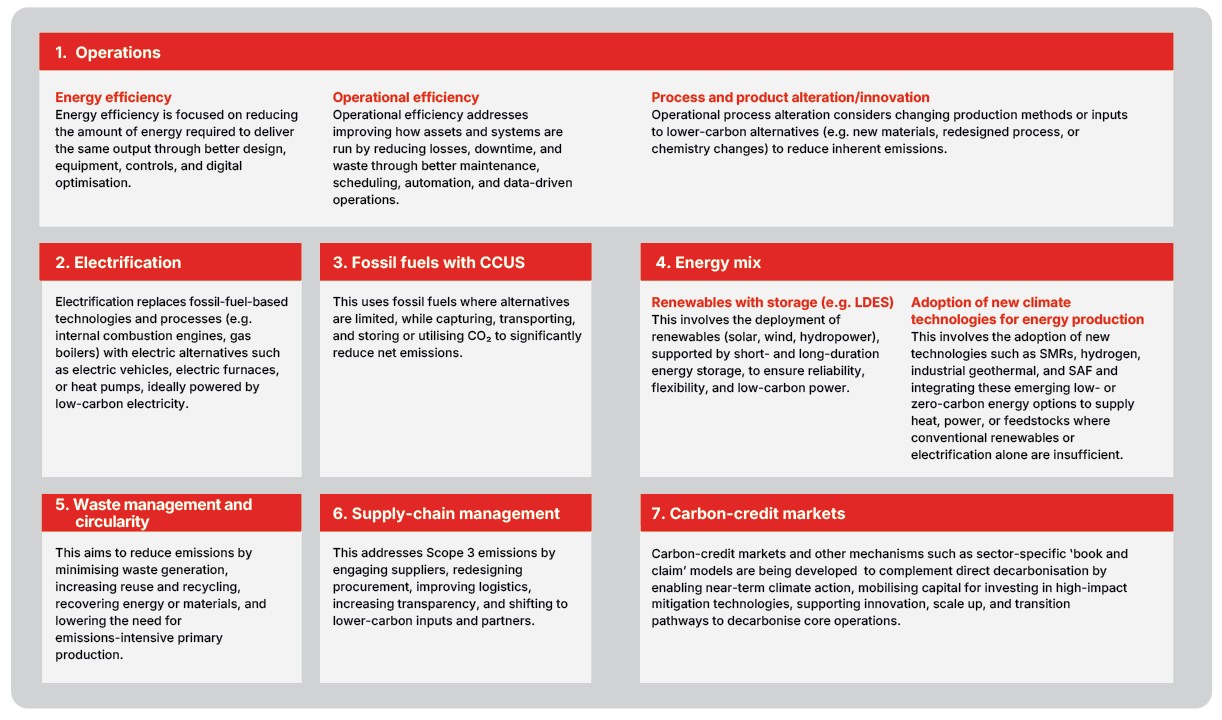
Decarbonisation across sectors is not uniform. Roundtable discussions and interviews with experts and platforms, representing the oil and gas, steel, cement, aviation, data-centre, and building industries, reveal a portfolio of strategies, deployed at different speeds depending on technological maturity, cost, and sector-specific constraints. These exchanges reveal seven strategic focus areas: operations (e.g. operational and energy efficiency, process alteration/innovation), electrification, fossil fuels with CCUS, evolving energy mixes, waste management and circularity, supply-chain management, and carbon market mechanisms (Figure 1).
Figure 1: Portfolio of strategies used for sectoral core business decarbonisation
Source: Geneva Association
In the near term, efficiency remains the primary driver. Measures to enhance energy and operational efficiency – through waste-heat recovery, digital optimisation, and improved maintenance, for example – deliver immediate emissions reductions while enhancing productivity and cost performance. These foundational actions across all sectors will continue to play a critical role.
Beyond efficiency, sectors are beginning to address process emissions through innovation. In steel, the shift toward electric arc furnaces and hydrogen-based production represents a structural transformation. In cement, clinker substitution and alternative materials are central to reducing embedded emissions. In aviation, sustainable aviation fuels and operational measures such as contrail avoidance are emerging as key levers. These developments signal a transition from incremental improvements to changes in core production systems.
Electrification is advancing, particularly in sectors where processes can be powered by low-carbon electricity. Buildings and parts of industry are expected to see significant gains. However, electrification alone cannot address high-temperature industrial processes or inherent process emissions, limiting its applicability.
This gap is driving increased reliance on CCUS, renewables with long-duration energy storage (LDES) and emerging low- or zero-carbon technologies for energy production. CCUS is particularly critical for sectors such as oil and gas, cement and steel, where process emissions are difficult to eliminate. At the same time, new energy technologies, such as green hydrogen, small modular reactors (SMRs), and industrial geothermal are expected to play a transformative role over the medium to long term, although most remain at early stages of deployment.
A defining trend is the shift toward more diversified and resilient energy systems. Data centres, for example, are rapidly increasing their reliance on renewables combined with storing and reducing water, while industrial sectors are exploring a mix of energy solutions. However, scaling these approaches requires significant infrastructure investment and coordinated development of supply chains.
Waste management and circularity along with supply chain management are increasingly strategic. Material efficiency, recycling, and circular business models offer substantial emissions reductions, particularly in materials-intensive sectors. At the same time, addressing Scope 3 emissions requires greater transparency and coordination across value chains.
Technology-based carbon-credit markets need to evolve as complementary mechanisms to mobilise capital and support early-stage technologies. High-integrity credits and sector-specific approaches, such as book-and-claim models are gaining traction, although their effectiveness depends on robust standards and governance.
Overall, sectoral decarbonisation pathways reflect a combination of evolutionary improvements and transformative shifts in core business models using a wide range of new technologies. While efficiency gains deliver near-term progress, deep decarbonisation will depend on scaling new technologies and reconfiguring entire systems, introducing new risks that must be managed. Understanding sectoral priorities and approaches will have significant implications for re/insurers’ capacity to support their clients across these sectors in their decarbonisation journey.
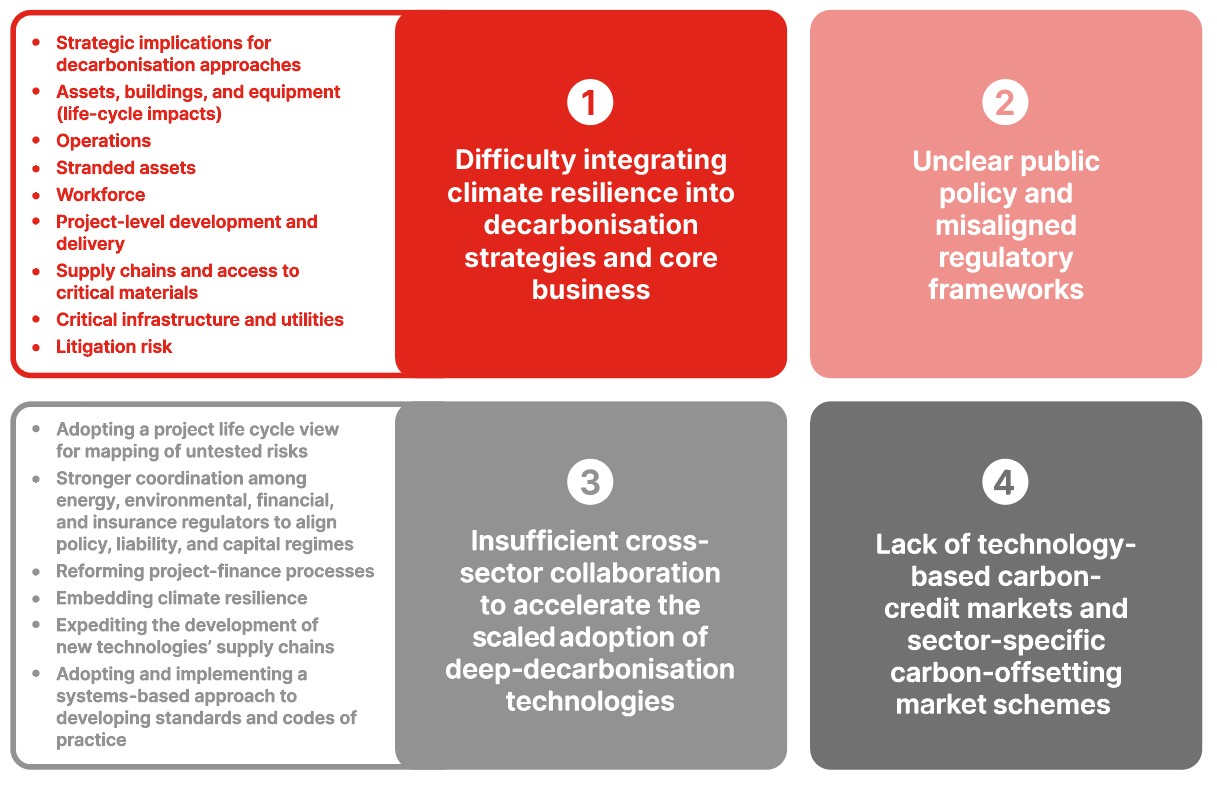
Across sectors, four structural challenges are constraining the pace and scale of decarbonisation.
I. Climate resilience is an emerging consideration for decarbonisation strategies.
As sectors invest in new low-carbon assets and infrastructure, exposure to physical climate risks is increasing. Extreme weather events, rising temperatures, and water stress are already disrupting operations, damaging assets, and affecting workforce productivity. These risks directly influence site selection, asset design, and long-term investment decisions.
Importantly, resilience considerations are beginning to reshape decarbonisation strategies themselves. Companies are reassessing where and how to build, prioritising resilient, modular, and distributed systems over centralised and exposed assets. Failure to incorporate resilience at the design stage increases the risk of stranded or uninsurable assets.
II. Cross-sectoral policy and regulatory fragmentation remain a major barrier.
Clear, stable, and aligned policy frameworks are critical to enabling investment and scaling decarbonisation. However, across sectors, regulatory fragmentation persists. Divergent standards, inconsistent incentives, and unclear liability regimes create uncertainty for developers, investors, and insurers.
This is particularly evident in areas such as land-use planning, permitting, building codes, and cross-border projects. Misaligned regulatory and capital frameworks can result in unclear allocation of risks and liabilities, constraining risk-sharing mechanisms and limiting insurability. Without greater coordination across energy, environmental, financial, and insurance regulators, progress will remain constrained.
III. Expediting deep decarbonisation requires new models of cross-sectoral collaboration.
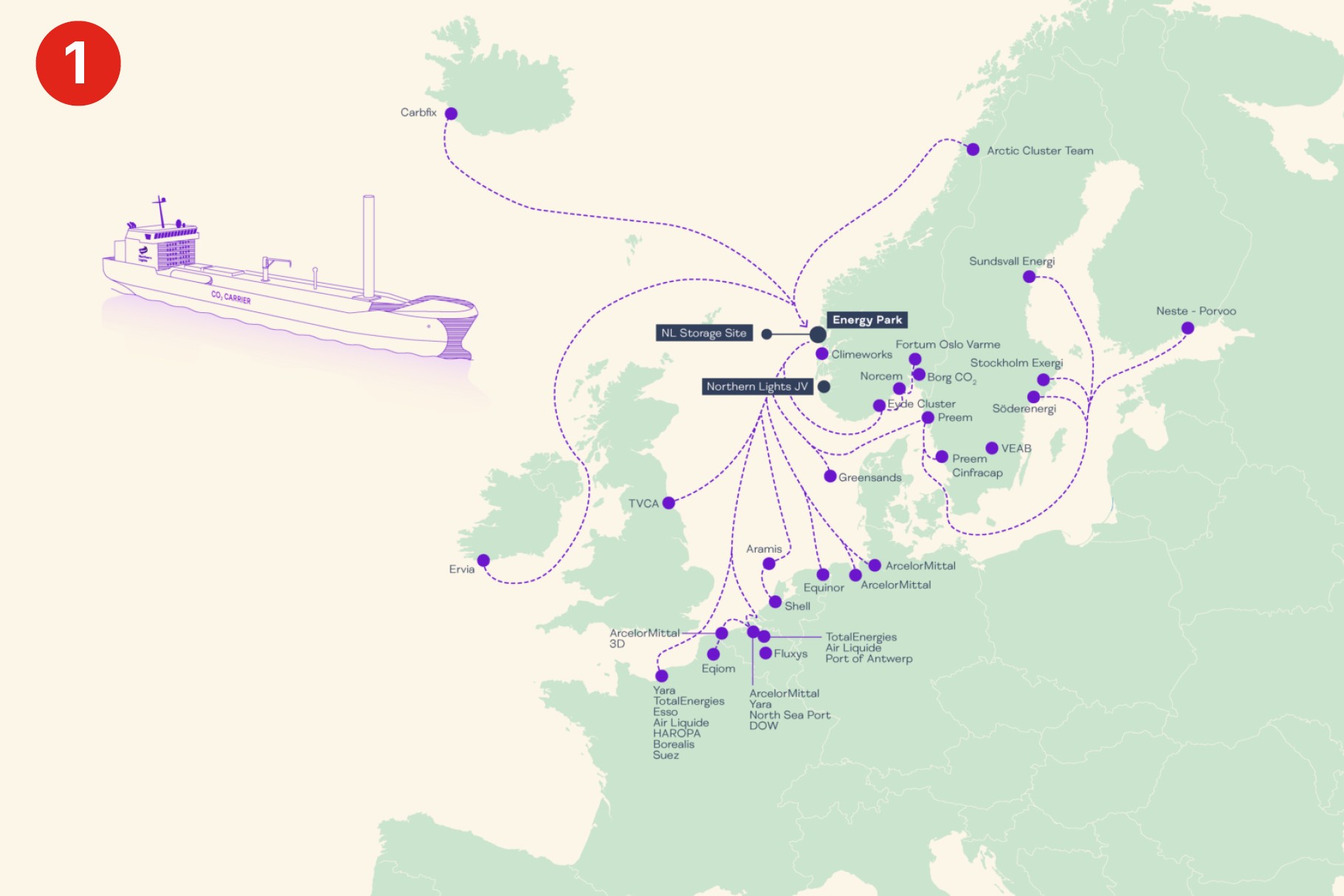
Many of the emerging technologies required for deep decarbonisation, such as CCUS and green hydrogen, depend on complex projects with multi-stakeholder ecosystems. These projects span sectors, value chains, and jurisdictions, creating interdependencies that amplify risk. A failure in one component of a system can trigger cascading impacts across the entire value chain (Figure 2).
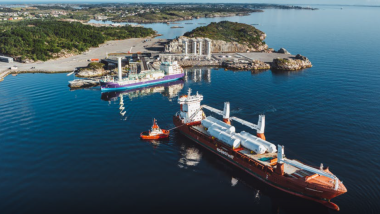
Northern Lights – an open and flexible CCS infrastructure that aims to transport CO2 by ship from capture sites across Europe (purple dots) to a terminal in Norway for intermediate storage, before transporting it for permanent storage in a reservoir under the seabed (operational in 2025).
Figure 2: Example of a complex CCS project in Europe
Source: Northern Lights 2022 1
Expediting scaled deployment of such projects would require new ways of cross-sectoral engagement to:
Develop system-wide standards for scalable, transparent, and safe deployment.
IV. Credible and standardised technology-driven carbon markets are needed.
Carbon markets for low- or zero-carbon technologies need to be developed. However, divergent methodologies, inconsistent accounting rules, and varying credibility standards create uncertainty for market participants. While demand for high-quality credits is increasing, a lack of harmonised frameworks limits their ability to mobilise capital at scale. Strengthening monitoring, reporting, and verification (MRV) systems and aligning governance frameworks will be essential to unlocking their full potential.
The transition to sectoral decarbonisation is reshaping risk landscapes and redefining the role of the insurance industry. As sectors adopt new technologies and business models, they are exposed to a broader and more complex set of risks: technology risks, construction and operational risks, supply chain disruptions, regulatory uncertainty, stranded asset risk, and long-tail environmental liabilities.
This has created opportunities for re/insurers – as risk managers, strategic partners, and catalysts for investment – to play a central role in enabling a resilient and insurable transition to a low-carbon economy. Some companies are already taking steps to move beyond traditional underwriting by engaging earlier in projects to support the scaled deployment of emerging technologies such as CCUS. Through risk engineering, they assess risks across the full project lifecycle, improve project design, strengthen mitigation strategies, and enhance insurability and bankability.
Innovative risk-sharing mechanisms are critical. Blended-finance structures, guarantees, and multi-stakeholder risk-sharing models can help crowd in private capital and support the deployment of capital-intensive, pre-commercial technologies. At the same time, as investors, re/insurers can play a catalytic role in financing resilient, low-carbon infrastructure.
To capture these opportunities, re/insurers will need to scale up investments in advanced technical capabilities. This includes forward-looking stochastic climate risk analytics, technology risk assessment, and multidisciplinary expertise to meet the emerging needs of clients in different sectors. Organisational models will need to evolve to support earlier and more integrated engagement with clients.
Finally, collaboration with policymakers and regulators will be essential to develop enabling frameworks. This includes aligning liability regimes, capital requirements, and regulatory incentives to support scalable risk-sharing solutions.
Northern Lights. 2022. Northern Lights Designated a Project of Common Interest by the European Union.
The transition to a low-carbon economy is unfolding under unpredictable conditions, amid geopolitical crisis, economic pressure and polarised climate-change debate. Governments are rebalancing priorities – placing greater weight on energy security, affordability, and competitiveness, alongside decarbonisation. While this does not lessen the urgency of climate action, it does change the path to progress, with important implications for risk management and the insurance sector.
This report examines how decarbonisation is advancing across emissions-intensive sectors – oil & gas, aviation, steel, cement & concrete, data centres and buildings – and the role insurers play in enabling these transitions. While sustained investment in areas such as operational efficiency and waste management is moving the transition forward, large, complex projects to adopt emerging, low-carbon energy technologies are also accelerating. These projects introduce new technical, financial, liability and regulatory risks. As a result, conventional approaches to underwriting and risk transfer are being challenged.
Our analysis points to four conditions that will shape insurability at scale: stable, coherent policy environments; closer collaboration between project developers, investors, insurers and governments; integrating climate resilience in decarbonisation plans; and credible carbon markets. Where these conditions are absent, the gap between the needed pace and scale of transition and the availability of insurance cover can hinder progress.
Insurers are stepping forward as risk carriers and partners to shape resilient, investable low-carbon systems. This requires developing a whole new set of capabilities: targeted R&D efforts, innovative risk-sharing schemes, multidisciplinary teams, fresh-talent acquisition, and strategic cross-sectoral partnerships. Insurers are moving with enthusiasm and determination to put these capabilities in place.
Jad Ariss
Managing Director
Against a backdrop of increasingly polarised climate politics, governments are refocusing transition strategies on energy security, industrial competitiveness, and secure access to critical and rare earth minerals. Decarbonisation policy support, while varying by jurisdiction, is increasingly directed toward nuclear energy, carbon capture, utilisation, and storage (CCUS), renewables combined with long-duration energy storage (LDES), smart grids, and carbon-linked trade measures.
Geopolitical shocks to oil and gas supply, such as the 2026 conflict in the Middle East and the closure of the Strait of Hormuz, reinforce that energy security and the energy transition are inseparable. Energy resilience could be enhanced with diversified domestic clean energy production, supported by storage, distribution, and energy efficiency. At the same time, such tensions could also disrupt critical minerals and supply chains, highlighting the importance of building robust clean energy supply chains.
Economic sectors such as energy (e.g. oil and gas), transportation (e.g. aviation, shipping, and trucking), industrial production (steel, cement, aluminium, and chemicals), data centres and buildings account for a significant portion of greenhouse gas (GHG) emissions. Beyond being energy intensive, a range of other shared characteristics also explains both their high emissions and the difficulty in reducing them. For example, such sectors require continuous and reliable power, operate long-duration assets, and have system dependence and infrastructure constraints. Although challenges persist, private-sector decarbonisation is progressing; the key question is how to scale and accelerate this progress while ensuring lasting resilience.
Five global developments are paving the way for sectoral decarbonisation:
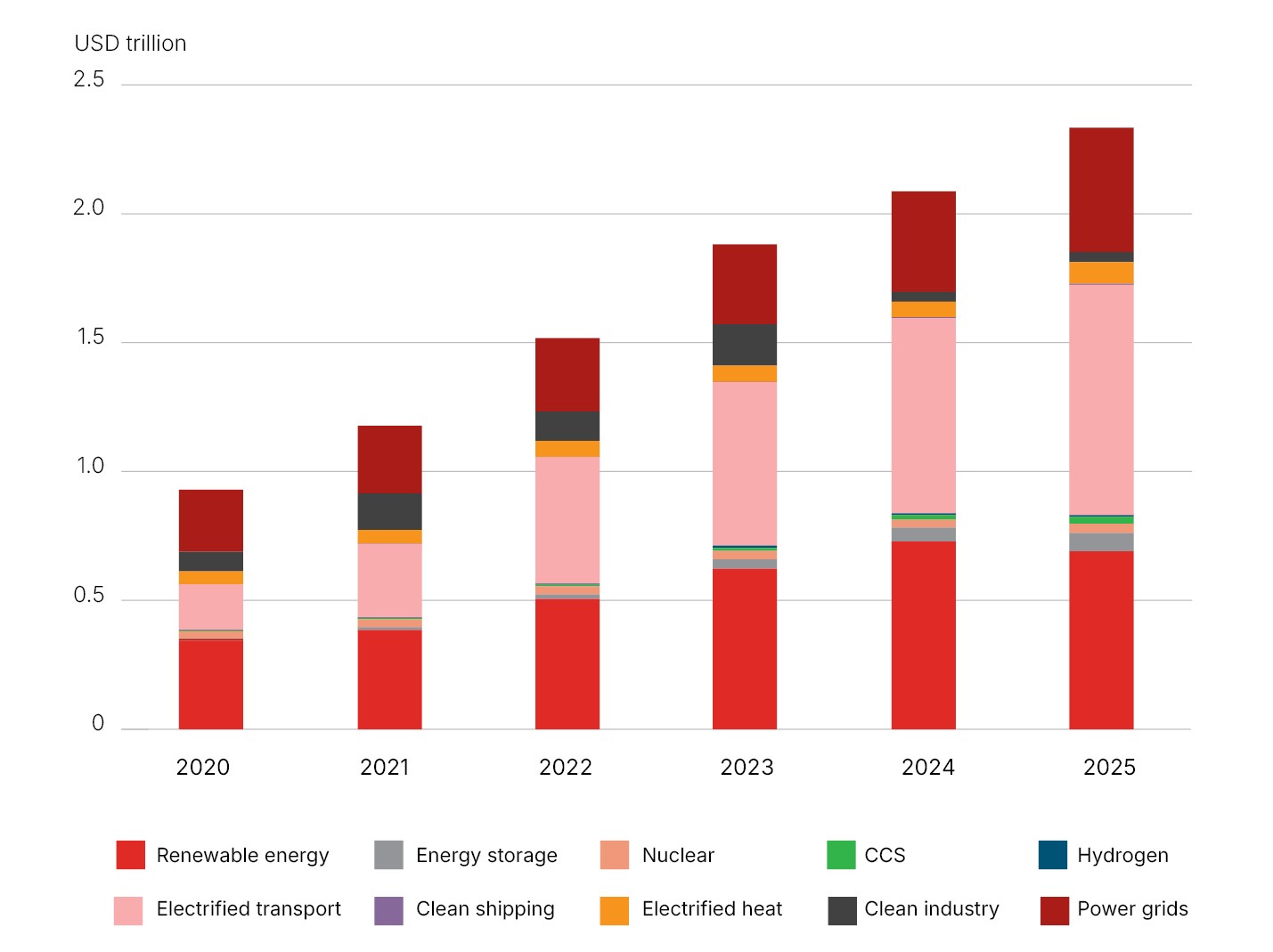
First, new partnerships are securing access to critical and rare earth minerals through co-investment, offtake agreements, and frameworks such as the US–Australia Critical Minerals Agreement. Second, global investment in technologies for production of zero- and low-carbon energy has continued to grow, reaching a record USD 2.3 trillion in 2025, up 8% year-on-year, despite geopolitical and trade headwinds. Third, public-private sector collaborations are accelerating the deployment of nascent climate technologies for deep decarbonisation, including CCUS hubs (e.g. Northern Lights), green hydrogen gigaprojects (e.g. NEOM) and small modular reactors (SMRs). Fourth, carbon-credit markets are maturing, with tighter integrity standards and growing demand for high-quality, technology-based removal credits, to mobilise early demand for and investments in low-carbon technologies. Fifth, private-sector industry-specific platforms are enabling coordinated actions to expedite scaling of decarbonisation and resilience solutions for sectors such as oil and gas, cement and concrete, steel, and buildings.
Sector-specific decarbonisation is well underway within the private sector, using a portfolio approach combining various strategies, deployed with differing priorities and over different time horizons.
These include energy and operational efficiencies and alterations, electrification, reliance on fossil fuels combined with CCUS, an energy mix combining a range of low- or zero-carbon energy production options, waste management and circularity, supply-chain management, and utilising carbon-credit markets or similar sector-specific schemes to mobilise capital.
The implementation of sector-specific decarbonisation strategies depends on the development and deployment of a wide range of technologies and approaches, exposing companies to new risks, which need to be assessed and managed. This provides insights on the evolving needs of each sector for insurance products and services, to implement their respective priorities.
Interviews and roundtables with leading experts across six industries (oil and gas, data centres, aviation, steel, cement and concrete, and buildings) have revealed that sectors are advancing decarbonisation but at different speeds and levels of ambition. For each, concrete short-, medium-, and long-term priorities, aligned with respective decarbonisation strategies, have been identified, offering valuable insights into where investments are being focused today and how these are expected to evolve over time.
While some approaches, focusing on areas such as operational and energy efficiency, will lead to evolutionary changes, others such as shifting the energy mix for deep decarbonisation have the potential to lead to transformative changes in the core business models in these sectors. As companies confront associated challenges and emerging risks, the implementation of these strategies will also shape evolving, sector-specific needs for insurance products and services.
There are four noteworthy common challenges experienced across these sectors in implementing projects for deep decarbonisation, which key stakeholders – including re/insurers – could work together to tackle.
Sector-specific decarbonisation priorities and requirements, as well as their common challenges, have strategic implications for the insurance industry.
Accelerating sectoral decarbonisation needs a wide range of new technologies to be developed, scaled, and adopted by a wide range of stakeholders, within and across many sectors, affecting business models over the coming years. The insurance industry can play a key role in supporting sectors through this transition.
The implementation of sectoral decarbonisation strategies exposes companies to a wide range of emerging risks, such as technology, construction, supply-chain, product liability, stranded-asset, regulatory, and long-tail environmental liability risks. While each sector’s approach and needs for insurance and financing services varies, common threads across their decarbonisation strategies have implications for the insurance industry and investors. This will have profound implications for re/insurers and the dynamics of insurance markets.
By assessing sectoral decarbonisation priorities over the short, medium, and long term across various sectors, re/insurers can proactively identify emerging areas of expertise and technical knowledge they need to build and support sectoral transitions. This approach enables them to develop tailored risk management strategies and offer insurance products and services that facilitate sectoral transformations.
The scale up of capital-intensive, pre-commercial technologies for the production of clean or low-carbon energy and the development of robust supply chains presents a clear growth opportunity, positioning re/insurers not only as risk carriers, but also as strategic risk advisors, enablers of investments, and partners for setting standards. As investors, re/insurers can leverage blended finance, guarantees, and innovative risk-sharing structures to crowd in private capital and improve risk-adjusted returns.
Re/insurers can capture these opportunities through:
Finally, collaboration among regulatory bodies overseeing insurance and other sectors is required to develop liability regimes. Capital requirements that could lead to viable risk-sharing models among the stakeholders, particularly to expedite the scaled deployment and adoption of emerging technologies for deep decarbonisation, are also needed.
Against a backdrop of increasingly polarised political debates, recent policy and regulatory developments have refocused national transition priorities towards energy security,1 industrial competitiveness,2 and access to robust supply chains.3 For example, in the US, the 2025 One Big Beautiful Bill Act marks a pivot away from broad-based wind, solar, and electric vehicle (EV) incentives4 towards targeted, longer-term support for CCUS,5 nuclear and geothermal energy6,7 energy infrastructure, as well as robust access to critical materials.8 Japan’s 7th Strategic Energy Plan, approved by the Japanese Cabinet in February 2025, elevates nuclear and renewables as core pillars of decarbonisation and energy security, while China and Australia continue backing renewables combined with energy storage.9,10 EU regulations continue to prioritise rapid wind and solar expansion, grid upgrades, and energy storage, keeping nuclear and green hydrogen as complementary rather than core decarbonisation drivers.11,12,13 Importantly, the EU Carbon Border Adjustment Mechanism (CBAM) enters into full force in 2026, embedding carbon costs into trade, strengthening incentives for low-carbon steel, cement, aluminium, and hydrogen.14 Country-specific measures, such as increasing flight taxes and green subsidies in France, are also being implemented.15
Beyond climate policies, geopolitical tensions such as the 2026 Iran conflict could affect major energy-transit corridors, such as the Strait of Hormuz, underscoring persistent vulnerabilities in global energy security and supply chains. These international tensions demonstrate how energy security and the energy transition are fundamentally interconnected. Diversified domestic clean and low-carbon energy systems, supported by robust storage, distribution, and energy efficiency, enhance resilience to external shocks. Geopolitical disruptions can also impede progress by constraining access to critical minerals, materials, shipping routes, and key project inputs, reinforcing the critical need to build clean energy supply-chain resilience.
Despite increasing private sector initiatives and investments, speeding up scaled decarbonisation of economic sectors with inherently high greenhouse gas (GHG) emissions remains a key challenge. Sectors spanning industrial production (steel, cement and concrete, aluminium, and primary chemicals), energy (oil and gas), and transport (aviation, shipping, and trucking), together account for approximately 40% of global Scope 1 and 216 greenhouse gas emissions (see Figure 1).17 The energy use of buildings accounts for a further 26% of global GHG emissions.18 The rapid expansion of large-scale data centres, driven by digitalisation, cloud computing, and expectations of rising demand for artificial intelligence (AI), is sharply increasing their electricity use (see Box 1). While data centres currently account for about 1% of global energy-related emissions, even conservative projections suggest this could nearly double by 2030 if current trends continue.19
Figure 1: Global GHG Emissions (Scope 1 and 2) by sector
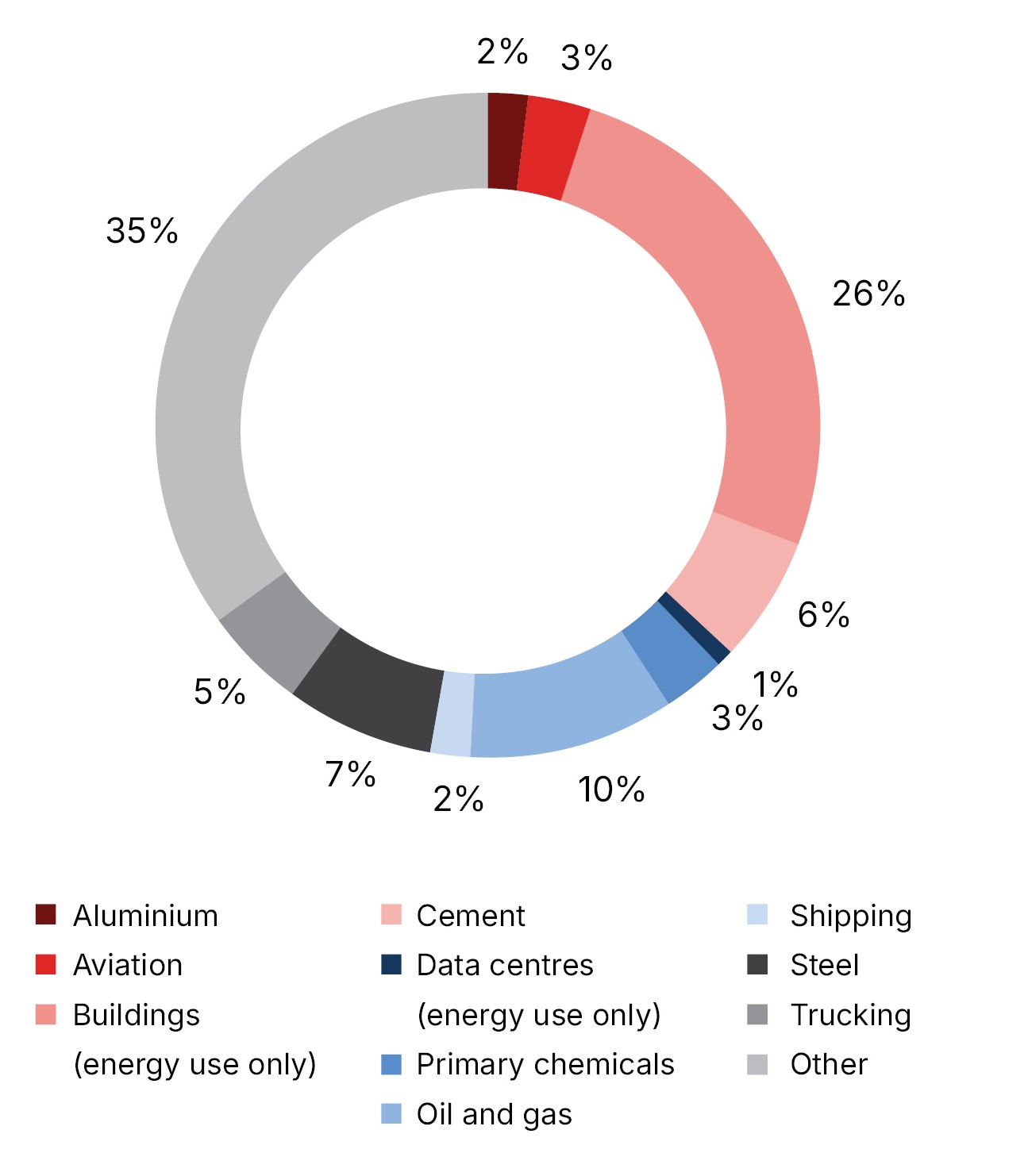
Note: In this chart, the 26% attributed to buildings refers solely to global GHG emissions from operational energy use (e.g. heating, cooling electricity) and does not represent the sector's full life-cycle emissions, including embodied carbon in materials and construction. Similarly, the 1% attributed to data centres reflects emissions from operational energy consumption only, and excludes embodied emissions, upstream supply-chain impacts, and end-of-life considerations.
Source: Geneva Association, based on World Economic Forum 2024, 2025, and IEA 202420
Box 1: Growth of data centres and their GHG emissions
Major cloud‑infrastructure companies, known as hyperscalers,21 are spearheading the massive expansion of data centres. For example,
Data centres require highly reliable, 24/7 power, with industry standards limiting unplanned downtime to about 5 minutes per year (99.9% uptime). In 2024, they accounted for roughly 1.5% of global electricity demand, growing at about 12% annually over the past five years. They also depend on continuous cooling, as high temperatures lead to performance losses, equipment failure, and outages.
Source: Geneva Association, based on various sources22
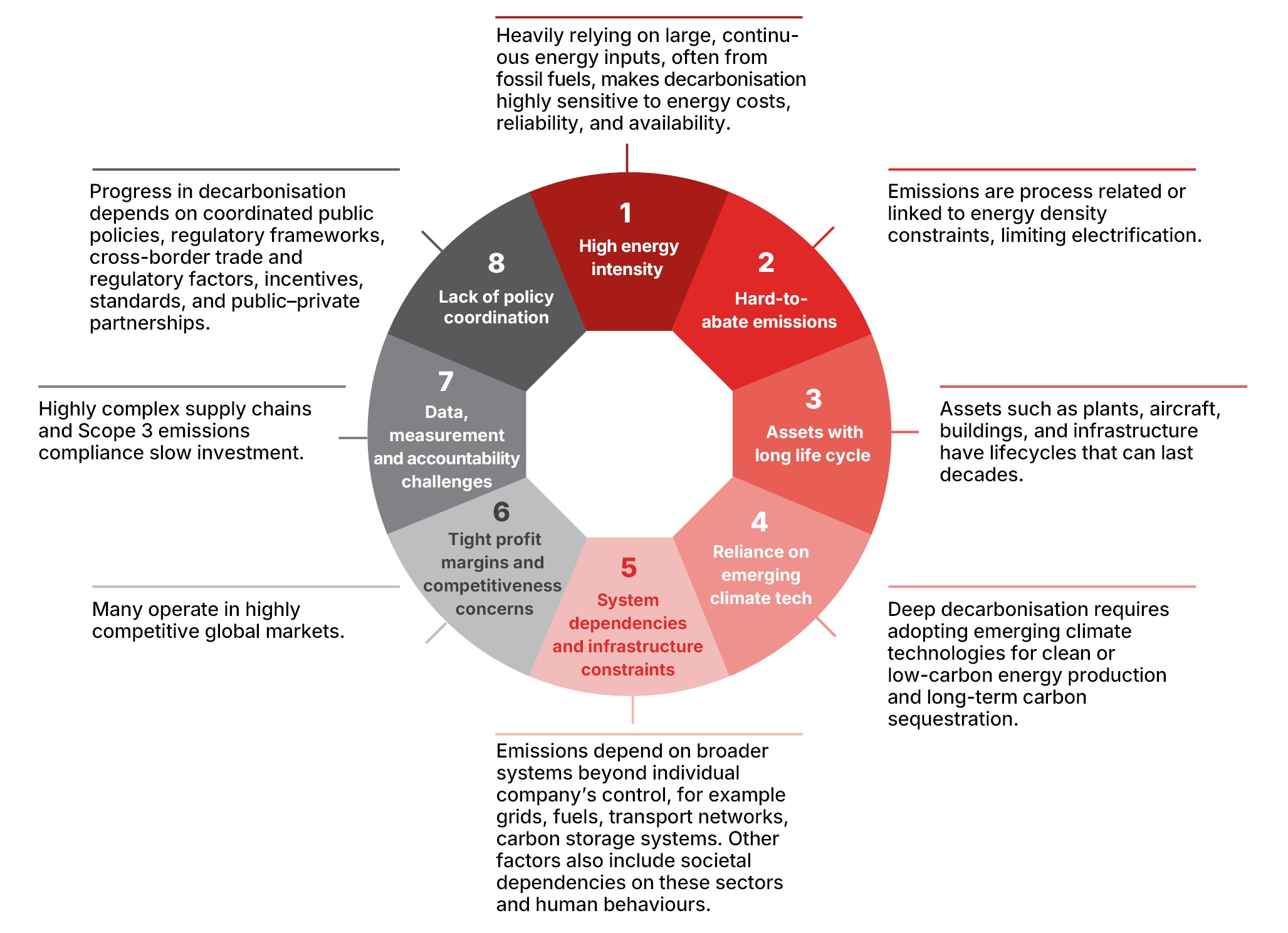
Several common characteristics explain both the large GHG emissions of these sectors and the challenges to reduce them (see Figure 2).
Figure 2: Factors contributing to SECTORS' HIGH GHG emissions and challenges with reducing them
Source: Geneva Association
Several promising developments are paving the way for sectoral decarbonisation:
Figure 3: Global energy transition investment by sector, 2020–2025
Source: BloombergNEF 202633
Notably, both public and private investors continued to scale-up funding.34,35 Low-carbon energy supply investments exceeded fossil fuels for the second consecutive year.36 In 2025, electrified transport-led investments (USD 893 billion), followed by renewables (USD 690 billion), were the most significant investment categories.37
Cross-sectoral public-private collaborations are being forged to expedite scaled deployment of nascent climate technologies, essential for the energy transition.
Public- and private-sector initiatives are underway through regulatory harmonisation and public-private partnerships to expedite scaled deployment of the next wave of climate technologies needed for changing the energy mix and enabling deep decarbonisation, such as CCUS,38 green hydrogen,39,40 long-duration energy storage (LDES),41 and small modular nuclear reactors (SMRs).42
Carbon-credit markets are advancing, but with many nuances
Carbon markets are systems where carbon credits are bought and sold, each credit representing a unit of GHG emissions reduced or removed by a project.43 Project developers earn income by selling these credits to finance projects that cut emissions, for example through energy efficiency improvements, forest conservation, wetland restoration, and carbon-removal technologies that would otherwise struggle to secure funding. Companies buying these credits use them to help meet climate regulatory requirements, alongside other efforts to cut their own emissions (Box 2).
Over the last few years, rules for GHG reduction claims associated with carbon credits have tightened with rising demand for more robust accounting.44 New integrity frameworks are pushing for stricter criteria in areas such as permanence of carbon removal and prevention of double counting, which is raising expectations of project quality across the market.45 Over recent years, the market has moved from large volumes of cheap, lower-quality credits toward fewer but higher-integrity units.46
Box 2: Mechanisms for generating certified credits
Typically, there are four steps in the generation of certified carbon credits: 1) a baseline is established reflecting how much CO₂ would be released if the project did not happen; 2) project implementation; 3) measurement of avoided emissions; and 4) verification and issuance of certified credits, whereby an independent auditor certifies reductions based on standards established by standard-setting bodies (e.g. Gold Standard Verified Emission Reductions or Verra’s Verified Carbon Units).
These standards provide detailed rules on how projects must quantify, report, and verify their impact.
There are two main types of markets: 1) compliance markets, created by governments where companies buy credits to meet certain regulations, such as emissions trading systems; and 2) voluntary markets, where companies and individuals buy credits to meet their own climate or net zero targets.
Source: Geneva Association, based on various sources47
Sectoral collaborations are being forged to expedite decarbonisation
Sector-specific platforms are enabling intra- and cross-industry collaborations to accelerate the development, scaling, and financing of practical decarbonisation and climate resilience solutions. Table 1 highlights examples of such platforms in oil and gas, steel, cement and concrete, buildings, data centres, and aviation, which are the target sectors for this study.
TABLE 1: EXAMPLES OF SECTORAL PLATFORMS FOCUSED ON DECARBONISATION AND RESILIENCE SOLUTIONS
Organisation | Members and sector coverage |
| |
International Petroleum Industry Environmental Conservation Association (IPIECA) |
|
| |
| |
| |
| |
| |
|
Source: Geneva Association
Focusing on six key sectors (oil and gas, steel, cement and concrete, aviation, data centres, and buildings), this report explores sectors’ receptivity, strategies, and priorities for business decarbonisation; the associated challenges and opportunities; and ways in which the insurance industry could support commercial clients to enable and expedite their decarbonisation plans. The objectives of this study are to:
The research methodology has involved:
Section 2 examines sector-specific decarbonisation strategies and priorities, providing insights on current and future areas of focus and related emerging risks. Section 3 examines common challenges among sectors to expedite deep decarbonisation strategies, also taking into account the impacts of slow-changing climatic trends and the intensification of extreme weather. Section 4 takes a deeper dive into future strategic implications for the insurance industry.
Sectoral decarbonisation follows a portfolio approach involving a combination of seven strategies (see Figure 4). These include operations, electrification, combining fossil fuels with CCUS, evolving energy mix with low- or zero-carbon energy production options, waste management and circularity,48 supply-chain management, and the use of carbon credits or similar schemes to mobilise upfront investments in decarbonisation solutions.
Figure 4: Portfolio of strategies used for sectoral core business decarbonisation
Source: Geneva Association
Examples of sectoral activities and their impacts for the implementation of various decarbonisation strategies are highlighted in Table 2.
TABLE 2: EXAMPLES OF ACTIVITIES AND THEIR IMPACTS IN THE IMPLEMENTATION OF DECARBONISATION STRATEGIES
Strategies | Oil and gas49 | Data centres50,51 | Aviation52,53,54 | Steel55 | Cement and concrete56,57,58 | Buildings59,60 | |
| 1. Operations | Energy efficiency |
|
|
|
|
|
|
| Operational efficiency |
|
|
|
|
|
| |
| Process or product alteration/innovation |
|
|
|
|
|
| |
| 2. Electrification |
|
|
|
| |||
| 3. Fossil fuels with CCUS |
|
|
|
|
| ||
| 4. Energy mix | Renewables with storage |
|
|
|
|
| |
| Adoption of new climate technologies for energy production |
|
|
|
|
| ||
| 5. Waste management and circularity |
|
|
| ||||
| 6. Supply-chain management |
|
| |||||
| 7. Carbon-credit markets and related instruments |
|
|
|
| |||
Discussions with leading experts from sectoral platforms (see Table 1) have identified clear short-, medium-, and long-term priorities across the six target sectors, aligned with the seven decarbonisation strategies, thereby clarifying key areas of focus for each sector (see Annex 1). Specifically, each sector requires the deployment and adoption of a wide range of new technologies and approaches with varying complexities to implement its respective decarbonisation strategy.
This transition introduces complex operational, technological, and financial challenges that expose companies to emerging risks requiring careful assessment and management, driving evolving demand for new insurance products and services. While many of these new technologies and activities that are focused on areas such as operational and energy efficiency will lead to evolutionary changes in their core business, others – such as scaling up CCUS and shifting the energy mix for deep decarbonisation – have the potential to lead to transformative changes, significantly impacting their needs for new insurance products and services.64
Sectoral interviews revealed four common challenges hindering sectoral decarbonisation efforts (see Figure 5).
Figure 5: Common sectoral challenges hindering the implementation of decarbonisation strategies
Source: Geneva Association, based on interviews with sectoral experts
Discussions with representatives from the six sectors and further research confirm rising concerns with the impacts of the intensification of extreme weather events65 and slow-changing climatic trends66 on their core business and their decarbonisation strategies. For example, as billions of dollars in public and private funding are being invested to accelerate the commercial deployment of climate technologies and related infrastructure systems, choices around where and how to build new assets and operations will be critical to ensure their resilience and insurability over their full life cycle. These issues are highlighted in Table 3.
TABLE 3: COMMON SECTORAL CONCERNS ASSOCIATED WITH INTENSIFICATION OF EXTREME WEATHER AND SLOW-CHANGING CLIMATIC TRENDS AND IMPLICATIONS
Common concerns | Implications |
| 1. Strategic implications for decarbonisation strategies | Climate resilience considerations may require re-prioritising decarbonisation strategies; for example, favouring resilient, modular, and distributed assets, and operations over exposed, centralised, or water-intensive options. These considerations would affect sectoral decisions on where and how to build new assets and operations, taking into account the insurability of those assets throughout their life cycle.67 For sectors such as cement and concrete, scaling up alternative and recycled raw materials in the production of concrete and cement is a significant challenge in realising the industry’s decarbonisation roadmap. Constraints related to the slow development and adoption of building standards, and to customer acceptance of alternative decarbonised raw materials, could have significant impacts on the cement industry’s decarbonisation strategy.68 |
| 2. Assets, buildings, and equipment (life-cycle impacts) | Damage to and destruction of existing assets,69 rising maintenance, retrofit, and relocation costs70 |
| 3. Operations | Disruption of operations through shutdowns, efficiency losses, safety constraints, outages, and water stress71 which can permanently alter site-design assumptions72 |
| 4. Stranded assets | Assets becoming unusable or uninsurable, increasing stranded-assets and credit risks73 |
| 5. Workforce | Injury, illness and mental-health impacts, reduced productivity and labour availability, and increased health insurance and compensation costs74,75 |
| 6. Project-level development and delivery | Construction and maintenance delays, driving cost overruns, permitting challenges, and uncertainty around schedules and performance76 |
| 7. Supply chains and access to critical materials | Damage to infrastructure and operational delays77 with mining of critical minerals as well as supply-chain disruptions78 |
| 8. Critical infrastructure and utilities | Delayed repair of power, transport and digital infrastructure, causing prolonged business interruptions, affecting supply chains, workforce access, and service delivery79 |
| 9. Litigation risk | Rising exposure to climate-related litigation, including alleged impacts from physical-damage claims, failure-to-adapt allegations, disclosure and fiduciary-duty cases, and liability for service interruptions, creating growing legal, financial, and reputational risks80,81 |
Source: Geneva Association, based on interviews with sectoral experts and various sources
Implications for re/insurers: P&C re/insurers could invest in developing forward-looking stochastic climate risk assessment tools and provide risk advisory services to help sectoral clients’ prioritisation of retrofit investments and development of phased, cost-effective plans for existing assets and operations. In addition, these services could support decarbonisation investments, for example, with site selection, asset design, and incorporation of risk-mitigation measures for new assets and operations. Through underwriting incentives, re/insurers can also promote resilient design and adaptive technologies, reducing disruptions, preserving long-term insurability, and lowering stranded asset risks. Re/insurers could also support supply-chain resilience by mapping supplier concentration and exposure to extreme weather and slow-changing climatic trends. They can pre-assess alternative suppliers and logistics routes through risk engineering.
Discussions with sectoral representatives emphasised that the lack of clear, coherent, and well-aligned public policy and regulatory frameworks remains a critical bottleneck to accelerating sectoral decarbonisation. For example, in the buildings sector, risk-based land-use planning and zoning, alongside updated and enforceable building codes for low-carbon and climate-resilient buildings are essential to enabling green, resilient buildings, and reducing transition and liability risks.82 Re/insurers could work with governments to develop green and resilience incentives, leverage government rebates as well as achieve a shared understanding of hazards, identify regions facing insurance affordability pressures, and prioritise high-impact resilience and green-building investments. In parallel, market uptake and scaled use of low-carbon concrete and alternative binders in construction depend on the timely development and enforcement of building standards that allow for the safe use of these new materials.
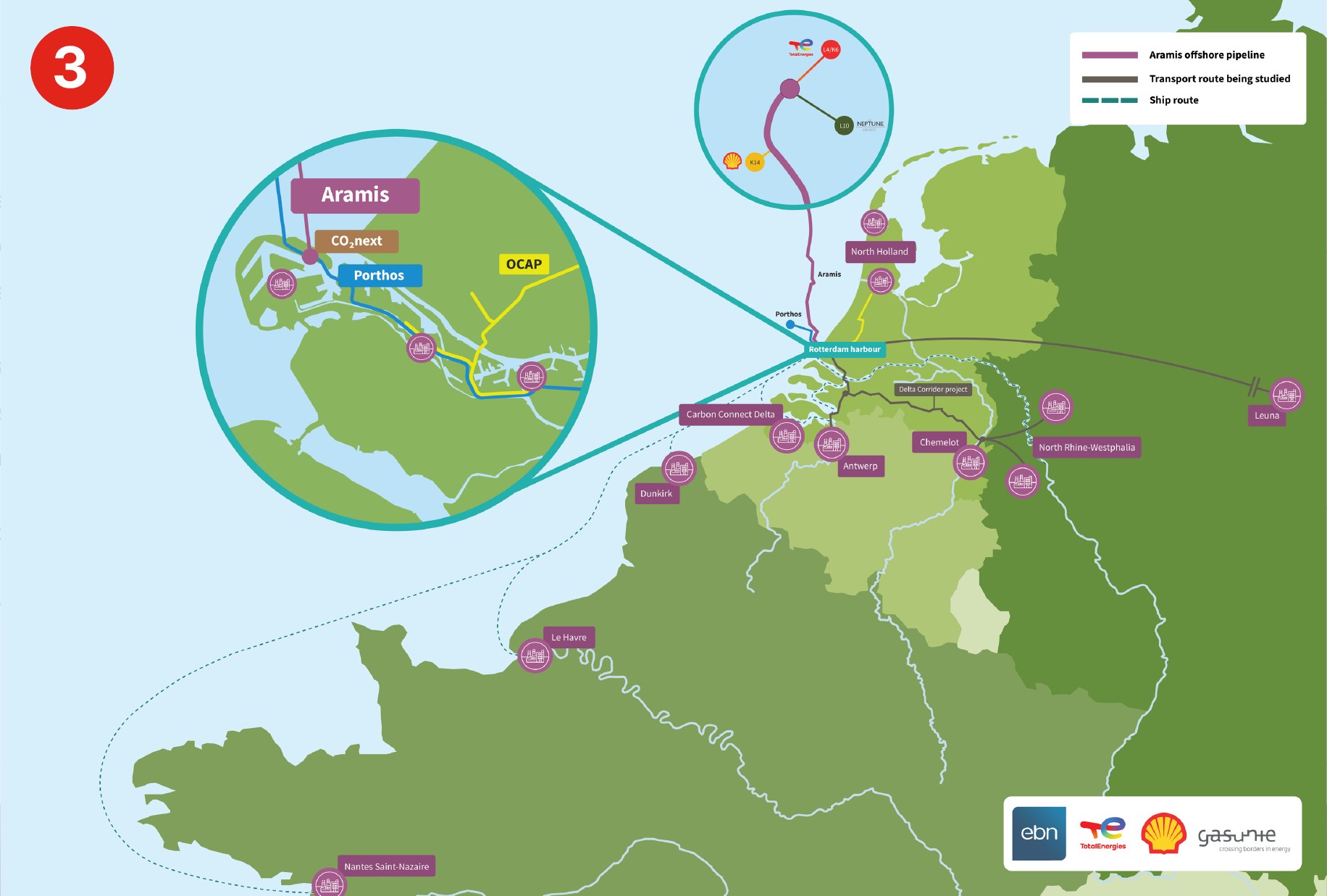
A key challenge highlighted in the interviews is the urgency to accelerate their deep decarbonisation,83 which relies on companies gaining access to commercial-scale technologies like CCUS and production of low- or zero-carbon energy. Experiences from these sectors have revealed that as industrial projects scale, they become increasingly complex, involving multiple stakeholders with diverse roles, risk exposures, liabilities, and regulatory requirements. These projects could span jurisdictions with differing policy and regulatory regimes and rely on underdeveloped supply chains. This further amplifies the need for more coordinated risk identification and risk management to reduce risks for all stakeholders and enable scaled upfront investments. This is illustrated for CCS84 clusters in the EU in Box 3.
Geneva Association research and a recent multi-stakeholder R&D initiative85 have indicated that early engagement among project owners and developers from economic sectors, engineering, procurement, and construction (EPCs) firms, re/insurers (particularly risk-engineering teams), investors, sector-specific policymakers, and regulators could deliver significant benefits, including:
Together, these outcomes would strengthen project bankability, enhance insurability, and accelerate the responsible scaling of complex projects.
Box 3: Europe’s CCS clusters
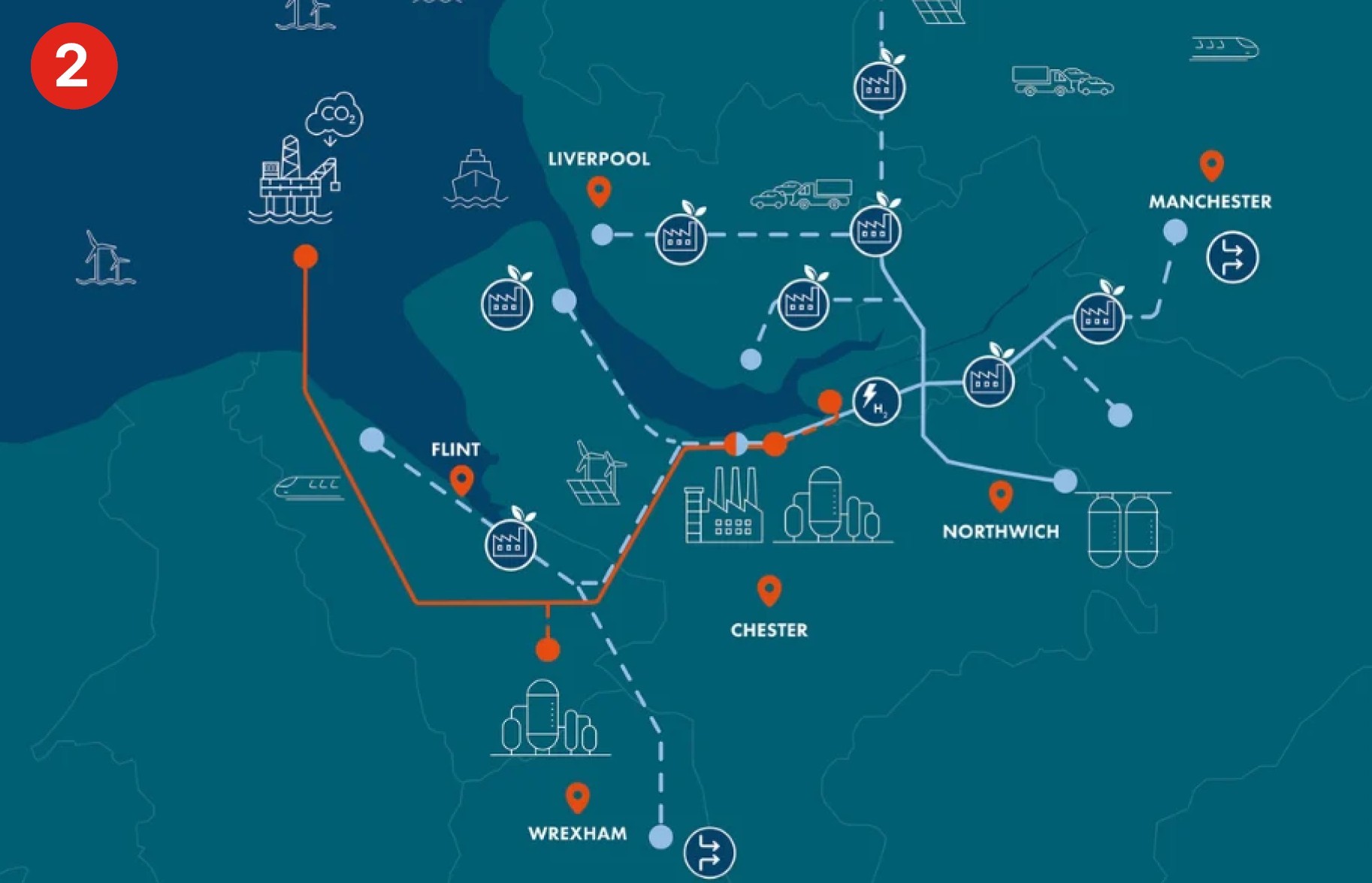
In Europe, industrial clusters are developed around a single, shared carbon capture, transportation, and storage infrastructure to manage and reduce their combined GHG emissions. A complex ecosystem of stakeholders, with different roles and liabilities, enables capture, transportation, utilisation, storage, and closure. The interconnectedness of stakeholders is illustrated in three cases in Figure 6 including: HyNet in Northwest England and North Wales; Aramis in the Netherlands; and Northern Lights in Norway. Importantly, a single incident in a critical part of the system, for example, a major event on an offshore platform that forces a prolonged halt in CO₂ injection would stop CO₂ transport to the storage site and effectively block the entire system. This could trigger losses related to property damage and/or business interruption for the offshore operator, pipeline companies, and each emitter unable to send CO₂ to storage. These accumulated losses, together with others, such as lost revenue from the inability to claim carbon credits, need to be considered as part of the total insured exposure. Interconnectivity and risk accumulation are major concerns in large industrial clusters.
Figure 6: CCS clusters – Hynet, Aramis and Northern Lights
Source: Geneva Association, based on various sources87
The experiences of sectors engaged in the development and deployment of deep decarbonisation technologies are also pointing to the need for transformative cross-sectoral approaches to help expedite scaled deployment for market adoption. These are highlighted in Table 4.
TABLE 4: SIX TRANSFORMATIVE APPROACHES TO EXPEDITE SECTORAL ADOPTION OF EMERGING TECHNOLOGIES FOR DEEP DECARBONISATION, WITH IMPLICATIONS FOR KEY STAKEHOLDERS AND THE INSURANCE INDUSTRY
| Why is this needed? | What does it mean for key stakeholders? | What are the implications for the insurance industry? |
| 1. Adopting a project-life-cycle approach for the mapping of untested risks, stakeholder roles and liabilities, contractual agreements, and risk mitigation measures would enable better coordination of risk mitigation, risk-sharing, and reduce overall risk from early stages. For example, with CCUS projects, this could include design, construction, execution and monitoring of sequestration, transportation and storage, and final closure stages. |
|
|
|
| 2. Strengthened cross-sectoral coordination among policymakers and regulators (e.g. energy, environment, finance and insurance) is needed to align regulations and liability regimes and enable effective risk-sharing models. |
|
|
|
| 3. Reforming project-finance processes would improve site selection and project design by embedding risk mitigation to enhance insurability and financing from the early stages. |
|
|
|
| 4. Embedding climate resilience as a core requirement in plans, project design, and investment decisions for new assets would enhance insurability and reduce stranded-asset and credit risks over the asset life cycle. |
|
|
|
| 5. Accelerating the development of emerging technologies’ supply chains involving a network of suppliers, manufacturers, developers, and service providers that design, produce, and deliver components and subcomponents of novel technologies, would expedite scaled deployment. |
|
|
|
| 6. Adopting and implementing a systems-based approach to developing standards and codes of practice is critical to project replication and scaling. This should address all aspects such as risk identification, mitigation, allocation, contracts, supply chains, data transparency, safety, compliance, and decommissioning. |
|
|
|
Source: Geneva Association, based on interviews with sectoral experts
The development of credible and certified, technology-based carbon credits is essential to mobilise private-sector investments in decarbonisation projects. While technology-based carbon credits, such as those related to engineered carbon removals and CCUS, are attracting growing interest, scaling remains constrained by the high costs and limited supply of such technologies, concerns with the long-term durability of carbon-storage systems, as well as the need to further develop high-quality monitoring, reporting and verification (MRV) practices, and certification systems.90,91,92
Furthermore, a range of sector-specific carbon offsetting and reduction schemes are emerging based on similar principles, but often with differing methodologies, boundaries, and accounting assumptions, such as CORSIA in aviation and the book-and-claim model for cement (as highlighted in Table 2). These are being developed by industry and third parties to mobilise early demand for, and investments in low-carbon production. While these schemes are beyond the scope of this report, discussions with sectoral representatives indicate a consensus or common approach to thesentation, reduce the risk of double counting or greenwashing, and improve confidence for re/insurers, investors, and regulators assessing these mechanisms.
Re/insurers could support this process by providing risk assurance and due diligence on integrity, MRV, permanence, and long-term liability risks; offering guarantees and parametric solutions to enable early demand and financing; and engaging with standard-setting bodies to support convergence and governance.93
Sectoral decarbonisation is underway within the private sector, as different sectors, with varying levels of application, use a portfolio approach to enable transition within their core business (see Figure 4). As described in this report, a deeper dive into the short-, medium-, and long-term priorities of each target sector allows re/insurers to anticipate evolving needs for insurance-related products and services to support expediting decarbonisation strategies. As sectors implement these strategies, they need to assess and manage a wide range of emerging risks such as technology, construction, supply-chain, product liability, stranded-asset, regulatory, and long-tail environmental liability risks.
While each sector’s approach and needs for insurance and financing services vary, there are common characteristics across their decarbonisation strategies, with implications for the insurance industry and investors. For example, achieving deep decarbonisation through low- and zero-carbon energy sources, and ensuring access to robust, credible carbon-credit markets and other sector-specific financial mechanisms, all require strong intra- and inter-sectoral collaborations.
At a time of mounting cost pressures and intensifying competition, re/insurers face strategic choices about how to proactively support clients through early engagement in the transition. Geopolitical shocks and resulting energy instability heighten the need for resilient decarbonisation and energy systems. Re/insurers can help embed resilience into the design, development, and financing of clean energy systems and supply chains – reducing exposure to external shocks while accelerating the energy transition.
The expertise of re/insurers could be significantly leveraged if they directly engage with project owners and governments to co-assess risks and co-develop risk-sharing solutions. Building climate resilience is another critical common concern, particularly as companies and sectors invest massively in new assets, operations, and infrastructure systems. At the same time, advancing deep decarbonisation will require close collaboration among re/insurers and a broad set of stakeholders, as no single organisation can address these shared challenges alone. This carries important strategic implications for the evolving dynamics of insurance markets.
Re/insurers are critical enablers of their corporate clients’ decarbonisation journeys. The scaling and broad adoption of many emerging technologies have profound implications for re/insurers, with each with distinct technical, operational, regulatory, and liability profiles:
Research and development: The energy transition underscores the necessity of investing in targeted R&D, as well as building internal technical capabilities to support commercial clients. With the steady emergence of new technologies across various sectors, they face a diverse set of risks related to technical performance, market adoption, resource constraints, and liability frameworks. These challenges require the implementation of advanced analytical methods and comprehensive risk-mitigation strategies needing new expertise. Traditional risk-transfer structures may also be ill-suited to these contexts, creating the need for new risk-sharing solutions.
Insurability itself is becoming more tightly coupled with climate resilience. Intensifying extreme weather and slow-onset climatic shifts already affect where assets can be built, how long they remain economically and operationally viable, and whether they can remain insurable over their life cycle. This also calls for the development of forward-looking, location-specific modelling of both physical and transition risks.
Strategic cross-sectoral partnerships: Partnerships could be forged through early and sustained collaboration with project developers, financiers, technology providers, and governments. This is becoming critical to mapping risks upfront, innovating risk-sharing models and risk-transfer solutions, and supporting the development of policies and regulatory and liability regimes. However, mechanisms for such early direct engagement need to be developed.
Furthermore, the ability to engage multi-disciplinary teams with standard-setting bodies, manufacturers, and suppliers, could help expedite the development of standards spanning early risk identification, risk mitigation, risk allocation and risk sharing, contracts and processes, supply-chain collaboration, data transparency, safety and regulatory compliance, and decommissioning.
Geneva Association 2024b.
Sectors | Short term | Medium term | Long term | Other considerations | |
| Oil and gas |
|
|
| ||
| Data centres |
|
|
|
| |
| Aviation |
|
|
| Market makers for SAF would secure long-term fixed-price deals with producers and offer flexible short-term sales to airlines, absorbing price/volume risks to boost liquidity and confidence. | |
| Steel |
|
|
|
| |
| Cement |
| Recarbonation (hardened concrete absorbing CO₂ naturally) is often overlooked in emissions accounting, potentially offsetting up to 20% of cement-production CO₂ Book-and-claim model creates tradable Environmental Attribute Certificates (EACs) from verified emissions reductions, decoupling benefits from physical supply chains to drive demand, finance projects, and enhance bankability for low-carbon cement | |||
| 2. Process alterations Alternative substitutes for clinker Scaling-up the use of other alternative raw materials for production | 2. Process alterations Alternatives to Portland clinker cement (2050) Introducing kiln electrification (2040) | |||
| |||||
| |||||
| Buildings | Commercial and industrial | Developed countries:
Developing countries:
| Developed countries:
Developing countries:
| N/A | |
| Residential | Developed countries:
Developing countries:
| Developed countries:
Developing countries:
| N/A | ||
Source: Geneva Association, based on interviews and roundtables held by the GA with representatives from the World Steel Association, Mission Possible Partnership, the Climate Neutral Data Centre Pact, GCCA, and World Green Building Council