Maryam Golnaraghi, Director Climate Change & Environment, Geneva Association
Zhelyan Vichev, Junior Researcher, Climate Change & Environment, Geneva Association
Suggested citation
Geneva Association. 2025.
Safeguarding Home Insurance: Reducing exposure and vulnerability to extreme weather.
Authors: Maryam Golnaraghi and Zhelyan Vichev. May.
Authors
Introduction
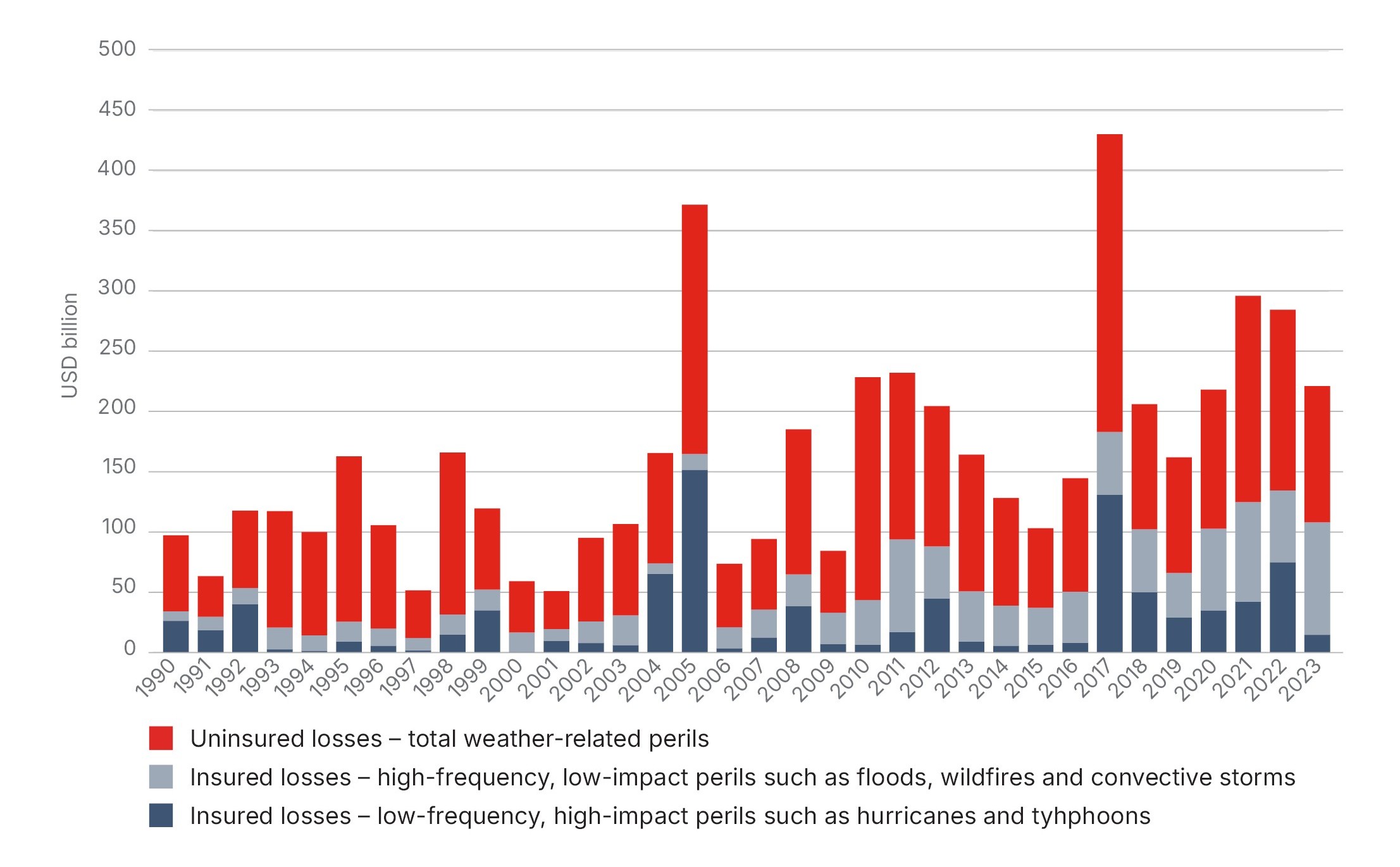
Globally, insured losses from extreme weather events have been on the rise over the last three decades. They accounted on average for roughly one third of total economic losses and exceeding USD 100 billion every year since 2020, with expectations to surpass USD 200 billion in 2025. Between 2000 and 2023, annual accumulated insured losses for more localised perils such as floods, wildfires, and severe convective storms accounted for 55% of total insured losses on average and are estimated at nearly 50% for 2024 (Figure 1).
FIGURE 1: GLOBAL INSURED AND UNINSURED LOSSES RELATED TO EXTREME WEATHER (1990–2023)
Note: USD inflation adjusted to 2024
Source: Geneva Association, based on data from Swiss Re Institute1
Rising exposure and vulnerability
Socioeconomic choices such as land-use decisions, dated building codes, urbanisation, ageing infrastructure, and inflation are among the key factors driving exposure and vulnerability to extreme weather, exacerbating losses. For example:
- Land-zoning practices have traditionally not been risk based, resulting in a rising concentration of people and assets in hazard-prone zones; for example, in Japan, 29%; EU, 17%; US, 12.5% of the population lives in flood-prone regions; and in the EU, 67%; Australia, 61%; US, 60% of the population in wildfire-prone regions. Building in high-risk areas continues; for example, in the US, in 2023, 57% of new homes were built in hurricaneand wildfireprone regions compared to 39% in 2014. In the UK, 8% of new homes have been built in flood-prone regions since 2013. In Canada, using current zoning policies could lead to an additional 150,000 homes in flood-prone zones and 220,000 in wildfire-prone zones by 2030.
- Building codes, while updated around every five years, face cost and resource constraints, among other factors, when it comes to local adoption and enforcement.
- Destruction of aged infrastructure, such as dams, roads and energy assets from extreme weather events, could further exacerbate impacts on neighbouring communities and the economy.
- Inadequate operational maintenance and retrofitting of utilities’ assets could exacerbate extreme-weather impacts.
- Urbanisation can lead to soil loss and concreting and the replacement of natural ecosystems such as wetlands, heightening flood risks. Densification and proximity to vegetation (wildland-urban interface) are increasing wildfire risk.
- High rebuilding costs are driven by factors such as inflation, supply-chain disruptions, labour shortages, and higher wages, as well as tariffs on building materials. Since COVID-19, on average, the cost of rebuilding has risen 26% in the EU, 40% in the US, and 51% in Canada.
Rising challenges with insurance availability and affordability
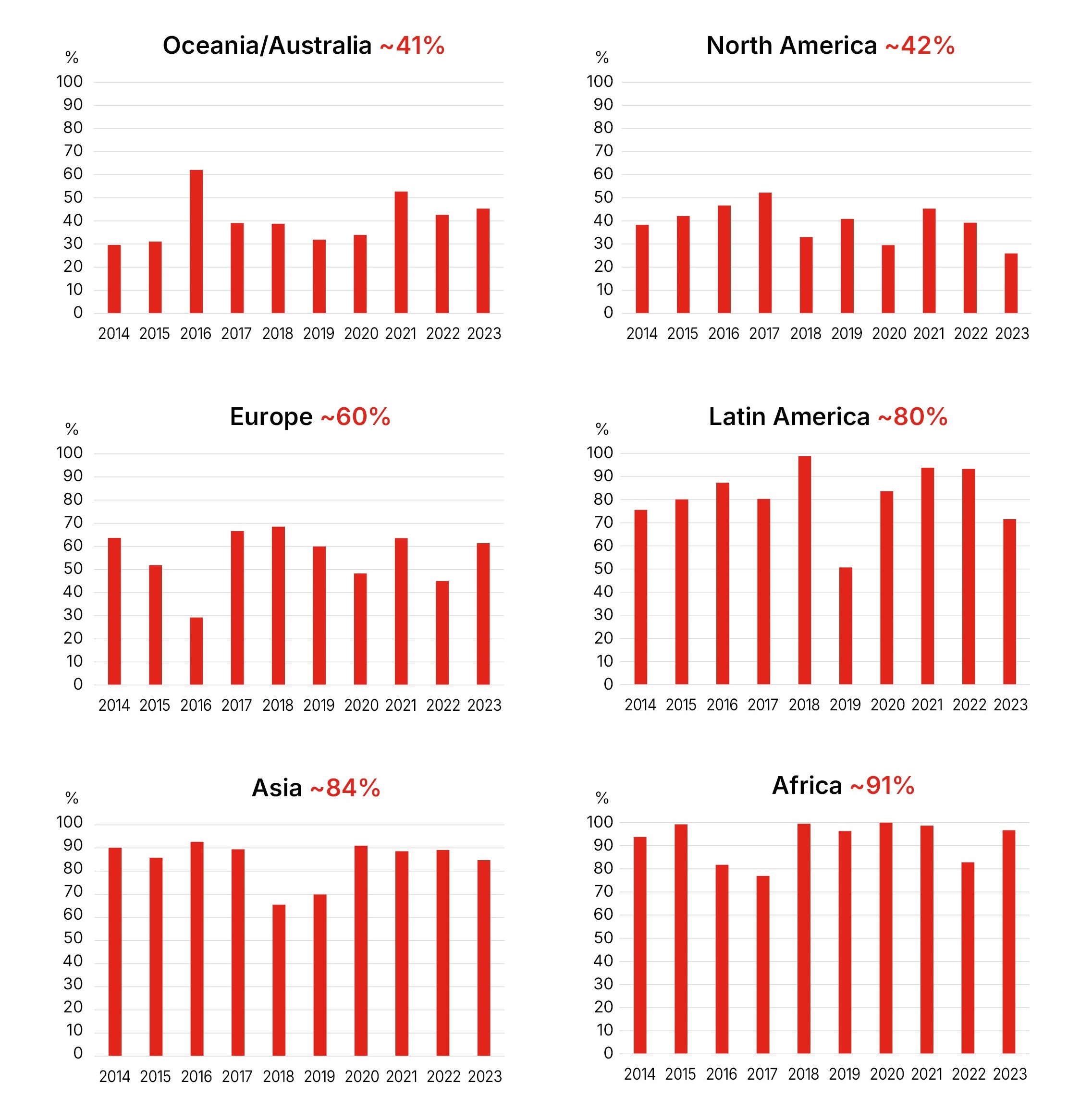
Access to insurance is essential for economic growth and resilience, supporting investments and enabling faster recovery for homeowners, businesses, and governments after natural disasters. However, insurance penetration varies by region. Protection gaps, which range from nearly 40% in Australia and North America to 84% Asia and 91% in Africa, are driven by reliance on post-disaster government handouts, as well as low financial literacy, and risk awareness, among other factors.
P&C re/insurers are first in line to help society cope with the financial impacts of extreme weather events. However, years of high insured losses and the growing gap between collected premiums and claims payouts could lead to eroding capital and challenges in maintaining the financial health of the industry. Re/insurers have been promoting the need for risk-based insurance pricing to align premiums with actual risks. This also brings focus to regions and properties where investment in risk-reduction and -prevention measures are needed.
TABLE 1: PREVALENCE OF INSURANCE-AVAILABILITY AND -AFFORDABILITY ISSUES
| Availability | Affordability |
|---|---|
Rising risks have forced some insurers to limit or cease offering coverage in some parts of the US and Canada, mainly in response to regulatory pressures to cap premiums.
| Rising premiums have led to affordability concerns. An increasingly significant portion of household gross income in some regions is spent on annual insurance premiums.
|
Source: Geneva Association, based on data from various sources2
Rising risks and the absence of risk mitigation measures have led to challenges with insurance availability and affordability (Table 1). For example, in various states in the US, roughly 15% of insured properties (around 2% of the USD 47 trillion housing market) face insurance availability and/or affordability challenges, while in Australia 15% of properties are under excess affordability pressure, as insurance premiums have risen to around 8.3% (or equivalent of 1 month or more) of gross yearly household income. Re/insurers have been investing significantly in research and development to understand the underpinning causes of risks, developing resilience measures for homeowners, communities and governments, and offering innovative products and services. However, they cannot solve the challenges alone.
Stakeholder actions impact the risk profiles of properties and their localities
The risk profile of a property evolves throughout its lifecycle, shaped by the decisions of homeowners and stakeholders involved in land zoning, permitting, development and construction, valuation and financing, and risk management. Homeowners, communities, governments (local/state, federal/national), developers and contractors, utilities, and government-backed insurance pools, can take actions that impact a property’s risk and incentivise investment in local resilience. For example:
- Homeowners usually decide to build or buy a property based on quality-of-life and cost-of-living considerations; mandatory hazard-disclosure laws and rising insurance costs are also increasingly impacting their decisions. To invest in retrofits, homeowners require knowledge about a property’s risks and appropriate measures to address them, as well as available funding and incentives. Incentives to investing in resilience could include home-damage savings, higher home values, and reduced insurance premiums and mortgage rates.
- Governments are critical stakeholders; for example, local government actions are driven by the need to expand the availability of affordable housing and other economic development priorities. They deal with zoning and land management, permitting, building-code enforcement, urban design, and other levels of government in managing disaster risks. Local-government incentives to invest in local resilience could include securing property tax revenue, avoiding litigation, receiving better credit ratings, and improving re-election prospects. National/federal governments coordinate, fund, and support large-scale infrastructure projects that enhance resilience. Reforming post-disaster aid programmes could incentivise local resilience measures by state/local governments.
- Utilities could enhance local resilience by proactively monitoring and maintaining their operations. Investing in local resilience allows them to avoid litigation and secure better credit ratings.
- Government-backed insurance pools may stabilise markets in the short term, but they generally do not address the root causes of rising risks. They also do not use risk-based pricing, allowing people to live in hazard-prone regions. Promoting and investing in local resilience could improve the financial health of the pools and help keep private insurers in the market.
- Mortgage lenders use a property valuation report, prepared by a certified appraiser, which provides an independent assessment of a property’s market value and condition and local market trends. It typically reflects the open market value, not the insured replacement cost. Insurance is often required by law and/or by lenders to ensure that borrowers maintain coverage throughout the mortgage term. This aims to transfer property risks (e.g. the cost of rebuilding in case of a disaster) to insurers, leaving lenders with only credit risks. Specifically:
- Borrowers initially qualify for a mortgage based on their ability to afford the loan payment and insurance costs in the first year of coverage.
- There are no incentives or mandatory requirements for lenders to assess and factor in property risks in mortgage appraisals or for rate setting. In other words, two borrowers with identical credit conditions and home types could receive the same mortgage, irrespective of the level of extreme weather risk of their respective properties.
- Lenders set broad requirements for the level of insurance coverage required for a mortgage. Studies show that in the absence of risk-based insurance pricing, lenders lack insight on property risks and related insurance challenges. Furthermore, mandatory hazard-disclosure laws and rising insurance premiums are also increasingly leading to lower values of homes in hazard-prone regions after a disaster.
- The process for monitoring and verifying borrowers’ annual insurance policies vary in different jurisdictions. However, access to data on mortgage defaults linked to insurance challenges could provide significant insight to develop preventive measures.
A two-tier approach is needed to tackle rising risks and incentivise behavioural change to reduce property and local risks.
TABLE 2: A TWO-TIER APPROACH TO SCALING UP RESILIENCE AT THE LOCAL AND PROPERTY LEVELS
| GOAL | STAKEHOLDER | ACTION | |
|---|---|---|---|
| Tier 1 | Targeted, scaled local resilience measures that are proven to be effective |
|
|
| |||
| |||
| |||
| Enhanced know-how among key stakeholders and adoption of latest innovations |
|
| |
| |||
| Tier 2 | Changes to property valuation and mortgage systems, linked with insurance, to impact homeowner decisions |
|
|
| |||
| |||
| |||
| |||
|
Source: Geneva Association
References
Foreword
There are moments in the arc of our collective experience when slow-building challenges evolve into defining tests of resilience. The accelerating impacts of extreme weather are not distant forecasts or theoretical models – they are now shaping the lives, livelihoods, and futures of millions across the globe. From scorched hillsides to flooded city blocks, the consequences of inaction echo louder each season. As these events grow in frequency and severity, we must move beyond reaction and into readiness – socially, structurally, and financially.
This report examines a sobering reality: while insured losses from extreme weather events have exceeded USD 100 billion every year since 2020, a staggering proportion of the damage remains uncovered. The gap between economic and insured losses – the protection gap – exposes profound vulnerabilities, especially in regions like Africa and Asia where insurance penetration remains limited. Meanwhile, in the absence of risk-based pricing, concerns around the availability and affordability of property insurance are mounting even in advanced economies.
Insurance is not merely a financial product; it is a foundation for resilience. It protects households and businesses from catastrophic loss, enables faster recovery, and supports economic continuity. Yet, the systems that rely on insurance – from mortgage markets to infrastructure investment – often overlook the risks that threaten them. These systems are not evolving to keep pace with changing risks.
This study offers a roadmap for systemic resilience. It recognises the power of local decisions, the responsibility of public and private institutions, and the necessity of collaboration. I invite industry leaders, policymakers, and community stakeholders to explore the findings with urgency and resolve – because resilience, while an ambitious goal, begins with the choices we make today.
Jad Ariss
Managing Director
Geneva Association
Executive summary
Globally, insured losses from extreme weather events have been rising over the last three decades. While they vary significantly from year to year, hurricanes, floods, wildfires, and severe convective storms have driven insured losses to over USD 100 billion every year since 2020, with expectations that they will surpass USD 200 billion in 2025.
This has largely been driven by socioeconomic factors that increase the exposure and vulnerability of assets to extreme weather. These include land zoning practices that allow building in hazard-prone regions, outdated building codes, rapid urban densification, increasing wildland-urban interfaces, destruction of natural ecosystems, ageing infrastructure, and utilities’ operations. Increasing costs of rebuilding due to inflation, supply chain disruption, and higher labour costs are further intensifying losses.
The protection gap – the proportion of total economic losses that is uninsured – for weather-related extremes varies significantly among regions. On average, North America and Oceania/Australia have the lowest protection gap, while Africa and Asia experience the highest. Various factors, including low risk awareness, reliance on post-disaster government aid, misperception of risk, and a lack of financial education and risk management culture, contribute to this protection gap.
Insurance provides financial protection against natural catastrophes, accelerates recovery after a disaster, and reduces the burden on taxpayers. High insurance penetration therefore helps countries and communities manage the economic fallout of disasters more effectively. Though property & casualty (P&C) re/insurers are first in line when it comes to helping society cope with the financial impacts of extreme weather, they face rising risks driven by the decisions of various stakeholders that affect the vulnerability and exposure of properties. The industry invests in research to explore risk drivers and has been promoting the need for risk-based insurance pricing, which aligns premiums with actual risks, taking property exposure, vulnerability, and the likelihood of extreme weather events into account. This encourages investment in risk prevention and promotes fairness by charging higher premiums for higher-risk properties.
This report examines the housing sectors in advanced economies – Australia, Canada, the EU, Japan, and the US – where rising exposure and vulnerabilities to extreme weather in some localities are driving insurance availability and affordability challenges. For example, in Australia, 15% of properties face affordability stress, while in some parts of the US and Canada, rising risks and regulatory pressures to cap premiums have forced insurers to limit or cease coverage for some perils. Market participants in Europe have called for the need for higher insurance premiums for major weather-related events like wildfires.
It considers how stakeholders involved in the land management, building, regulation, construction, lending, insurance, and risk management sectors, as well as homeowners, impact exposure and vulnerability to extreme weather at the property and local levels. For example, homeowners often choose to live in areas based on cost of living and/or quality of life rather than considering extreme weather risks or insurance availability and affordability. Local governments may approve construction in hazard-prone regions due to pressure to provide more affordable housing. Meanwhile, property valuation and mortgage systems have historically focused on borrowers’ credit and market conditions, overlooking extreme weather risks and insurance factors, which allows homeowners to buy in high-risk areas. The report examines these stakeholders’ incentives to invest in localand property-level resilience measures.
It also offers a two-tier approach to addressing rising property exposure to reduce risks that impact insurance. Tier 1 focuses on scaling existing measures that have enhanced local resilience:
Develop a shared understanding of hazards and local risks. Collaboration between governments (national/ federal and state), insurers, and other key stakeholders – e.g. Australia’s Government Hazards Insurance Partnership – can help identify regions with growing exposure to extreme weather, highlight successful resilience initiatives, and promote the expansion of private insurance. Expanding hazard disclosure laws can encourage homeowners to invest in retrofits and discourage buyers from purchasing high-risk properties.
Develop solutions for preventing risks in new construction. Preventing risks in new construction requires the adoption and enforcement of updated building codes, risk-based land zoning, and policies for voluntary relocation and buyouts. Land zoning laws, such as Japan’s disaster risk zones, restrict development in high-risk areas, while programmes such as the ‘Voluntary Home Buy-back Programme’ in Australia help homeowners relocate from disaster-prone regions and enable rezoning for non-residential use.
Focus on the most impactful retrofit measures to reduce risks of existing structures. Governments can legislate, fund key resilience projects (e.g. the ‘Room for the River’ project in the Netherlands, Japan’s Tokyo underground floodwater diversion project), and implement home fortification initiatives tied to certification programmes that boost property value and reduce mortgage and insurance costs (e.g. Strengthen Alabama Homes). Nature-based solutions can also be used, while digital tools can help homeowners assess and enhance resilience, often with financial incentives.
Redesign government post-disaster aid to incentivise ex-ante resilience measures. As disaster costs increase, national governments can shift financial responsibility for resilience to local authorities and homeowners while funding large-scale infrastructure projects with regional impacts. For example, Germany mandates flood resilience measures and insurance for local governments, reducing their reliance on post-disaster aid, and Canada has reformed its aid programme to support preventive resilience. Credit rating agencies can also use disaster risk management and resilience measures as criteria to encourage proactive investments.
Leverage resilience guidelines for informed decision-making. Resilience guidelines produced by insuranceindustry-supported research organisations could be used to create certified trainings for property valuers, home inspectors, mortgage appraisers, and insurance brokers to enhance homeowners’ understanding of risks and how to address them. Targeted digital tools for homeowners can provide an additional resource.
Scale up the development and adoption of innovative solutions. Investment in transformative technologies in areas such as climate risk modelling, climate-linked housing and mortgage valuation, coordinated planning platforms for managing wildfires and floods, new building materials and construction methods, and sensors and drones for proactive infrastructure and utility maintenance could be expanded.
Tier 2 outlines needed structural changes to property valuation and mortgage systems and government-backed insurance pools to incentivise and drive behavioural change among homeowners:
Improve property valuation reports used for mortgage appraisals to include the property’s ‘insured value’ – i.e. the cost of rebuilding – and its risk e.g. building codes used and implemented retrofits. Mandatory hazard disclosure laws could be leveraged to increase transparency.
Set insurance coverage requirements based on risk-based insurance premiums and assess the borrower’s ability to pay before mortgage approval. Lenders should make underwriting and rate decisions using forward-looking stress tests that consider rising insurance costs and potential drops in property values over the term of the mortgage in hazard-prone regions.
These conditions, along with robust monitoring of borrowers’ property insurance annually to keep track of insurance-related delinquencies, could be enforced by mortgage and lending regulatory bodies to incentivise prevention and raise awareness.
Strengthen cross-sectoral collaboration in implementing home-certification programmes with incentives. Collaboration among lenders, insurers, governments, and the real estate sector could support the implementation of home resilience certification programmes. These have been shown to lead to higher property valuations and lower mortgage and insurance rates, encouraging homeowners to invest in property retrofits (e.g. the Strengthen Alabama Homes programme in the US).
Enhance insurance partnerships to increase awareness and strengthen resilience. Re/insurers could collaborate with governments and other stakeholders to enhance understanding of hazards and regions facing rising insurance challenges to enable targeted resilience measures. Certification trainings and resilience initiatives developed through research funded by insurers can also be used. Insurers can expand their investments in restoring and conserving nature-based systems such as wetlands for greater local resilience.
Government-backed insurance pools could promote and support resilience measures and discourage (re)building in high-risk locations, e.g. by using risk-based pricing, discouraging the purchasing of high-risk properties, setting time-bound resilience goals, and incentivising property strengthening through discounts and/ or funding, with the goal of attracting private insurers to the market.
Insurance regulators should promote risk-based pricing and support resilience measures such as riskbased zoning and building codes, educate the public on private insurance, and reform government-backed insurance pools to prioritise resilience.
Credit rating agencies could incorporate extreme weather risks and resilience strategies in their procedures, e.g. for governments at all levels and lenders via rated mortgage credit securities.
This report aims to bring focus to how socioeconomic factors exacerbate extreme weather risks and highlight the need for a paradigm shift towards an all-of-society approach to reduce exposure and enhance local resilience. Investing in decarbonisation offers long-term financial returns by addressing the root cause of climate change. In a world that has not yet made adequate progress to reduce greenhouse gas emissions, increasing investments in adaptation and building local resilience is more important than ever. It is cost-effective and addresses short-term challenges, particularly for those most vulnerable to extreme weather, and provides long-term benefits by preventing exposures from rising. Collaboration will be essential to driving innovative solutions in this space.
The rising insurance challenge
Economic and insured losses related to extreme weather
Over the last three decades, global economic losses associated with weather-related extremes have risen significantly.1 Climate change is impacting the characteristics of extreme weather events differently around the world.2 However, research conducted by the insurance industry has revealed that socioeconomic factors, such as land-zoning approaches leading to higher concentrations of people and assets in hazard-prone areas, ageing infrastructure, urbanisation patterns, and increases in building-replacement costs, are among the key drivers exacerbating extreme-weather-related risks.3
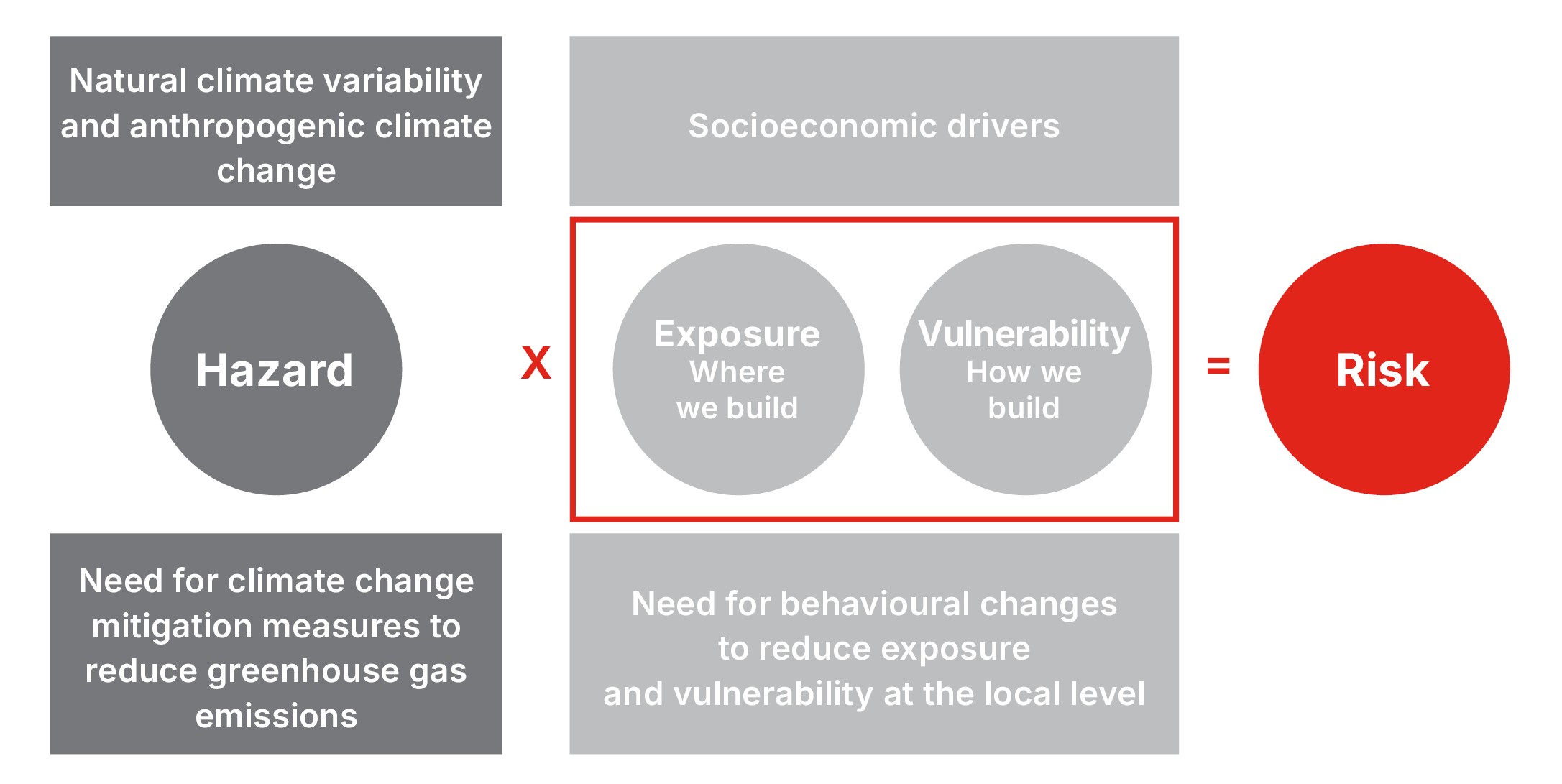
Reducing weather-related property risks requires addressing the changing frequency and severity of weather-related hazards through climate change mitigation actions to reduce greenhouse gas (GHG) emissions, as well as implementing risk-reduction and -prevention measures to minimise the exposure and vulnerability of assets (Figure 1). Efforts are underway to decarbonise the economy, but investment in adaptation and local resilience is cost effective and provides both immediate and long-term benefits, especially for those most vulnerable to extreme weather.
FIGURE 1: RISING RISKS DUE TO MORE EXTREME WEATHER, SLOW-CHANGING CLIMATIC TRENDS, AND GROWING EXPOSURE AND VULNERABILITY
Source: Swiss Re Institute, modified by the Geneva Association4
Globally, insured losses from extreme weather events have been rising, accounting for roughly one third of total economic losses on average (Figure 2). While insured losses vary significantly from year to year, they have exceeded USD 100 billion every year since 2020 (combined blue bars in Figure 2). For 2024, total economic and insured losses are estimated at USD 320 billion and USD 140 billion, respectively.5 Insured losses are expected to surpass USD 200 billion in 2025.6
Traditionally, the highest concentration of weather-related insured losses have been from less-frequent but high-impact perils such as US hurricanes, typhoons in Japan, and winter storms in Europe (dark blue bars in Figure 2).7 However, accumulated insured losses associated with more localised perils such as floods, wildfires, and severe convective storms such as hail and tornados8 are also on the rise (light blue bars in Figure 2).9 Importantly, between 2000 and 2023, annual accumulated insured losses for such ‘secondary’ perils accounted for 55% of total insured losses on average. In 2024, secondary perils accounted for nearly 50% of total insured losses.10
FIGURE 2: GLOBAL INSURED AND UNINSURED LOSSES RELATED TO EXTREME WEATHER (1990–2023)
Note: USD inflation adjusted to 2024
Source: Geneva Association, based on data from Swiss Re Institute11
Appendix 1 provides an overview of regions where the severity and frequency of extreme weather events such as floods and wildfires are expected to rise with high or medium certainty, under a 2°C warming scenario.12 Box 1 highlights some of the climatic and environmental conditions that increase the risk of wildfires and floods.
Box 1: Wildfire and flood risks explained
Wildfire frequency and severity are influenced by various factors:
- Weather – Rising temperatures and changing precipitation could lead to drier fuels, longer fire seasons, and more extreme fires. Wind speeds up fire spread by supplying more oxygen and hinders fire suppression efforts.
- Fuel – Vegetation such as grass, shrubs, trees, and dead leaves, as well as structures, provide fuel for fires.
- Topography – Steep slopes accelerate fire spread, with fires typically moving faster uphill.
- Ignition source – Lightning, campfires, arson, utility incidents, and human accidents (e.g. cigarette butts, fireworks) can start wildfires.
Floods can be divided into different types:
- Fluvial or river floods are linked to prolonged heavy rainfall in river basins, particularly during storms, which can overwhelm rivers.
- Pluvial or flash floods (mainly in urban areas) occur due to rainfall exceeding the capacity of drainage systems or the ground’s ability to absorb it.
- Coastal (storm surges, tidal flooding) floods can be caused by rising sea levels combined with stronger and more frequent tropical storms, and changes in atmospheric circulation patterns (such as those linked to El Niño and La Niña events) which make storm surges more powerful and unpredictable, especially in low-lying coastal regions.
All types are exacerbated by deforestation and land-use planning. Each type has different impacts and requires different risk management strategies. According to the IPCC:
- The frequency and intensity of heavy rainfall have increased since the 1950s, driven mainly by humancaused climate change, leading to more local flooding.
- The wettest day of the year’s precipitation is projected to rise in most regions, even those with declining soil moisture.
- The global water cycle is intensifying, with more extreme wet and dry events.
Source: Insurance Institute for Business and Home Safety (IBHS), IPCC, and the Geneva Association13
The protection gap
Protection gaps are defined as the proportion of uninsured losses as a share of total economic losses.14 As shown in Figure 3, the protection gap for weather-related extremes varies significantly across different regions. Notably, North America and Oceania/Australia have the lowest while Africa and Asia have the largest protection gaps.
Table 1 outlines the underpinning drivers of protection gaps. In some regions, despite insurance being available and affordable, factors such as low risk awareness, underestimation of risks, an ‘it will not happen to me’ mindset, reliance on post-disaster government aid, and a lack of financial education could lead to limited uptake (demand) by homeowners and businesses. Additionally, the complexity of insurance products and unclear wording around coverage and exclusions could lead to misunderstandings and subsequently to distrust of the industry. In some regions, affordability issues have led to homeowners opting not to purchase insurance.
In some countries, insurance supply may be limited due to a lack of data for accurate risk pricing, limited access to reinsurance capacity linked to trade barriers affecting foreign reinsurers,15 information asymmetry/ adverse selection (e.g. higher insurance demand from those with past losses), moral hazard,16 and legal and regulatory challenges.
FIGURE 3: REGIONAL PROTECTION GAPS FOR EXTREME WEATHER EVENTS (2014-2023)
Source: Geneva Association, based on data from Swiss Re Institute17
TABLE 1: FACTORS DRIVING THE EXTREME WEATHER INSURANCE PROTECTION GAP
| Demand-side factors | Supply-side factors |
|---|---|
|
|
|
|
|
|
|
|
|
|
| |
|
Source: Geneva Association, based on data from various sources18
Tables 2 and 3 provide examples of some of the costliest floods and wildfires of the last 10 years, respectively. The economic losses of the 2025 greater Los Angeles wildfires are still unknown (as of April 2025), but preliminary insured losses were estimated at USD 40 billion as of the end of February 2025. This makes the event potentially the costliest wildfire to date.19
TABLE 2: COSTLY FLOODS WORLDWIDE, 2015–2024
Date | Region | Economic losses (USD billion) | Insured losses (USD billion) | Uninsured losses (% of economic losses) |
|---|---|---|---|---|
July 2021 | Western and Central Europe | 45.6 | 13 | 71.5% |
June - September 2020 | China | 35 | 2 | 94.3% |
May - September 2023 | China | 32.2 | 1.4 | 95.7% |
June - September 2021 | China | 30 | 2.1 | 93% |
Summer 2016 | China | 28 | 0.8 | 97.1% |
October 2024 | Spain (Valencia) | 16.1 | 3.9 | 75.8% |
June - July 2024 | China | 15.5 | 0.4 | 97.4% |
August 2016 | US (Louisiana, Mississippi) | 10-15 | 3 | 70-80% |
July 2018 | Japan | 10 | 2.7 | 73% |
May 2023 | Italy (Emilia-Romagna) | 9.8 | 0.6 | 93.9% |
July 2020 | Japan (Kyushu) | 8.5 | 0.2 | 97.6% |
February-March 2022 | Australia (Queensland, New South Wales) | 8 | 4 | 50% |
April-May 2019 | Canada | 0.8 | 0.2 | 75% |
Source: Geneva Association, based on data from Aon20
TABLE 3: COSTLY WILDFIRES WORLDWIDE, 2015–202421
| Date | Region | Economic losses (USD billion) | Insured losses (USD billion) | Uninsured losses (% of economic losses) |
|---|---|---|---|---|
November 2018 | US (California, Camp Fire) | 15 | 12 | 20% |
October 2017 | US (California, Tubbs Fire) | 13 | 11 | 15.4% |
November 2018 | US (California, Woosley Fire) | 5.8 | 4.5 | 22.4% |
August 2023 | US (Hawaii) | 5.5 | 3.5 | 36.4% |
November 2019— January 2020 | Australia (bushfires) | 5 | 11 | 78% |
May 2016 | Canada | 4.5 | 2.8 | 37.8% |
October 2017 | Portugal | 0.9 | 0.3 | 67% |
Source: Geneva Association, based on data from Aon22
The critical role of risk-based insurance pricing
Access to insurance is crucial for economic growth, backing investments, and building financial resilience.23 Without insurance, the financial burden of natural catastrophes (Nat Cat) falls on individuals, businesses, and governments. Through loss indemnification, those who have suffered damage gain financial resources to rebuild and restore more quickly.24 Higher Nat Cat insurance penetration therefore helps countries to recover faster and reduces the burden on taxpayers. Uninsured catastrophe losses drive macroeconomic costs, while well-insured events can have minimal or even positive economic effects.25
Insurance regulators face the challenge of balancing consumer protection by keeping insurance affordable, while safeguarding the financial stability of insurers. The question therefore becomes whether insurers should charge premiums based on actual risk or cap rates for affordability.
Risk-based insurance pricing for extreme weather events is essential to ensure premiums reflect the actual risk of a location or property.26 By adjusting premiums based on the likelihood and severity of extreme weather events, as well as exposure and vulnerability profiles, insurers can better cover potential claims in affected areas. This approach could have several other benefits:27
- Indicates property risk levels to encourage investment in risk reduction and prevention: Higher premiums can motivate homeowners, communities, and governments at all levels to invest in measures such as property retrofits. In regions with recurrent extreme weather events, this could lead to the development of targeted government programmes for property buybacks, relocation, and rezoning to keep people out of high-risk areas.
- Promotes fairness and reduces adverse selection: Those with greater risk are charged higher premiums.
- Improves insurers’ financial health: Risk-based pricing promotes the financial health of re/insurers by ensuring that companies are sufficiently capitalised to pay out claims.28
However, while risk-based pricing offers benefits in terms of aligning premiums with actual risk, it also presents challenges related to affordability and market stability.
Insurance availability and affordability challenges in specific regions
This report mainly focuses on advanced economies with mature and competitive insurance markets in the housing sector, with particular focus on Australia, Canada, the EU, Japan, the UK, and the US.
In these jurisdictions, rising exposure to weather-related extremes are driving concerns over the availability and/or affordability of insurance for some perils in certain locations. Inadequate risk reduction for existing buildings and insufficient preventive measures for new construction further exacerbate these challenges.29 For example, in various states in the US, roughly 15% of insured properties or ~2% of the USD 47 trillion housing market face insurance availability and/or affordability challenges (Figure 4).30 In Australia, 15% of properties are estimated to be under extreme stress for affordability. In Europe, market participants have warned about the need to increase insurance premiums to respond to extreme weather events, such as the 2023 wildfires.
FIGURE 4: REGIONAL INSURANCE AVAILABILITY AND AFFORDABILITY CHALLENGES

Source: Geneva Association
1.4.1 Availability
Over the last few years, inadequate risk-reduction and risk-prevention measures have forced some insurance companies to limit or cease offering new policies for some hazards in certain areas of the US. Similar challenges have also been observed more recently in Canada (Table 4). Importantly, in many cases, this was in response to regulatory pressure to cap insurance premiums and, in some cases, to delays with insurance repricing (Table 4).
In the US, P&C re/insurers are concerned about shrinking capital due to consistently high losses from certain perils in some regions, resulting in lower return on equity compared to other financial sectors. In 2022, US P&C insurers’ return on equity reached its lowest value (5.7%), compared to all economic sectors (16.5%), investment and asset management (17.2%), and brokerage and investment banking (13.4%).31 This could lead to hesitation among investors and capital providers, making it difficult for insurers to attract sufficient capital to replenish the industry’s capacity.32 A recent investor survey indicates a 27% decline in growth expectations for P&C insurers beyond 2026, driven by increasing challenges related to availability, affordability, and escalating risks, compounded by inadequate local risk prevention measures.33
In the US, major insurers with strong credit ratings are pulling out of high-risk areas like Florida. Some companies use their ‘non-admitted’ or ‘surplus lines’ subsidiaries, which are permitted to operate through licenced brokers and are not state regulated. They have become increasingly risk averse, reducing coverage. As a result, a different type of non-admitted insurer is gaining market share; they are smaller, undercapitalised, less diversified, and have a higher risk of insolvency. Despite strong ratings from Demotech, seven went insolvent in Florida in 2021–22.34
TABLE 4: REGIONS WITH INSURANCE AVAILABILITY ISSUES
Country | Regions |
|---|---|
US |
|
Canada |
|
Source: Geneva Association, based on various sources35
Affordability
In markets where insurers are increasingly factoring in rising extreme weather risks in pricing, homeowners’ insurance premiums are rising. Over time, this could make insurance less affordable, and homeowners and small businesses may decide not to buy it.36
In the US, despite an average rise of 11% in insurance premiums (from 7% in Michigan to 56% in Florida) in recent years,37 some studies show that premiums in some areas are still underpriced.38 In Europe, according to market participants, insurance prices will have to rise over the next two years as the industry responds to events such as the 2023 wildfires, which resulted in the fourth largest burnt area on record in the EU.39 Box 2 provides an overview of rising insurance rate trends in different regions.
With rising claims in the US, reinsurance prices rose by 20–40% in 2022–2023, whereas in Europe they have increased by just 10–12%.40
Box 2: Trends in insurance rates in different regions
US
In 2023, the average homeowners’ insurance rate rose by over 11%. The five largest percentage increases between 2020 and 2023 were in:
- Florida (56%)
- Louisiana (55%)
- District of Columbia (51%)
- Colorado (43%)
- Utah (42%)
Canada
Between 2023 and 2024, homeowners’ insurance premiums rose by 7.66% on average, with some provinces seeing increases of up to 12%.
Australia
Between 2023 and 2024, the median retail price of insurance increased by 10%. The states and territories with the highest increases were:
- Western Australia (19%)
- South Australia (16%)
- New South Wales (15%)
Japan
In October 2024, four major P&C insurers announced plans to raise fire insurance premiums by 13% on average due to the increasing number of natural disasters.
Europe
Market participants have warned that insurance prices in Europe will have to rise over the next two years as the industry responds to extreme weather such as the 2023 wildfires.
UK
The price of the average UK home insurance policy increased by about 20% in 2024, influenced by insurers paying out a record GBP 573 million after a series of storms in 2023.
Source: Geneva Association, based on data from various sources41
Notably, due to the extent to which risks are rising, premiums could reach levels that put significant stress on homeowners. To this end, interventions by governments and other stakeholders that prioritise risk reduction and prevention to reduce exposure and vulnerability are critical.
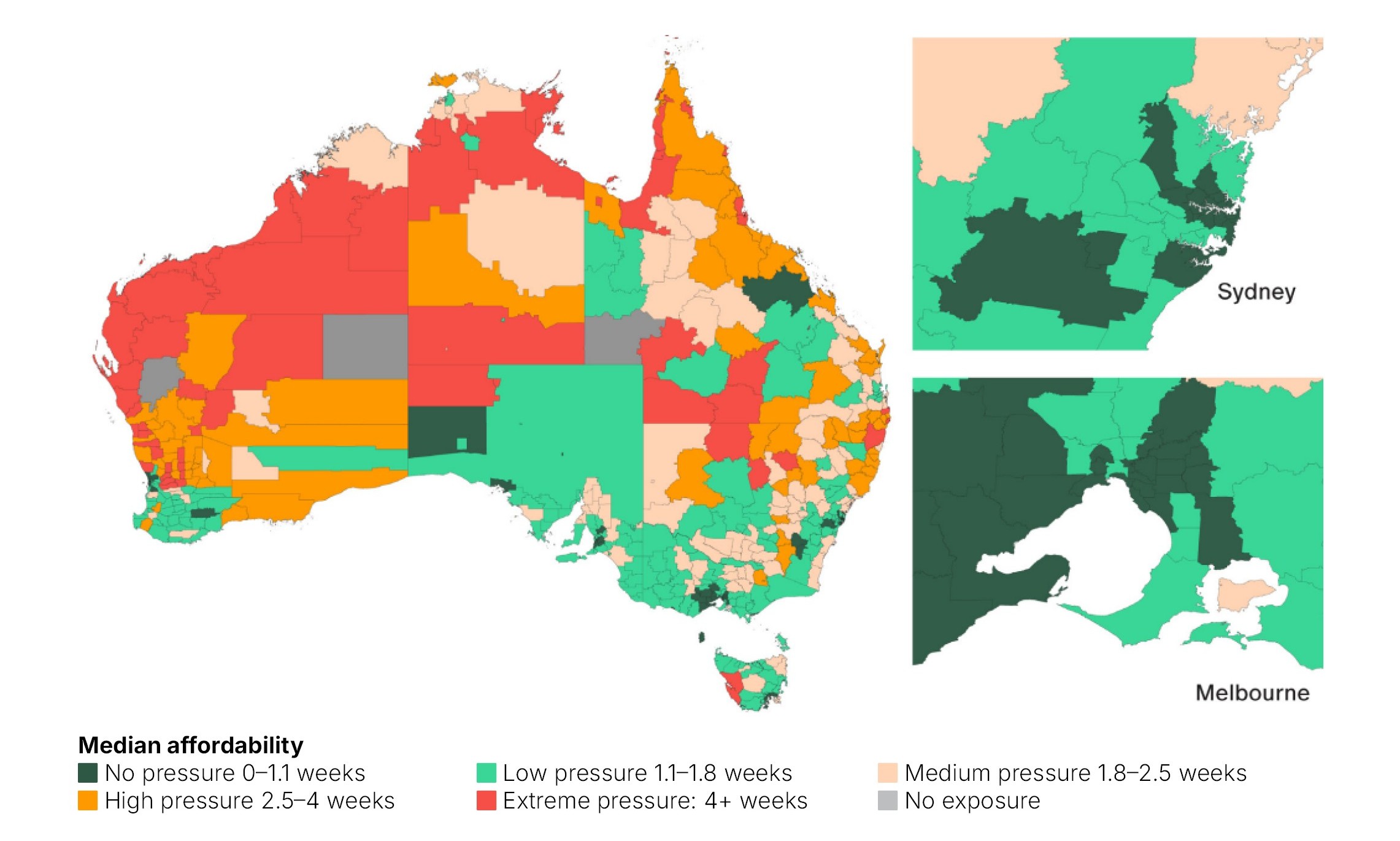
The Australia Actuaries Home Insurance Affordability (AAHIA) Index has quantified the tipping point at which affordability affects customers’ insurance-purchasing decisions. According to the index, this occurs when homeowners pay more than four weeks of gross household income (more than 8.3%) for annual home insurance premiums. The AAHIA helps identify areas under significant affordability stress. In 2024, an estimated 1.61 million Australian households (around 15%) faced this stress, up from 1.24 million in 2023, with the highest concentrations in Western Australia, Queensland, and the Northern Territory (Figure 5).42 This information brings focus to regions where investments in local resilience are imperative. In 2023, median homeowners and flood insurance spending as a percentage of household income among southeastern hurricane-prone states in the US varied from 1.2% in North Carolina to 2% in Florida and 2.1% in Louisiana.43
FIGURE 5: AUSTRALIAN ACTUARIES HOME INSURANCE AFFORDABILITY INDEX
Source: Actuaries Institute44
Without measures to reduce localand property-level exposure and vulnerability, insurance challenges will become more acute. Addressing them requires incentives for scaled interventions by different stakeholders to reduce the exposure of existing buildings and prevent risks for new ones.
Aims and structure of the report
This report reviews the evidence on factors driving the increasing exposure and vulnerability of properties to extreme weather and explores the roles of the stakeholders whose actions impact them. It also outlines an all-of-society approach for manging these risks.
The report focuses on developed economies with mature insurance markets: Australia, Canada, the EU, Japan, the UK, and the US. The research methodology involved an extensive literature review, 14 technical roundtables, and numerous one-on-one interviews with experts.
Section 2 explores factors that are driving up property risks related to extreme weather. Section 3 identifies key stakeholders whose actions impact the exposure and vulnerability of a property and/or its surroundings and their incentives to invest in local resilience measures. It also takes a deep dive into the links between property valuation and mortgage systems and insurance and explores government interventions via government-backed re/insurance pools. Section 4 outlines a framework for building local resilience and bringing about the structural changes needed to incentivise and drive behavioural change among homeowners. Section 5 outlines some of the key challenges ahead.
Socioeconomic drivers of property risks related to extreme weather
Rising exposure and vulnerability
2.1.1 Growing concentration of people and assets in hazard-prone areas due to land-zoning practices
Population growth and land-management practices have resulted in an increasing concentration of people and assets in hazard-prone regions (see Table 5).
Construction also continues to take place in hazardprone areas, driven by factors like rising demand for affordable housing. Traditionally, land-zoning policies have not been risk based, allowing further development in areas where the severity and frequency of hazards are increasing.
TABLE 5: POPULATION EXPOSURE TO FLOOD AND WILDFIRE RISK IN DIFFERENT REGIONS
| US | Canada | Australia | Japan | EU average45 | UK | |
|---|---|---|---|---|---|---|
| Pluvial, fluvial, and coastal flood-prone areas46 | 12.5% | 9.4% | 7.9% | 28.7% | 16.6% | 11% |
| Wildfire-prone areas (wildland-urban interface)47 | 60.5% | 46.8% | 61.4% | 41.2% | 67.4% | 66.6% |
Source: Geneva Association, based on data from Rentschler et al. and Schug et al.48
Homes continue to be built in hazard-prone regions. In the US, four million homes were built in areas exposed to hurricanes, wildfires, and extreme heat between 2014 and 2023, with the annual percentage of new homes in these areas rising from 39% to 57%.49 In Germany, 1,000–2,400 new buildings are added to high-risk flood zones annually,50 while 8% of new homes constructed in the UK since 2013 are in flood-prone areas.51 In Canada, without changes to land-zoning policies, over 150,000 homes could be built in flood-prone areas and more than 220,000 in wildfire-prone areas by 2030.52 However, major events like the 2019–2020 bushfires in Australia have sparked increased awareness and reconsideration of building practices in fire-prone areas, with more focus on fireresistant materials.53
2.1.2 Updating and enforcing building codes
Traditionally, building codes have often taken historical weather hazards such as floods and wildfires and their recurrence intervals into consideration. Building codes are also increasingly factoring in expected future changes in the severity and frequency of extreme weather events. These regulations aim to enhance the safety of people and reduce vulnerability of properties to natural hazards. Codes vary by region and should be regularly updated, taking into consideration new technologies and lessons learnt from past disasters. Some countries, like France and the UK, have binding national codes, while others offer guidelines. Many countries also update their codes on a regular basis.54 However, adoption and enforcement by local governments varies significantly due to challenges including costs, resistance from developers and builders, and lengthy implementation times. These are further detailed in Box 3.
Box 3: Hurdles to adopting and enforcing updated building codes
- Cost constraints: Implementing new codes requires significant investment, straining local budgets.
- Resistance to change: Builders and developers may resist due to costs or complexity issues.
- Balancing development and safety: Economic pressures may conflict with safety in hazard-prone areas.
- Lack of resources: Municipalities may lack the expertise or staff to enforce new codes.
- Political pressures: Competing interests from stakeholders can delay adoption.
- Infrastructure upgrades: New codes may require costly infrastructure updates.
- Awareness: Public and builder knowledge gaps hinder support.
- Coordination issues: Aligning with provincial or federal codes can be challenging.
- Implementation delays: Adoption often involves lengthy consultation processes.
- Enforcement: Ensuring compliance can be difficult without sufficient oversight.
Source: Geneva Association, based on National Institute of Building Sciences (NIBS)55
2.1.3 Urbanisation
Urban development approaches are also driving up the exposure and vulnerability of people and their properties to extreme weather events.
Urbanisation and floods: Concreting, soil loss, replacement of natural ecosystems, and rapid development and densification near rivers and coasts have heightened flood risk in urban areas. Additionally, critical infrastructure like sewer systems is not designed for growing urban populations. Water drainage systems are often inadequate for handling current climate conditions, let alone the anticipated future increases in rainfall due to climate change.
Urbanisation and wildfires: In regions with rising wildfire risks, urban development and other human-related factors have increased the threat of urban wildfires. The wildland-urban interface covers 4.7% of global land, home to nearly half the world's population.56 In Europe, 15% of land is in the wildland-urban interface, with coverage varying widely across and within countries. In Los Angeles, one in 10 properties now face 'very high' fire risk, with newer buildings slightly more likely to be in wildfire-prone areas.57 Beyond lightning, wildfire ignition sources can be manmade, such as campfires, arson, utility incidents, and human accidents (e.g. cigarette butts, fireworks).
2.1.4 Critical infrastructure and utilities
Years of underinvestment in infrastructure has led to ageing and declining quality worldwide. Failure of and damage to infrastructure make up a substantial share of annual economic losses.58,59,60,61 Globally, extremeweather events threaten to damage essential transport infrastructure and disrupt supply chains, with annual direct damages to global transport infrastructure estimated at USD 15 billion. This could lead to business interruption, supply chain disruption, and significantly delayed recovery and reconstruction after disasters.62
Failure to maintain or inadequately upgrade infrastructure such as drainage systems, water facilities, and electric utilities exacerbate extreme weather impacts.63 For example, in California, the Pacific Gas & Electric Company (PG&E) has been linked to several major wildfires. Utilities in California are required to report wildfire risks to the Public Utilities Commission.64
Rising cost of rebuilding
Rising inflation is a key factor driving increased insurance losses, with building replacement costs up by 26–50% in many regions since the COVID-19 pandemic (Table 6). Supply-chain issues (e.g. shipping and logistics disruptions, raw-material shortages) during the pandemic were further exacerbated by labour shortages, increased consumer demand, and global conflict.65 According to Kaufman (2025) tariffs also threaten to drive up the cost of rebuilding due to more expensive building materials.
TABLE 6: RISING BUILDING REPLACEMENT COSTS
| Country/region | Rise in costs |
|---|---|
| US | 40% between 2020 and 2022 |
| Canada | 51% since COVID-19 |
| Australia | 30% compared to pre-COVID-19 |
| Japan | 30% since 202166 |
| EU | 26% for new residential buildings between 2019 and 2023 |
Source: Geneva Association, based on data from various sources67
Stakeholder impacts on exposure and vulnerability
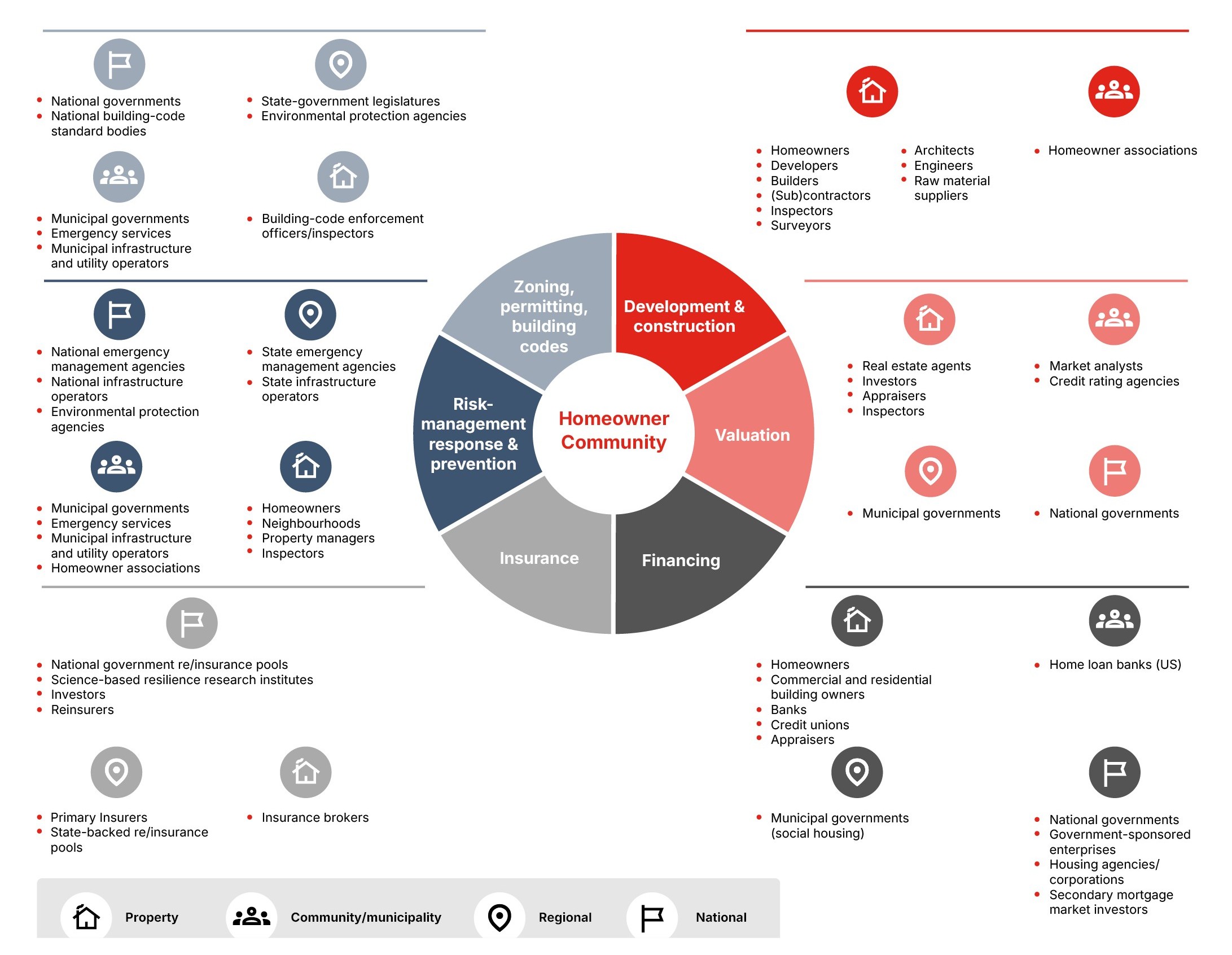
The risk profile of a property evolves throughout its lifecycle, shaped by the changing intensification of weather extremes and actions taken by various stakeholders (Figure 6) which can either increase or decrease its exposure and vulnerability over time.
FIGURE 6: STAKEHOLDERS WHOSE ACTIONS IMPACT THE EXPOSURE AND VULNERABILTY OF PROPERTIES TO EXTREME WEATHER
Source: Geneva Association
Homeowners
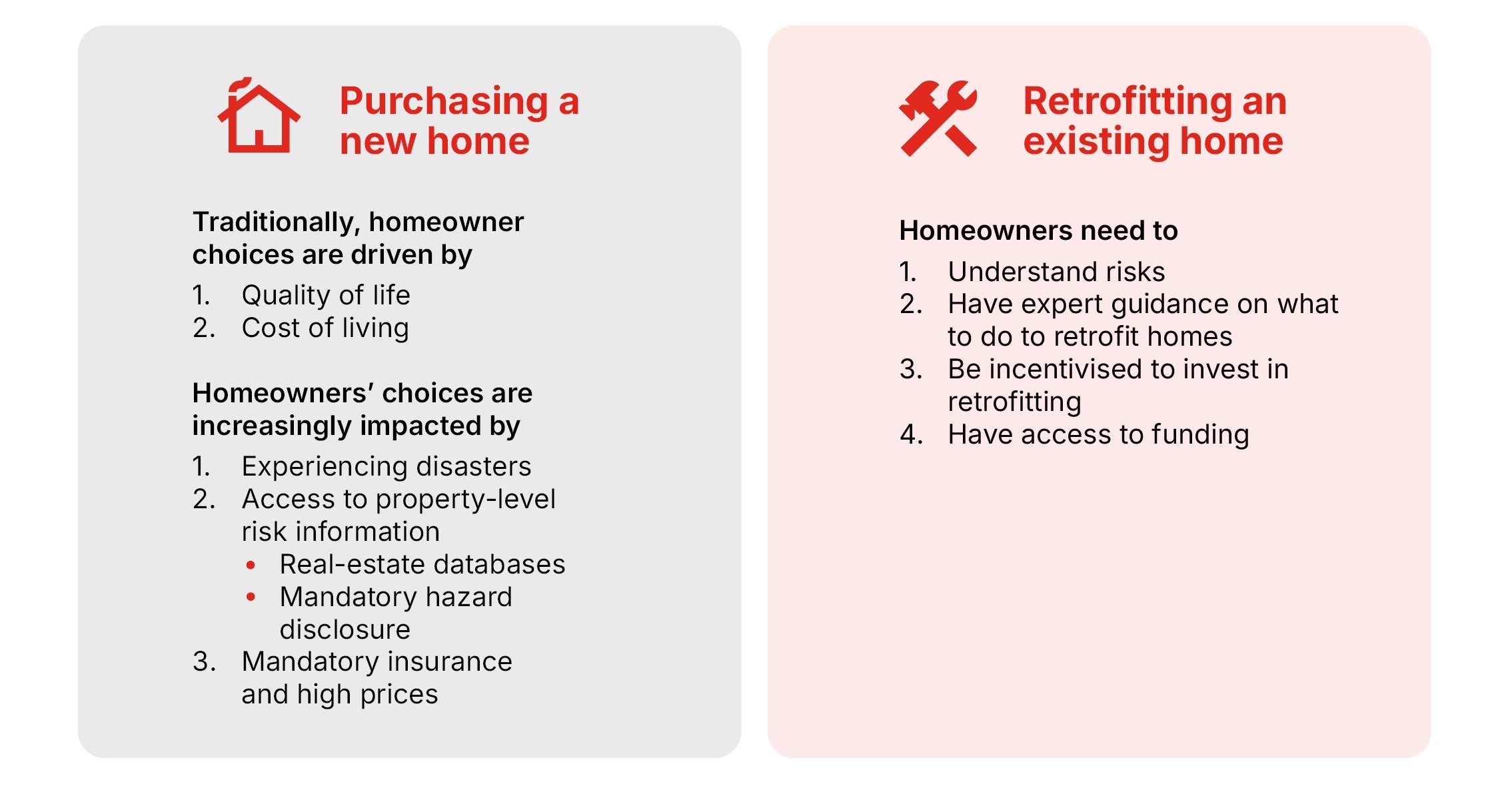
Though hazards are intensifying, quality of life68 and cost of living69 considerations continue to drive people to move into hazard-prone areas (Figure 7).70 Traditionally, the impact of extreme weather events on insurance availability and/or affordability has not significantly impacted homeowners' decisions to live in a specific area. For example, research shows that between 2023 and 2024, more people moved into floodand fire-prone areas in US states like Texas, Florida, and California than moved out.71
In case of a disaster, beyond experiencing loss or damage to personal assets, homeowners may experience challenges such as mental and other health-related issues, food insecurity, relocation, and income disruption. A lack of or inadequate level of insurance could significantly exacerbate the situation.
Homeowners are becoming more aware of the social and financial impacts of extreme weather, with rising insurance costs now consuming a larger share of their income (Figure 7). For example, in Australia, over 15% of homeowners pay insurance costs equal to or exceeding one month's gross income.72 Recent studies in the US suggest that frequent weather-related disasters, limited access to private insurance, federaland state-level requirements for mandatory insurance, and rising insurance rates linked to risk-based pricing are starting to influence homeowners' decisions to avoid hazard-prone areas.73
Ownership of a property may change throughout its lifecycle. Homeowners' investments in maintenance, upgrades, resilience retrofitting, and rebuilding could impact a property's exposure and vulnerability to extreme weather. Key hurdles to implementing resilience retrofits include inability to assess risks, lack of access to expert advice on what measures to take, and lack of incentives and availability of funding (disposable income, loans, or grants) to implement them (Figure 7).
FIGURE 7: FACTORS INFLUENCING HOMEOWNERS' DECISIONS
Source: Geneva Association
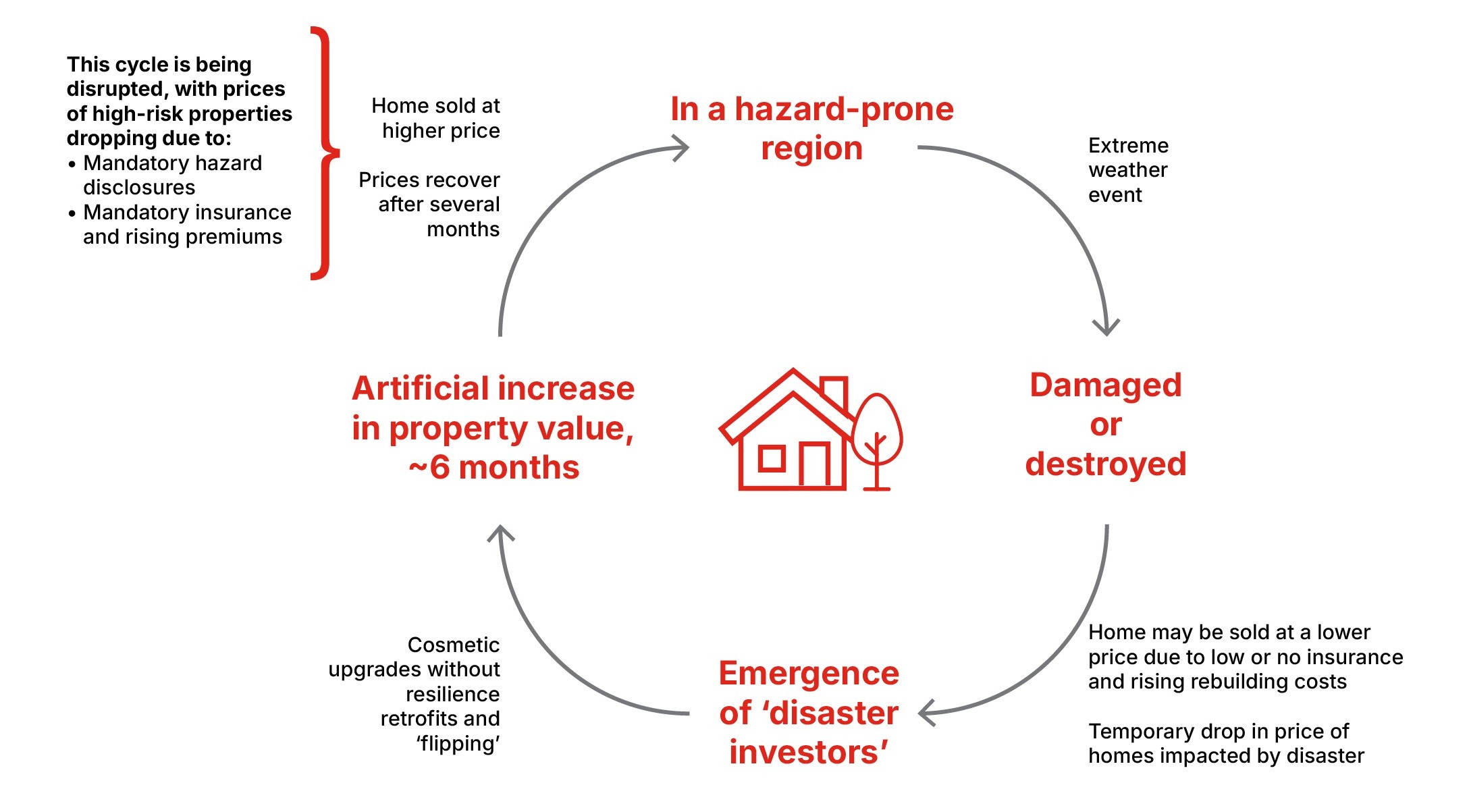
House prices drop following a disaster. Homeowners that lack appropriate levels of insurance and/or financial resources are more likely to sell their property, especially with rebuilding costs rising. In the US, ‘disaster investors’ – mainly small to mid-sized real estate developers – have profited from catastrophes by buying such damaged homes at low prices, making cosmetic upgrades, and reselling them, attracting buyers to highrisk areas and driving up prices of high-risk properties.74 However, this trend is changing as homebuyers become increasingly aware of a property’s risk due to ‘mandatory hazard disclosure laws’, which require sellers to report previous disasters that have impacted a property and the mitigation measures that were implemented (Figures 7, 8). Disclosure laws vary by jurisdiction, with around half of US states requiring property flood history and current insurance status. Similar requirements exist in other countries such as France, Japan, and Australia (New South Wales).75
FIGURE 8: TRENDS IN DEMAND-DRIVEN HOUSING PRICES AFTER A DISASTER
Source: Geneva Association
Homeowners could be incentivised to invest in property-level retrofits through increased returns on their investments. For example, in the US, it has been shown that building with updated codes can save up to USD 11 in future losses for every USD 1 invested.76 Furthermore, participation in FORTIFIED building retrofits,77 specifically the Strengthen Alabama Homes programme, can increase house values by approximately 7%.78
Communities
Community organisations, homeowners’ associations, and neighbourhood groups can explore sources of risk that impact homes in their community. They can undertake actions that can be taken collectively to reduce risks for all. Examples of collective suburban community efforts are already in evidence. For instance, the Insurance Institute for Business & Home Safety in the US provides detailed risk reduction strategies that enable homeowners to assess the wildfire vulnerabilities of their home and neighbourhood and to lay out a path to reduce their risk.79
Other initiatives may include lobbying local and state governments to undertake resilience initiatives, enforcing regulations on developers and contractors, and opposing urbanisation efforts such as densification. Communities could also strengthen collaboration with local government to protect public buildings offering community services.
Governments
Governments play a central role in protecting citizens against disasters caused by natural and man-made hazards. The ability of different layers of government to enable and finance resilience measures at the local and property levels may vary depending on the country’s governance system.80
3.3.1 Local governments and related agencies
Local governments and their agencies must respond to rising demand for affordable housing while avoiding development in high-risk areas. They manage zoning, permits, urban design, land alterations, and building code enforcements. Disasters result in reduced revenues, diverted funds for reconstruction, higher social recovery costs, increased borrowing, potential damage to essential infrastructure, and possible impacts on their credit rating.
Local governments rely primarily on property taxes for revenue. Without risk-based zoning, this reliance has allowed more homes to be built in hazard-prone areas. In the event of disasters, local governments often depend on national or federal government post-disaster aid to cover the resulting damage costs.
Local governments continue to face lawsuits from homeowners and communities for negligence or failure to adapt to climate change (Appendix 2). While many cases have been dismissed or withdrawn, litigation continues to increase.81
Risk-based land zoning, climate-resilient urban planning, updated building codes, and approving contractors and builders who conform to building beyond minimum resilience/retrofit standards in their jurisdiction (see developer and contractors below), could help local governments prevent risks for new constructions.
Reducing vulnerabilities in existing buildings in hazardprone areas remains a challenge as it requires significant investment in retrofits based on updated building codes.
Increasingly, local governments are incentivised to develop and implement resilience plans. Reasons for this include:
- Reduced national/federal funding due to postdisaster aid reforms that shift risk prevention responsibilities to local governments82
- Increased property values from improved local resilience, leading to higher property tax revenues83
- Higher return on investment from ex-ante resilience measures in infrastructure (e.g. USD 1 spent saves USD 6 in post-disaster costs)84
- Preventing lower credit rating from failing to invest in resilience, which could make borrowing more difficult85
- Avoiding litigation risks.86
3.3.2 State/provincial governments
In countries with federal government systems, the state/provincial layer plays a critical role in establishing resilience requirements, restrictions on building in high-risk zones, adoption of building codes, maintaining and enforcing resilience of state-owned infrastructure (in coordination with the federal government), availing funding, and enabling state and local projects.
While state/provincial governments have various revenue sources, in some countries, they have the authority to levy and collect property taxes, for example in the US, Canada, and Australia. Similar to local governments, this is both a deterrent as well as an incentive to support and implement resilience measures. Disasters not only result in reduced revenues, they also lead to diverted funds for reconstruction, increased borrowing, potential damages to essential infrastructure, and changes to the credit rating of the state/province. State governments can therefore benefit from similar incentives to local governments.
3.3.3 National/federal governments
National/federal governments coordinate, fund, and support large-scale projects that enhance resilience through major structural and non-structural solutions. They establish disaster response frameworks, issue official alerts and warnings, provide post-disaster aid, and deploy federal/national teams when state and local resources are insufficient. Some governments have reformed their national post-disaster aid programmes to transfer responsibility for resilience measures to local governments as a precondition for post-disaster funding.
Governments could develop forward-looking national strategies to identify and implement major projects that have a large-scale impact on managing local risks. Incentives for investing in local resilience include a healthy market-based insurance system, avoidance of risk transfer to taxpayers through the overuse of government-backed insurance pools, reduced post-disaster spending, reduced litigation risks (Appendix 2), and political benefits.87
Developers and contractors
Developers must adhere to local building codes. While aiming to keep costs low, they typically lack incentives to exceed minimum standards designed for life and safety. Local governments could increase monitoring and introduce incentives or stricter regulations for developers and contractors that go beyond minimum requirements.
Public and private infrastructure owners and utilities
Without retrofits and proactive maintenance to address extreme weather risks, private and public utilities and infrastructure owners could exacerbate local risks.
For example, poor maintenance of electric lines can trigger wildfires, as seen with PG&E in California.88 Infrastructure damage from extreme weather also increases risks to surrounding properties, and critical systems like sewage and drainage often cannot handle increased rainfall, as shown by recent flash floods.89
Failures have led to lawsuits, such as the 2019 PG&E case, which resulted in a USD 13.5 billion settlement for wildfire victims. Investing in retrofits and maintenance can reduce such litigation risks.90 Utilities also have an incentive to protect their equipment from being destroyed and/or failing by investing in resilience measures.91 Failure to do so could also lead to lowering of credit ratings.92
Other specialised agencies
Specialised agencies play a critical role in managing exposure and vulnerabilities to weather-related hazards. For example, river-basin authorities oversee water resources, flood control, environmental protection, and community needs, coordinating with local, state, federal, and cross-border entities. Forest conservation authorities play a key role in reducing wildfire risks.
Credit rating agencies
Increasingly, credit rating agencies consider factors like disaster preparedness and response capacities, adaptation plans, resilience investments, contingency funds, and insurance into account when setting credit ratings for governments, utilities, and companies. These strategies are often evaluated under the umbrella of sovereign risk and environmental and climate-related risks, which can impact a country’s economic resilience and fiscal health. Sovereign credit ratings have significant implications for a jurisdiction’s ability to borrow money, as they directly influence the cost of borrowing, the terms of debt, and investor confidence in government bonds. Credit ratings are also applied to different types of financial securities. They can affect the ability of mortgage lenders to securitise and sell mortgages, as well as to issue new loans. Credit rating can also affect the value of investment portfolios.
Property valuation, mortgage, and lending stakeholders
Stakeholders in the property valuation and mortgage and lending sectors could influence the behaviour of homeowners. According to 2021 data, 40.1% of homeowners in the US, 18.8% in the EU, and 27.6% in Japan relied on mortgages to finance the purchasing of their property.93 Box 4 provides a simplified description of how mortgage systems operate around the world.
Box 4: A simplified overview of mortgage and lending systems
Mortgage markets are made up of the primary market, where borrowers obtain mortgages, and the secondary market, where lenders sell mortgages to increase liquidity and investors use them as collateral, transferring risks to capital markets.94
- The primary market consists of banks, credit unions, mortgage brokers, and savings institutions. When a homeowner (borrower) decides to purchase or build a property, they apply for a mortgage to finance it. The lender approves the loan based on the borrower’s credit profile (e.g. credit score, income, debt-toincome ratio, down payment, employment history), a property valuation report and market conditions (e.g. interest rates, housing trends, unemployment, inflation). Mortgage approval is subject to securing property insurance and, sometimes, loan default insurance. Loan terms usually range from 10–30 years, depending on the jurisdiction. Borrowers may refinance every 3–5 years or sell the property during this period.
- In the secondary market lenders sell mortgages to loan aggregators, who bundle them into mortgage-backed securities (MBS) or issue covered bonds. These are then offered to investors, shifting mortgage risks to capital markets. The US issues only MBS, covered bonds are preferred in the EU, and Canada, Australia, and Japan use both. Aggregators, including Government-Sponsored Enterprises (GSEs), investment banks, and brokers, support the market by purchasing and guaranteeing loans, transferring risks to investors such as pension funds, mutual funds, insurance companies, and private investors. GSEs are used in the US, Canada, and Japan, transferring risks from lenders to the government and then to investors.95
Source: Geneva Association, based on Levitin and Reserve Bank of Australia96
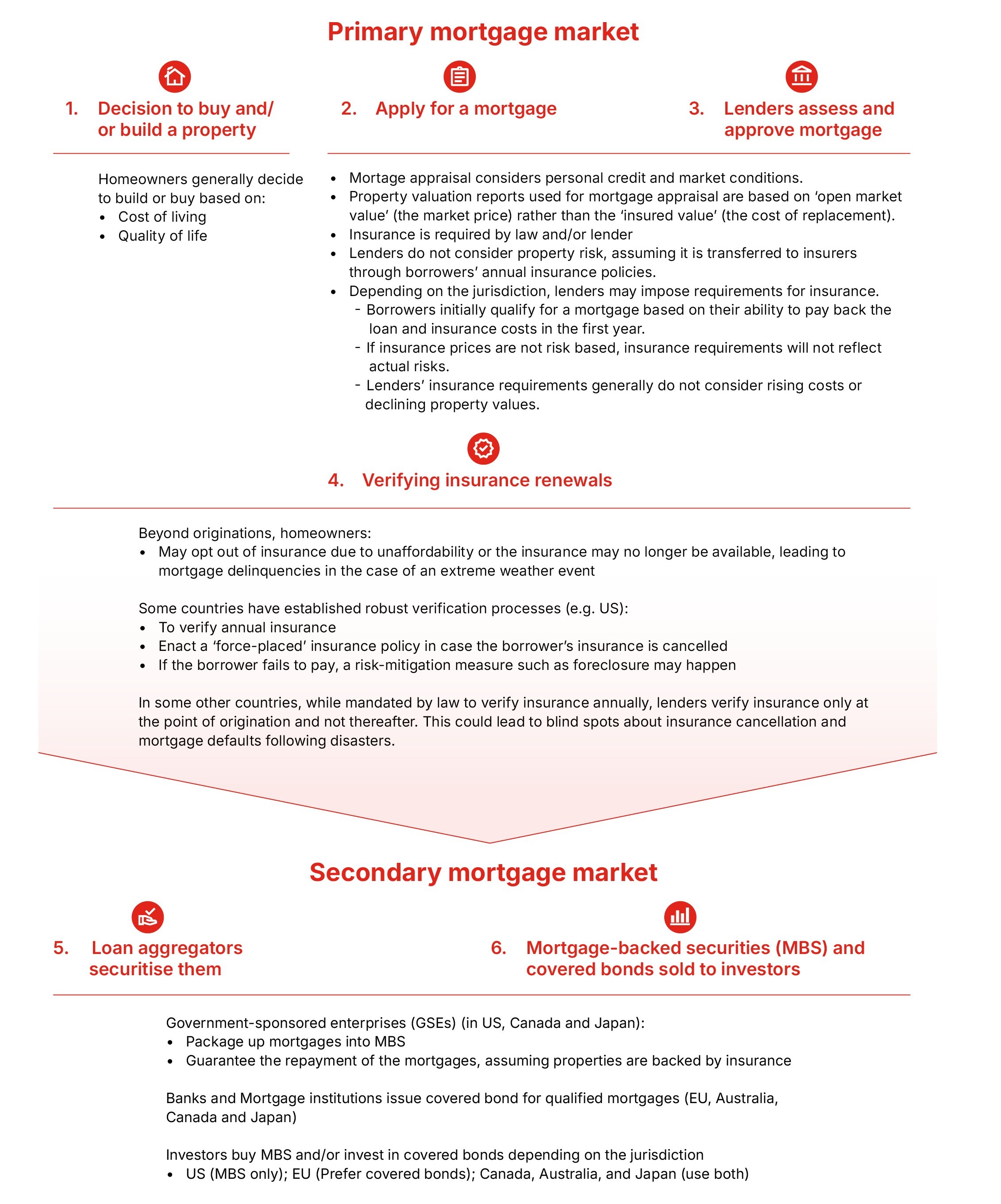
There are various nuances in the way valuations, mortgages, and insurance relate to homeowner choices (Figure 9). Traditionally, property valuation and mortgage systems consider the borrower’s credit status and market conditions for mortgage decisions; they typically do not consider the property’s extreme weather risks and assume that these risks are transferred to insurers through borrowers’ insurance.
3.8.1 Certified property appraisers
As a standard practice, a property valuation report is required for a mortgage appraisal and lending decision, prepared by a qualified certified property valuer or appraiser. The property valuation report is commissioned by the lender, or sometimes the borrower. It is prepared by a certified property appraiser and offers an independent assessment of the property’s market value, the physical state of the property, and local market conditions. Valuation reports typically focus on the ‘open market value’, which is the price a property would receive in the market. Notably, the report and subsequent mortgage appraisal process do not consider the insured value (cost of replacement or rebuilding), nor the property’s exposure and vulnerability to extreme weather.
FIGURE 9: LINKS BETWEEN PROPERTY VALUATION, MORTGAGE, AND INSURANCE SYSTEMS
Source: Geneva Association
3.8.2 Mortgage lenders
Insurance is often required by law and/or by lenders to ensure that borrowers maintain coverage throughout the mortgage term. This aims to transfer property risks (e.g. the cost of rebuilding in case of a disaster) to insurers, leaving lenders with only credit risks (Table 7).97 Studies show that lenders currently lack insight on property risks and insurance challenges.98
Specifically:
- Borrowers initially qualify for a mortgage based on their ability to afford the loan payment and insurance costs in the first year of coverage. There are no incentives or mandatory requirements for lenders to assess and factor in property risks in mortgage appraisals or for rate setting. In other words, two borrowers with identical credit conditions and home types could receive the same mortgage, regardless of the level of extreme weather risk of their respective properties.
- Lenders set broad requirements for the level of insurance coverage required for a mortgage based on property valuation and insurance premiums. However:
- If risk-based insurance is not used, this can bias insurance requirements. Rising insurance premiums in subsequent years could impact borrowers’ abilities to make periodic loan payments.
- According to Danko and Merlino (2024), higher annual home-owenership costs linked to rising insurance premiums and costs of rebuilding could also put downward pressure on property values, further undermining a borrower’s financial situation and increasing the risk of mortgage delinquency when a disaster happens.
- Monitoring and verification of borrowers’ annual insurance policies vary in different jurisdictions.
- Some countries have set up robust mechanisms with built-in mitigation measures to protect lenders and investors, but not necessarily borrowers. For example, in the US:
- ‘Servicers’, or in some cases lenders, perform mandatory annual insurance checks (insurance companies notify servicers if borrowers’ insurance is not renewed). Servicers manage mortgages after the mortgage has been issued.
- In some cases (e.g. if downpayment is less than 20%), borrowers are required to use an 'escrow account’ to ensure that property taxes and insurance payments on a home are collected and paid. This involves holding assets or money by a neutral third party.
- According to the Consumer Financial Protection Bureau (2023), in case the borrower fails to renew their annual insurance, servicers or lenders could put in place a ’forced-placed‘ insurance policy, which generally costs a lot more than a regular insurance contract, to protect the lender or mortgage owner (if the mortgage has been purchased by another institution) and not the borrower.
- If the borrower fails to pay, a risk-mitigation measure such as foreclosure could be initiated.
- Collection and analysis of data on rising insurance payments, insurance cancellations, and related mortgage defaults could help with the development of preventive measures for all. This information, combined with mandatory hazard disclosure rules, could also help raise awareness among borrowers to avoid purchasing high-risk properties.
- In some countries lenders may not always verify borrowers’ annual insurance renewals after the loan originations, as thoroughly. According to the Actuaries Institute (2024), this is mainly because ongoing monitoring is seen as too costly, especially when loan-to-value ratios decrease over time. In some countries, this service is provided by third parties. This could lead to blind spots on insurance cancellation and related mortgage defaults and a lack of data to support the development of preventive measures for lenders (or mortgage owners), GSEs, and investors in secondary markets.
- Some countries have set up robust mechanisms with built-in mitigation measures to protect lenders and investors, but not necessarily borrowers. For example, in the US:
TABLE 7: INSURANCE REQUIREMENTS FOR MORTGAGES IN SELECT COUNTRIES
| Country | Is insurance required by law or lender? | |
|---|---|---|
North America | ||
| Canada | Law: Mortgage default insurance (when down payment is less than 20%) Lender: Typically homeowners' insurance for catastrophic loss | |
| US | Law: Mortgage default insurance (when down payment is less than 20%) and or/flood insurance (for government-backed mortgages in areas with high flood risk) Lender: Typically homeowners' insurance | |
Australia | ||
| Australia | Lender: Typically mortgage default and homeowners' insurance | |
Asia | ||
| Japan | Lender: Typically life insurance as collateral | |
Europe | ||
| France | Law: Civil liability insurance for condominiums Lender: Typically life insurance as collateral and homeowners' insurance | |
| Germany | Lender: Typically homeowners' insurance and/or life insurance as collateral | |
| Italy | Law: Fire insurance Lender: Typically life insurance as collateral and homeowners' insurance | |
| Spain | Law: Fire insurance Lender: Typically homeowners' insurance | |
| UK | Lender: Typically homeowners' insurance | |
Source: Geneva Association, based on various sources99
Driven by financial regulators, large banks have conducted voluntary assessments of the impact of risks on their mortgage portfolios, for example in Canada (Box 5)100,101 and Australia.102 In the US, a Congressional Budget Office report found that federally backed mortgages cover properties that are expected to incur USD 190 billion in flood damage over 30 years.103
Box 5: Modelling physical climate risk of Canadian banks’ mortgage portfolios
In 2023, a study by the Office of the Superintendent of Financial Institutions (OSFI), the Bank of Canada, and Environment and Climate Change Canada (ECCC), five provincial financial regulators and nine P&C insurers analysed loan-level data for 7.7 million residential properties. Key findings included that high household lending in flood zones increases financial risks, and insufficient insurance worsens this.
Following the release of its Guideline B-15 on Climate Risk Management in 2023, requiring financial institutions to assess climate-related risks and develop a ‘Climate Transition Plan’, in 2024, OSFI partnered with Riskthinking.AI to provide climate risk data to around 400 financial institutions. Riskthinking.AI provided flood risk data for financial institutions of 11 metropolitan areas to georeference properties and assess their likelihood of future riverine and coastal flooding. The results are forthcoming.
Source: Geneva Association, based on Bank of Canada and OSFI104
3.8.3 Government-sponsored enterprises
Consultations with experts in the secondary market revealed that:
- Assessing the fair market value of the assets used to secure a loan is backward-looking, with physical climate risks and insurance costs not factored in. While GSEs are working to assess the materiality of these risks, they have not yet developed suitable methodologies for risk assessment, which would incentivise the market to manage these risks.105
- While impacts from extreme-weather events can be significant, they are often localised and appear less severe when assessed across entire mortgage portfolios.
- Most extreme weather events have coincided with rising property prices, causing only transient impacts on mortgage delinquencies and the cost of home ownership.
- There is a lack of data on delinquencies linked to insurance challenges given the historical stability of insurance rates and availability.
3.8.4 Mortgage regulators
Different parts of the mortgage system may be regulated by different bodies. Discussion with regulators confirmed that new methodologies are required to assess the extreme weather risks of properties, using a forward-looking approach that takes hazard characteristics under different scenarios into consideration. In the US, for example, the Federal Housing Finance Agency106 has noted that its methodology lacks specific procedures for monitoring lenders’ compliance.107
Market-based insurance stakeholders
P&C re/insurers take on risks that are created by rising extreme weather on the one hand, and significantly exacerbated by the decisions and processes of various stakeholders who directly and/or indirectly impact the vulnerability and exposure of properties on the other. By providing insurance, re/insurers help society cope with the financial impacts of rising weather risks.
3.9.1 Primary insurers
Protecting properties against natural catastrophes through risk pooling is central to the P&C insurance business model.108 Insurance allows individuals or businesses to transfer potential losses to insurers in exchange for regular premiums.109 This process is based on pooling premiums from multiple policyholders to cover the losses of a few, helping to minimise the financial impact on any single party. They use their risk assessment expertise to ensure solvency while covering claims.110 Rising risks drive insurers to raise premiums to ensure they can cover losses, be more selective in underwriting, limit offerings, or exit markets.
3.9.2 Reinsurers
Reinsurers play a critical role in creating conditions that enable primary insurers to transfer risks to reinsurers.111,112 Reinsurance allows local insurers to offer higher coverage limits, take on more clients and remain solvent in the face of catastrophic events. Further, reinsurers diversify local risk by transferring it globally. The principle of uncorrelated risk pooling reduces volatility and allows reinsurers to absorb shocks without requiring excessive pricing from any one location. Reinsurers diversify risks by geography and type, passing some on to other reinsurers or capital markets through risk securitisation, using alternative risk transfer (ART) instruments such as catastrophe (CAT) bonds. It should be noted that primary insurers also directly transfer some of their risks to capital markets with ART mechanisms.113
Over the past decade, increasing natural catastrophe losses and rising asset values have driven up reinsurance demand and, globally, reinsurance capacity continues to grow.114 However, for some perils in certain localities (Florida), rising claims have led to reduced reinsurance115 and the temporary exit of some reinsurers. This has resulted in price increases and gaps in primary insurers’ risk transfer capacity.116
3.9.3 Supporting local resilience to reduce the exposure and vulnerability of properties
Re/insurers invest significantly in understanding the drivers of rising risks and economic losses from extreme weather, and develop and offer solutions to help homeowners, communities, and governments take resilience measures with high local impact. For example:
- Re/insurers invest in catastrophe risk modelling tools, which have revolutionised pricing, underwriting, and portfolio management.117 These models are now widely used by governments, financial institutions, regulators, and other sectors.118 Efforts are underway to develop next-generation, forward-looking stochastic climate risk models.
- The industry also invests in research & development to better understand extreme weather events, their intensification due to climate change, and the causes of rising economic and insured losses. This includes in-house research (e.g. Swiss Re Institute, Munich Re’s NatCatSERVICE) and funding academic studies (e.g. AXA Research Fund, Allianz Climate Risk Award). Re/insurers support science-based organisations, such as the Canadian Intact Centre on Climate Adaptation and the US Insurance Institute for Business and Home Safety, which provide solutions for homeowners, businesses, local governments, and communities. The findings from these efforts are translated into actionable guidelines and distributed through innovative channels to target audiences.
- Re/insurers engage with building code development and standard-setting bodies to update codes and actively advocate for their adoption and enforcement by state and local governments.
- In collaboration with conservation organisations, re/insurers invest in restoring nature-based systems to enhance resilience to extreme weather. For example, the Nature Force, involving 15 insurers and Ducks Unlimited Canada, invested in wetland restoration to reduce flood risk in urban communities.119
- Re/insurers have developed parametric products that trigger payouts based on physical parameters (e.g. wind speed, precipitation) once a threshold is met.120 Initially used in emerging markets, these solutions are now being adopted in advanced economies, offering immediate payouts after an event, unlike traditional indemnity insurance, which has delayed claims settlements.121 Re/insurers are also developing parametric solutions to protect coral reefs, mangroves, wetlands, and forests from storm surges, floods, and wildfires. Additionally, ART solutions like CAT bonds and resilience bonds enable re/insurers and governments to transfer risks to capital markets and promote investment in resilient infrastructure.122,123
- Some insurers offer premium or deductible discounts to households that retrofit their homes to withstand extreme weather, such as roof reinforcement, impact-resistant windows, or upgraded plumbing and electrical systems. In some regions, insurance regulators mandate such discounts for risk-reduction measures.124
Government-backed insurance pools
Governments sometimes intervene in re/insurance markets by creating government-backed re/insurance pools, with the aim of stabilising insurance markets, particularly where private re/insurers’ capacity may be strained from events like extreme weather or terrorism. Based on a review of 14 government-backed re/insurance pools (Appendix 3), this section outlines why such interventions do not necessarily address the rising risks from growing exposure and vulnerability of properties to extreme weather, leading to challenges for the private insurance market, and why they could even exacerbate the situation in some cases.125
Most pools are solidarity-based, ensuring insurance availability for those in need, with government subsidies encouraging homeowners to purchase insurance. Some pools require mandatory coverage offers from insurers or mandatory insurance purchases from homeowners. Pricing is often not based on actual risks. Most pools are permanent, except for the UK’s Flood Re, which is time-limited and aims to promote resilience and foster expansion of private insurance by 2039, when its term comes to an end. Some pools incentivise risk-reduction measures, like France’s Caisse Centrale de Réassurance, by offering deductible discounts for communities with risk prevention plans, though their effectiveness is unclear.
While these pools may stabilise markets in the short term, they do not address the root causes of rising insurance losses or long-term challenges with the availability and affordability of market-based insurance in regions with rising risks.126 In addition, homeowners may be underinsured, as pools typically cover the home’s actual cost rather than the replacement cost, and may underestimate risks due to subsidised premiums, allowing continued living in high-risk areas without incentives to reduce property risks.
Government-backed insurance pools may face pressure to offer low-cost premiums, shifting costs to taxpayers and potentially sidelining private insurers. In some US states, there is growing reliance on state-subsidised insurance pools, known as FAIR plans.127 With private insurers limiting or ceasing coverage in some regions, FAIR plans are increasingly acting as the ‘insurer of first resort’, though they are designed to be the ‘insurer of last resort’. Policyholder subscriptions for FAIR plans hit a record high in 2023, surpassing USD 1 trillion in coverage.128 For example, California’s FAIR plan subscriptions grew by 164% (2019–2024) and Florida’s Citizens Property Insurance Corp by 193% (2017–2024).129 Rising demand and increasing risks threaten their solvency. For instance, in 2024, Florida’s Citizens transferred over 428,000 policies to private insurers through its ‘depopulation’ programme.130
Insurance regulators
Insurance companies are regulated to protect consumers, ensure market stability, and maintain fairness. The debate over insurance availability and affordability has long been a priority for insurers and regulators.
With rising risks and insufficient risk-reduction measures, regulators must balance consumer protection and the financial health of insurers.131 In some cases, efforts to lower insurance prices (or limit their increases) have undermined insurers’ ability to offer policies that reflect actual risks, which has led to some insurers limiting or ceasing underwriting of new policies in high-risk areas.
Some regulators are focusing on creating a desirable environment for market-based insurance availability by working with governments and other stakeholders to introduce resilience measures to reduce risks.132
Reducing risks by investing in local resilience
No country or region has comprehensively addressed rising extreme weather risks, leading to growing insurance challenges. However, some initiatives show promise in scaling local resilience.133 Processes like property valuation, mortgage lending, and insurance provision, particularly through government-backed insurance pools, may need to be reconsidered to incentivise behavioural changes, such as avoiding high-risk areas and investing in property-level resilience.
This section presents a two-tier approach to address increasing risks and improve local resilience. Tier 1 focuses on scaling effective current approaches, while tier 2 calls for structural reforms in property valuation, mortgage, and insurance systems to drive behavioural changes (Table 8).
Tier 1: Scale up targeted local resilience
4.1.1 Develop a shared understanding of hazards and local risks
Collaboration between national or state governments and the insurance industry can help prioritise regions where public policy, legislative reforms, and regulatory developments are needed to enforce resilience requirements. These partnerships can also identify and prioritise large-scale resilience projects, aligning funding to support these efforts. Examples include:
- Australian Hazards Insurance Partnership: Launched in 2023, this partnership between the Australian Government, Australian Climate Service, six insurers, two reinsurers, and the Insurance Council of Australia addresses insurance affordability and prioritises flood mitigation.134
- Canadian National Working Group on Financial Risk: Co-chaired by Public Safety Canada and the Insurance Bureau of Canada, this group identified high-flood-risk properties and proposed financial solutions, leading to expanded flood insurance and a National Flood Insurance Programme with resilience measures for high-risk areas.135
Such initiatives could also drive the expansion of mandatory hazard disclosure laws across all jurisdictions, helping homeowners make informed decisions when building or buying in high-risk areas. Additionally, real estate databases providing hazard information are increasingly influencing homeowners’ decisions.136
TABLE 8: A TWO-TIER APPROACH TO SCALING UP RESILIENCE AT THE LOCAL AND PROPERTY LEVELS
| GOAL | STAKEHOLDER | ACTION | |
|---|---|---|---|
| Tier1 | Targeted, scaled local resilience measures that are proven to be effective |
|
|
| |||
| |||
| |||
| Enhanced know-how among key stakeholders and adoption of latest innovations |
|
| |
| |||
| Tier 2 | Changes to property valuation and mortgage systems, linked with insurance to impact homeowner decisions |
|
|
| |||
| |||
| |||
| |||
|
Source: Geneva Association
4.1.2 Develop solutions for preventing risks in new construction
Mitigating risks in new construction versus existing buildings requires distinct approaches. To reduce risks in new buildings, governments must regularly update and enforce building codes that promote resilience, particularly for hazard-prone regions. Risk-based land zoning can prevent construction in high-risk areas deemed unsuitable for residents while ensuring new properties comply with updated codes in other regions. Policies for voluntary relocation or buybacks in disaster-prone regions, particularly for vulnerable communities, may also be needed, though politically sensitive.
Furthermore, risk awareness and mandatory hazard disclosure laws are encouraging homeowners to avoid high-risk areas.
Regular building-code updates
- Several countries are enhancing resilience through updated building codes. Japan updates its codes regularly, with new fire resilience measures added in 2023. Canada’s 2026 updates will integrate climate change resilience into its National Building Code.137 Australia’s 2025 Building Codes will focus on resilience, potentially saving AUD 4 billion annually.138 The EU’s 2025–2026 Eurocodes will address climate impacts on structural design, though local updates will also be needed.139 In the US, the Insurance Institute for Business and Home Safety (IBHS) has developed science-based standards for hurricaneand wildfire-resistant buildings.
- A successful example is the rebuilding of Paradise, California, after the 2018 Camp Fire, which destroyed 19,000 structures and caused USD 20.6 billion in losses.140 After insurers stopped issuing policies, the local government enforced stricter building codes and zoning, requiring homes to meet IBHS Wildfire Prepared Home standards.141 By January 2025, 2,629 homes and 581 multi-family units were rebuilt and Mercury Insurance returned, offering coverage at lower premiums than the state’s FAIR plan.142,143
Risk-based land zoning
- Restricting new buildings or using more stringent building codes in disaster risk zones: The 2020 amendments to Japan’s Building Standards Act allow local governments to designate disaster risk zones where residential construction is prohibited or subject to stricter building codes.144 This is in addition to mandatory flood risk disclosures from realtors, based on flood hazard maps provided by the Ministry of Land, Infrastructure, Transport, and Tourism.145
- Policies for voluntary relocation and buybacks of unsuitable properties for residential use: In Australia, the Queensland Voluntary Home BuyBack Programme and Resilient Homes Fund were launched after the 2021–2022 Southern Queensland floods, which damaged 7,000 homes. This was a collaborative effort between the Australian and Queensland Governments, implemented under the Disaster Recovery Funding Arrangements, which raised AUD 741 million to support the programme. The buyback programme, which is managed by the Queensland Reconstruction Authority in partnership with local authorities, identifies at-risk homeowners and offers a buyback of their properties based on pre-flood and current market values. Bought homes are either demolished or relocated, with land then rezoned for non-residential use. By May 2024, 628 homes had been settled. Projections suggest that 4% of Australian properties may be deemed unsuitable for residential use by 2030.146
A similar initiative in New Zealand followed the 2010–2011 Christchurch earthquakes, where 7,400 properties were zoned for buyouts. Buyouts were initially based on 2007–2008 property valuations, with lower offers for underinsured properties. In 2012, buyouts were extended to vacant, commercial, and uninsured properties at 50% of land value, later revised to 100% after legal challenges.147
4.1.3 Focus on the most impactful retrofitting measures
Retrofitting existing buildings may exceed local capabilities and resources. Reducing exposure and vulnerabilities in identified regions requires targeted actions by governments, infrastructure owners, utilities, and hazard-management agencies.
- Governments can pass legislation to scale up local resilience while investing in high-impact projects and retrofitting critical infrastructure. Notable examples include:
- The ‘Room for the River’ programme (2000–2015) in the Netherlands involved converting reclaimed land in Noordwaard into floodplains, reducing flood risks for 60,000 people.148
- Germany has invested in flood-risk management and integrated nature-based systems with critical infrastructure. Its National Flood Protection Programme committed EUR 5.4 billion over 20 years, including projects like relocating dykes and restoring 600 hectares of floodplain in Lödderitzer Forest to reduce flood levels.149
- The Japanese government, alongside the city of Tokyo, developed the world’s largest underground floodwater diversion system – the Metropolitan Outer Area Underground Discharge Channel – at a cost of JPY 230 billion. Since 2006, it has prevented JPY 150 billion in flood damage. In 2023, a JPY 37.3 billion project was launched to strengthen levees and improve drainage.150
- National or state/local home fortification programmes, supported by legislation, funding, and incentives, have a demonstrated track record of enhancing property-level resilience.
- The Strengthen Alabama Homes programme, launched in 2011, is a collaboration between local governments, insurers, and IBHS’s FORTIFIED standards (see Box 6 for highlights).151 The programme proved effective, with over 95% of FORTIFIED homes in coastal Alabama sustaining little to no damage during Hurricane Sally (2020). The programme also helps maintain affordable insurance despite high hurricane risks.152 This model has been expanded to other states such as Louisiana and Mississippi.153 In Louisiana, funding for the programme is currently allocated from the state government budget through legislature each year.
Box 6: Strengthen Alabama Homes (SAH) programme
Reason for launch
- Alabama ranks 4th for major hurricanes among US states
Objectives, actions, and funding
- Legislative developments: 2011 SAH Act passed to lower insurance rates and improve home resilience
- Application: First come, first served; quarterly application period
- Compliance: IBHS FORTIFIED standard certification
- Grants: Max USD 10,000 for single-family homes (USD 106 million since 2016)
- Funding: Through increased insurer licensing fees
Certification process
- Initial assessment: By FORTIFIED-certified evaluator, providing steps for compliance
- Bidding: Homeowners select three state-certified contractors, grant paid to chosen one
- Certification: A FORTIFIED-certified evaluator confirms compliance
Outcomes and benefits
- Number of homes FORTIFIED: 50,000 as of September 2024 (17% from SAH)
- Protection: 95% FORTIFIED homes had little to no damage after Hurricane Sally in 2020
- Valuation: 7% increase in property value
- Insurance premiums: 35–45% reduction in property insurance premiums for coverage of the wind component of hurricanes
Source: Geneva Association, based on data from various sources154
Other initiatives could also incentivise behavioural change to reduce exposure and vulnerabilities:
- Mandatory disclosure laws. Governments should implement mandatory disclosure laws to provide homeowners with critical risk information.
- Co-investment in nature-based systems. National, state, and local governments could collaborate to co-invest in nature-based solutions, enhancing the resilience and lifespan of public infrastructure. For example, in California’s Sacramento Valley, restoring 60,000 hectares of floodplains through the Sutter and Yolo bypasses diverted 80% of floodwaters, easing pressure on levees and improving flood protection for Sacramento.155
- Digital tools for homeowners. Specialised, non-profit organisations, funded by national governments and the insurance industry, are developing digital tools to help homeowners assess and improve resilience to extreme weather.
- In Australia, the Resilient Building Council, with federal funding, launched the free Bushfire Resilience Rating Home Self-Assessment app in 2023, which provides tailored bushfire resilience recommendations. Over 6,600 households had invested AUD 44 million in upgrades by March 2024, receiving lower mortgage rates and insurance discounts for their efforts.156
- In the US, the Federal Alliance for Safe Homes developed the Inspect to Protect online tool, which assesses home compliance with building codes and resilience, and offers improvement suggestions.157
- Liberty Mutual’s WeatherReady app, developed with the IBHS in 2022, provides home resilience assessments and recommendations to reduce extreme weather risks. Over 50,000 households have used the app, with 20% implementing improvements.158
4.1.4 Redesign post-disaster aid to incentivise ex-ante resilience measures
As disaster costs rise, many governments are shifting focus from post-disaster aid to proactive resilience measures. Some are amending legislation and investing in large-scale infrastructure projects while transferring the financial burden of local damages to local authorities and homeowners, encouraging reliance on marketbased insurance. Others are reforming post-disaster aid programmes to increase response efficiency and direct funds toward ex-ante, local-level resilience projects.
Following the 2009 update to the Federal Water Act, individuals at risk of flooding in Germany must take precautionary measures, with the federal government focusing on high-impact resilience projects rather than compensating for damages. Local governments and homeowners are expected to cover damages through insurance or reserves.159 In Canada, the Disaster Financial Assistance Arrangements programme has been modernised based on recommendations from the 2022 Expert Advisory Panel. As of April 2025, the updated programme aims to streamline disaster support and allocate funding for resilience projects in high-risk regions.160
4.1.5 Increase the use of resilience guidelines to enable informed decisions
Re/insurers invest heavily in research and development to develop resilience measures and translate them into actionable guidelines for homeowners, businesses, local governments, and communities, using innovative channels to reach target audiences. For example, insurance-supported, science-based organisations like the IBHS and the Intact Center on Climate Adaptation (ICCA) create practical guidelines and tools, which are disseminated through traditional and social media, and partnerships with local governments and banks (Table 9). In Canada, the ICCA, in collaboration with technical colleges, has developed certified training for real estate brokers, insurance brokers, home inspectors, and mortgage appraisers to help them inform homeowners about property risks.161
TABLE 9: PROGRAMMES AND GUIDELINES PROVIDED BY INSURANCE-INDUSTRY-FUNDED CENTRES OF EXCELLENCE
| Insurance Institute for Business and Home Safety | Intact Center on Climate Adaptation |
|---|---|
| FORTIFIED building standard A building certification standard to strengthen homes against extreme wind and hail. | Climate-ready infographics Provide easy and cost-effective steps to protect homes and communities from extreme heat, flooding, and wildfires. |
| Wildfire Prepared A building certification standard to improve resilience for wildfires. | Home Flood Protection Check-Up An online self-assessment tool on actions to qualify for municipal subsidies and insurance discounts. |
| Home Disaster Ready Guides Guides to help property owners protect homes and businesses before, during, and following hurricanes, thunderstorms, winter weather, and wildfires. | Municipal Flood Risk Check-Up Self-assessment questionnaire and actions to reduce flood risks. |
Source: Geneva Association, based on IBHS and ICCA162
4.1.6 Develop and deploy innovative solutions for scaled adoption
Over the past decade, innovations to address physical climate risks have surged, including risk monitoring and assessment, proactive maintenance, risk reduction and prevention, changes to insurance and mortgage analytics, and risk-based insurance pricing. This has been driven by philanthropic, public-, and private-sector funding, an entrepreneurial mindset, and the push for a safer, more resilient society. However, market demand and adoption at the local level are crucial for deploying these solutions. Examples of how demonstrated technologies have changed the way society manages extreme weather risk in recent years are provided in Box 7.
Box 7: Innovative technologies to enhance extreme weather risk management
Forward-looking climate risk modelling: Riskthinking.AI combines climate science, big data, and AI to model climate risks with a forward-looking, stochastic approach, covering over 80,000 companies’ assets.163 Their platform captures extreme events and provides insights beyond deterministic models, helping market analysts, stock exchanges, investors, and regulators make informed decisions.
Housing and mortgage valuation with climate risk and insurance pricing: DeltaTerra Capital assesses property valuations and mortgage default risk related to physical climate risk and insurance, providing actionable insights for institutional investors, lenders, and policymakers.164
Early wildfire suppression: FireSwarm Solutions uses AI-powered coordination software and ultra-heavy-lift drones for rapid wildfire suppression, detecting and stopping fires before they escalate.165 They collaborate with governments and utilities in wildfire-prone regions.
Fire-risk management coordination among governments and utilities: Vibrant Planet’s AI-driven platform helps fire districts, counties, and utilities prioritise and coordinate wildfire risk management plans across 70 million acres in the Western US, providing real-time planning with quantified risk reduction.166
Proactive infrastructure maintenance: Startups like Airobotics, Percepto, and Firmatek use drones, sensors, and data analytics to monitor and assess weather-related risks to critical infrastructure in Germany, Canada and the US, enabling proactive maintenance, reducing downtime, and enhancing safety.167
Resilient home construction: The SABS™ building system uses innovative materials and construction approaches to create energy-efficient, hurricane- (winds up to 260 mph/420 kmh), flood-, and fire-resistant homes.168 Approved by the International Code Council, the SABS technology reduces construction costs by 15–30% and has withstood extreme conditions in Florida and Hawaii. A training centre is opening in California following increased demand after the 2025 Los Angeles fires.
Source: Geneva Association, based on Gongloff and Castenson169
4.2 Tier 2: Implement structural changes to valuation and mortgage systems to impact homeowner decisions
4.2.1 Use risk-based premiums, factor rising cost of home ownership into mortgage appraisal, and monitor borrowers’ insurance annually.
Certified property valuers or appraisers could include an assessment of the insured value of a property (i.e. the cost of rebuilding after a disaster), building codes used, and any retrofits that have been undertaken to strengthen the property’s resilience in property valuation reports. Mandatory hazard disclosure laws would allow for the inclusion of this information.
This may require property valuers to obtain additional training to be able to assess extreme-weather-related risks as well as the insured value of a property. Lenders could:170
- Integrate actual property risks, as reflected in risk-based insurance pricing, to set insurance requirements and evaluate borrowers’ premiumpaying abilities before mortgage approval.
- Inform underwriting and rate decisions using forward-looking mortgage stress tests that consider increasing insurance costs and possible property value declines over the term of the mortgage.
- Verify property insurance availability annually and monitor mortgage delinquencies related to borrowers’ lack of insurance and utilise this data to develop preventive measures.
- Raise borrower awareness of key hazards and provide requirements for insurance-coverage levels aligned with actual risks and the cost of owning the property before coverage approval.
- Offer loans to qualified borrowers for property retrofits, such as roof reinforcement and wildfire defences. This incentivises the promotion of local resilience through revenue creation.
Government-sponsored enterprises and investors in secondary markets could require lenders to assess the adequacy of borrowers’ property insurance annually and develop better methods to evaluate the impact of extreme weather on affordability and property value prior to the origination of new loans.
Mortgage regulators could work with lenders to create assessment methods for extreme weather risks, preventing these risks from entering secondary markets. Mandatory monitoring of borrowers’ insurance by lenders could be enforced by regulators.
4.2.2 Strengthen government-insurance industry collaboration to support the implementation of home resilience certification programmes
This could be enabled by offering incentives to homeowners to retrofit homes, which could lead to lower mortgage rates for certified homes, impacts on home valuation, and insurance premiums. For example:
- In the US, the Strengthen Alabama Homes certification involves an IBHS FORTIFIED evaluator, with certification granted once standards are met and verified.
- In Australia, the Bushfire Resilience Rating Home Self-Assessment app requires homeowners to obtain certification from Fire Safety Engineers to qualify for insurance and mortgage reductions.
4.2.3 Enhance insurance industry partnerships to raise awareness and strengthen resilience
Re/insurers could:
- Engage with governments to build a shared understanding of hazards, identify regions with insurance affordability issues, and recommend highimpact resilience projects.
- Invest in R&D for next-generation risk models, offering forward-looking, stochastic analysis to identify regions facing rising insurance challenges.
- Continually innovate products to better meet policyholders’ needs and enhance resilience (e.g. preserving nature-based systems through investments and novel insurance products).171
- Develop digital services, such as apps, to help homeowners assess and reduce property risks.
- Partner with academic institutions to expand certified training for professionals to guide homeowners in reducing risks through retrofits.
4.2.4 Improve government-backed re/insurance pools to promote and support resilience measures
Government-backed insurance pools could:
- Use risk-based pricing
- Only serve as insurers of last resort
- Prevent further development in high-risk zones by withholding insurance from new homeowners unable to secure private market coverage due to high property risks
- Set clear resilience goals with timelines, encouraging governments and homeowners to invest in localand property-level resilience
- Incentivise property resilience through deductible and premium discounts or provide extra funds for strengthening properties.
4.2.5 Increase support from insurance and lending regulators for resilience measures
Financial service regulators could actively promote and support resilience measures by:
- Allowing risk-based pricing to signal risk levels to stakeholders, including homeowners, governments, and mortgage lenders.
- Encouraging local governments to adopt risk-based land zoning and updated building codes, advocating for government investments in localand propertylevel resilience and collaborating with government agencies on resilience initiatives.
- Educating the public on the private insurance model and the importance of risk-based pricing to build trust.
- Advocating for the reform of government-backed insurance pools so they are risk based and include resilience requirements.
4.2.6 Include resilience measures in credit ratings
Credit rating agencies could update their processes to incorporate extreme weather risks and related resilience strategies, for example for governments and lenders via rated mortgage credit securities.
Challenges ahead
This report seeks to identify how risks associated with extreme weather in the housing sector stem from socioeconomic decisions made by a range of different stakeholders. It emphasises the urgent need for a paradigm shift towards a collective, all-of-society approach to minimise exposure and strengthen local resilience to extreme weather risks. Fostering interand cross-sectoral collaboration is crucial to developing and scaling up innovative solutions and aligning goals, priorities, and resources to increase investments in local resilience and develop preventive measures to reduce risks.
Investing in decarbonisation yields long-term financial returns by tackling the root causes of climate change, including weather-related hazards and shifting climatic conditions. But there is also a critical need to increase investments in adaptation and local resilience to address short-term challenges for vulnerable communities and limit exposure and vulnerability over the long term.
Appendices
Appendix 1: Projected increase in the frequency and severity of floods and wildfires
REGIONS WITH PROJECTED CHANGES IN THE FREQUENCY AND SEVERITY OF A) RIVER FLOODS AND B) HEAVY PRECIPITATION AND PLUVIAL FLOODS UNDER A 2°C SCENARIO
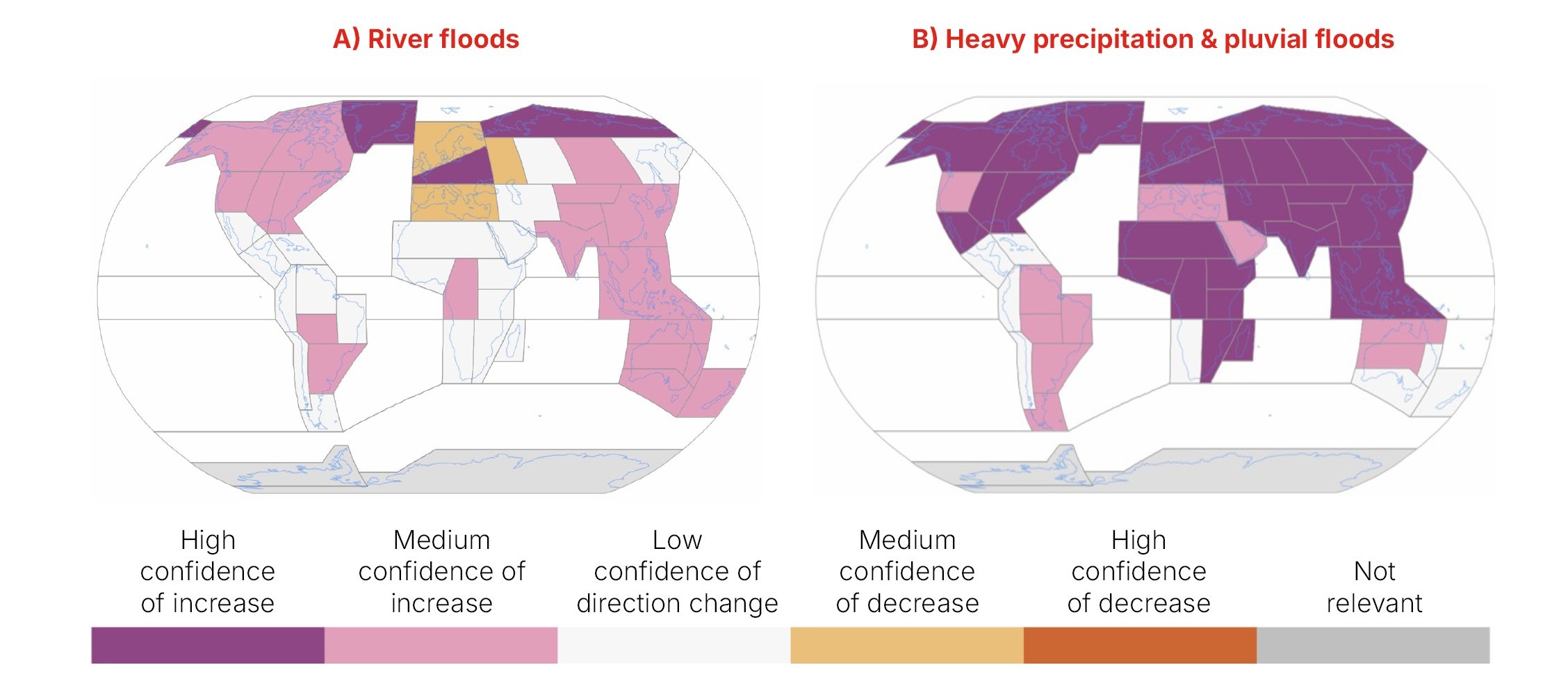
Source: IPCC172
REGIONS WITH PROJECTED CHANGES IN THE FREQUENCY AND SEVERITY OF WILDFIRES UNDER A 2°C SCENARIO
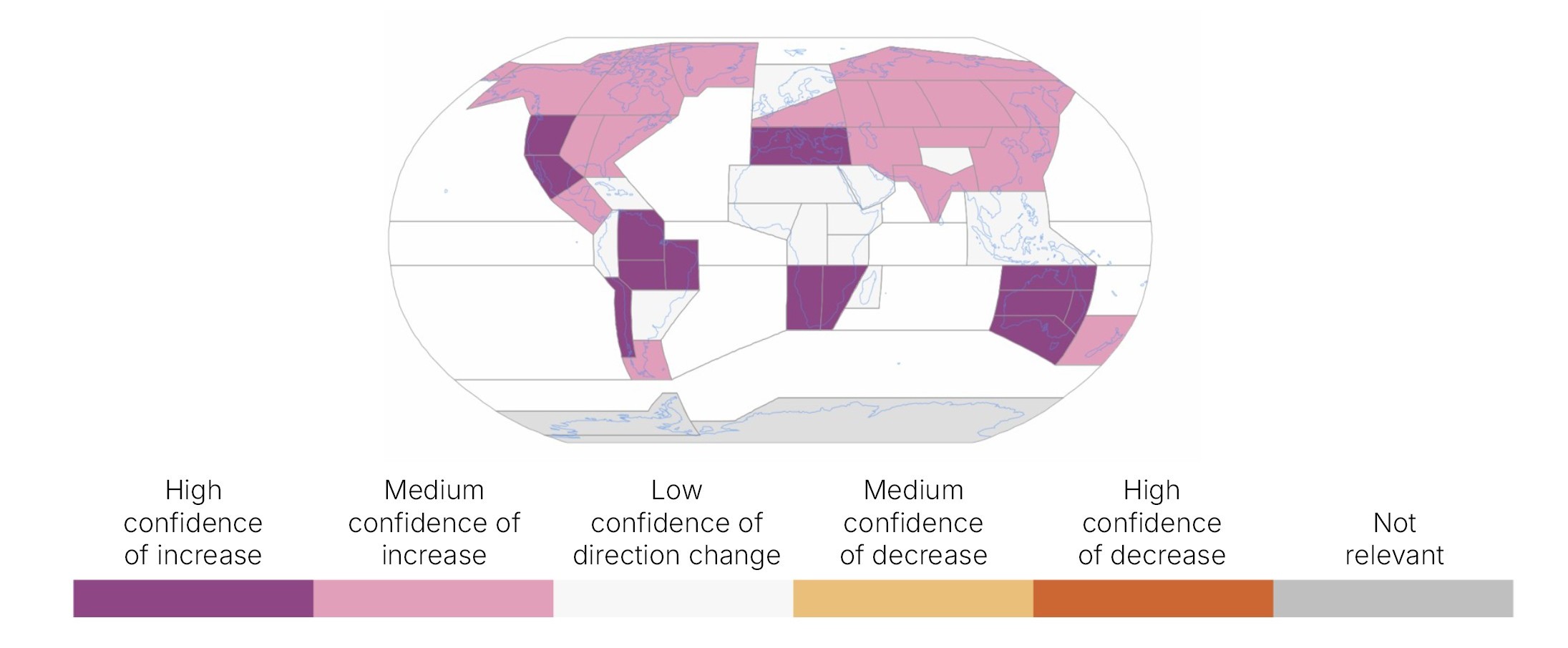
Source: IPCC173
Appendix 2: Litigation cases brought against local governments and agencies
| Year | Jurisdiction | Defendant | Litigant | Basis for litigation | Results to date |
|---|---|---|---|---|---|
US | |||||
| 1999 | Texas | Harris County and Harris County Flood Control District | 400 homeowners | Exacerbated flood damages from upstream, without risk reduction and prevention measures | Municipal governments were found not liable to avoid setting a precedent for holding governments liable for hurricanes allegedly caused by global warming |
| 2005 | New Orleans | United States Army Corps of Engineers, United States of America | Several individuals | Dredging method exacerbated Hurricane Katrina's effects | Claims were dismissed |
| 2014 | Chicago | Around 200 Chicago-area local governments | Farmers Insurance | Inadequately prepared sewers and storm water drains for 2013 floods | Lawsuits were withdrawn shortly after they were filed |
| 2015 | lllinois | Berger Excavating Contractors, Inc., Metropolitan Water Reclamation District, Maine Township, and Park Ridge | Class action led by an individual | The stormwater system caused flooding in 2008, due to inadequate preparedness | Claims were dismissed |
| 2019 | California | Pacific Gas & Electric Co. | Victims of four major wildfires in California, 2015-2018 | Failure to prevent the onset of wildfires due to mismanagement of electrical equipment | Settled with payment of USD 13.5 billion, resulting in a bankruptcy filing |
| 2024 | California | California FAIR Plan Association, the Department of Insurance, and Insurance Commissioner | Class action led by an individual | Selling policies that fail to properly cover fire damage and not enforcing laws appropriately | Ongoing |
Canada | |||||
| 2016 | Ontario | Ontario Ministry of Natural Resources | Class action led by an individual | Failure to adapt to changing climatic circumstances by managing water levels in several lakes, leading to property damage | Plaintiffs discontinued their case in 2018 |
| 2020 | Ontario | Town of Oakville, Halton Region Conservation Authority, The Regional Municipality of Halton, The Corporation of the Town of Milton, His Majesty the King in right of Ontario, and Mayor Robert Burton | Class action led by an individual | Development decisions starting in 1986 expanded the floodplain and increased flood risks | Settled with payment of USD 500,000 for flood-risk reduction information and education development |
Source: Sabin Center Climate Change Litigation Database, Superior Court for The State of California, Ontario Superior Court of Justice, and Almasy and Holcombe174
Appendix 3: Government-owned or -subsidised insurance schemes
| Jurisdiction/scheme | Scope | Structure | Premiums & payouts | Financing & risk transfer | Resilience requirements | ||||||||
|---|---|---|---|---|---|---|---|---|---|---|---|---|---|
| Peril | Type of property covered | Mandatory element (offer or uptake) | Type of scheme | Duration | Role in the market | Premiums | Payouts | Public financing | Risk transfer to private reinsurance markets | Insurance policies | Public measures | Public/private measures | |
| Australia Australian Reinsurance Pool Corporation | Cyclones | Broader (e.g commercial properties) | No mandatory element | Public-private | Permanent | Residual provider | Risk based | Indemnity based | Public guarantee | No | Premium discounts for undertaking risk reduction/prevention measures | - | Climate risk modelling/data |
| Belgium Belgian Natural Catastrophe Pool | Multi-peril | Broader (e.g commercial properties) | Mandatory offer | Private | Permanent | Residual provider | Premiums limited by law | Indemnity based | Public guarantee | No | - | - | - |
| Denmark Danish Storm | Storm surge | Residential only | Mandatory offer | Public-private | Permanent | Sole provider | Risk based | Indemnity based | Public guarantee | No | Premium discounts for undertaking risk reduction/prevention measures | - | - |
| France Caisse Centrale de Réassurance | Multi-peril | Broader (e.g commercial properties) | Mandatory offer | Public-private | Permanent | Residual provider | Risk based | Indemnity based | Public guarantee | No | - | Deductible discounts for communes if risk prevention plans are set in place | - |
| Iceland Natural Catastrophe Insurance of Iceland | Multi-peril | Broader (e.g commercial properties) | Mandatory offer | Public-private | Permanent | Sole provider | Risk based | Indemnity based | Conditional loans | Yes | - | - | - |
| Japan Japan Earthquake Reinsurance | Earthquake | Residential only | No mandatory requirement | Public-private | Permanent | Sole provider | Simplified pricing based broad location | Indemnity based | Public guarantee | Yes | Premium discounts for undertaking risk reduction/prevention measures | Deductions for premiums to support independent efforts of preparedness (max JYP 50,000 for income tax and JPY 25,000 for local tax) | - |
| New Zealand Natural Hazards Commission Toka Tu Ake | Multi-peril | Residential only | Mandatory offer | Public-private | Permanent | Residual provider | Risk based | Indemnity based | Public guarantee | Yes | - | - | Investments in risk prevention and mitigation research to build resilience (e.g. informing building codes and land zoning practices). Collaboration with local govs. |
| Norway Norwegian Natural Perils Pool | Multi-peril | Broader (e.g commercial properties) | Mandatory offer | Private | Permanent | Residual provider | Risk based | Indemnity based | No public financing | Yes | - | - | - |
| Romania Natural Disaster Insurance Pool | Multi-peril | Residential only | Mandatory uptake | Private | Permanent | Residual provider | Simplified pricing based broad location | Indemnity based | Conditional loans | Yes | - | - | - |
| Spain Consorcio de Compensacion de Seguros | Multi-peril | Broader (e.g commercial properties) | Mandatory offer | Public-private | Permanent | Residual provider | Risk based | Indemnity based | Public guarantee | No | - | - | Climate risk modelling/data |
| Switzerland Swiss National Hazard Pool | Multi-peril | Broader (e.g commercial properties) | Mandatory uptake | Private | Permanent | Sole provider | Risk based | Indemnity based | No public financing | Yes | - | - | - |
| UK Flood Re | Floods | Residential only | No mandatory requirement | Public-private | Temporary | Sole provider | Simplified pricing based broad location | Indemnity based | No public financing | Yes | - | Can pay up to GBP 10,000 more for flood resilient repairs | - |
| US National Flood Insurance Program (NFIP) | Floods | Broader (e.g commercial properties) | No mandatory requirement | Public-private | Permanent | Sole provider | Risk based | Indemnity based | Public guarantee | Yes | Premium discounts for undertaking risk reduction/prevention measures | Flood Mitigation Assistance grant programme provided by the Federal Emergency Management Agency (which manages the NFIP) | - |
| US State Fair Access to Insurance Requirements Plans (State FAIR plans) — available in 33 states | Typically multi-peril | Typically, broader (e.g commercial properties) | No mandatory requirement | Public-private | Permanent | Residual provider | Typically risk based | Indemnity based | Typically no public financing | Yes | Some offer premium discounts for undertaking risk reduction/prevention measures | - | - |
Source: Geneva Association, based on data from various sources175
References
AON 2014.
California Department of Forestry and Fire Protection 2019.
Campisi and Nici 2024.
Canterbury Earthquake Recovery Authority 2016.
CNW Group 2024.
DeltaTerra Capital 2021.
Engel&Volkers 2024.
Federal Insurance Office, US Department of the Treasury 2025.
Financial Times 2025.
Geneva Association 2021.
Joint Research Centre 2023.
Munich Re 1973.
Munich Re NatCaTSERVICE.
National Association of Realtors 2019.
Ontario Superior Court of Justice 2024.
Redfin 2021.
Statistics Canada 2022.
Superior Court for The State of California 2024.
Discover more research