
Summary
Day 1
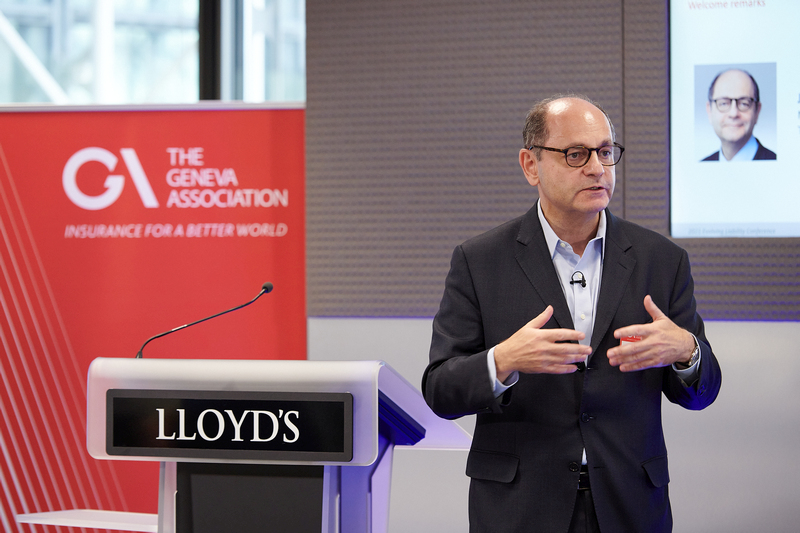
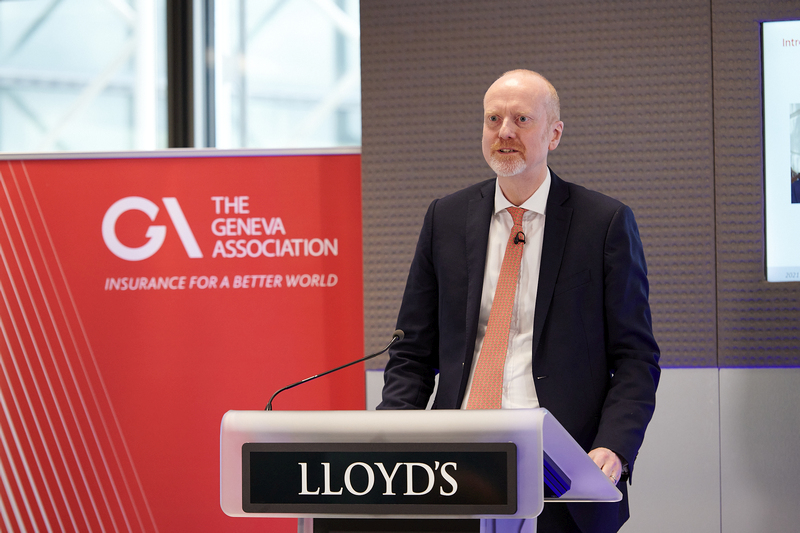
Jad Ariss, Managing Director of The Geneva Association (top), opened the conference. Cameron Murray, Head of Government Policy & Affairs, Lloyds (bottom), provided introductory comments.



Most COVID‐19-related claims and associated litigation have focused on first-party losses related to business interruption. By comparison, third-party claims in liability lines have thus far been relatively limited. As emergency restrictions and policy support are withdrawn or expire, vaccines slowly roll out and employees return to work, however, industry practitioners are steeling themselves for potential liability claims, as well as possible exposure from chronic conditions such as ‘long COVID’.
Against this backdrop, the conference aims to explore the long‐term lessons for liability insurers from the COVID-19 pandemic so that they can better position themselves to deal with such events in future. This includes how to think about (fat) tail risks like pandemics and the underwriting implications of likely shifts in working practices, building/transport design and liability standards, given the heightened recognition of such uncertainties.
Jad Ariss, Managing Director of The Geneva Association (top), opened the conference. Cameron Murray, Head of Government Policy & Affairs, Lloyds (bottom), provided introductory comments.
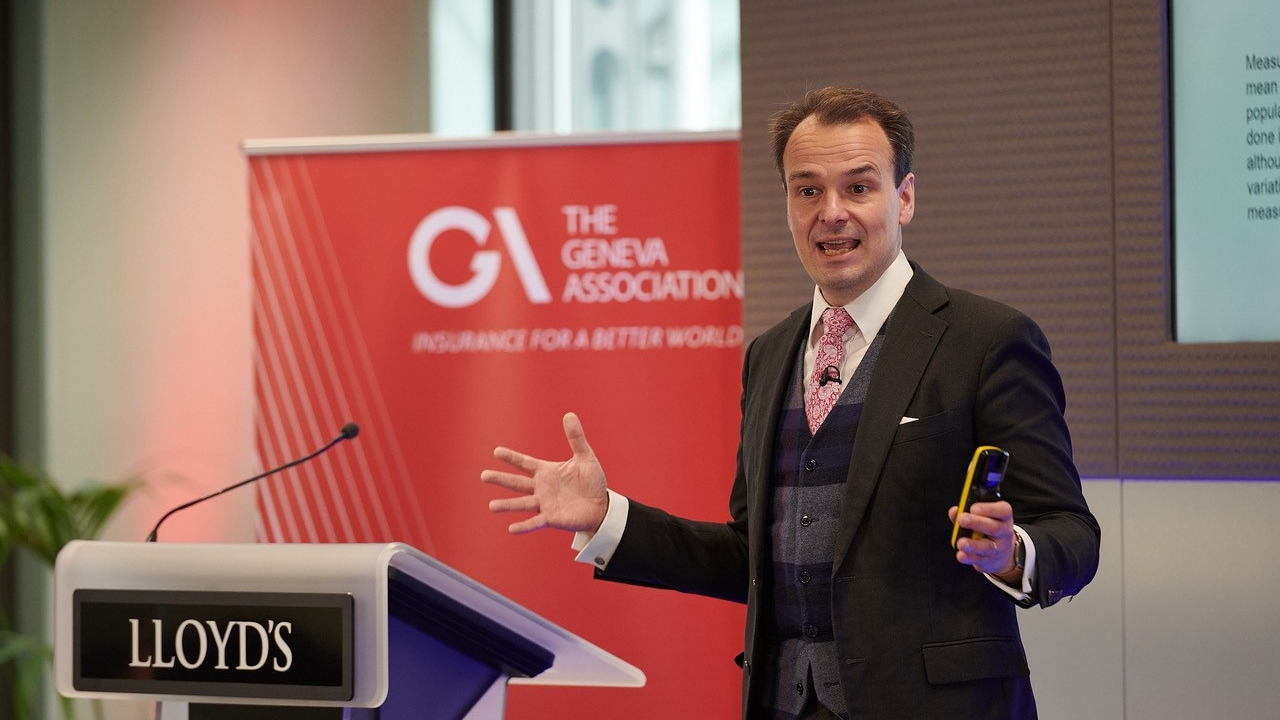
Alex Budzier, CEO of Oxford Global Projects, and Fellow at the Saïd Business School, University of Oxford.
In his keynote address, Alex Budzier, CEO of Oxford Global Projects, and Fellow at the Saïd Business School, University of Oxford, discussed rare events like pandemics from a basic, statistical perspective.
Typically we assume that observations on particular events tend to cluster around the mean (forming a normal distribution). Unusually large or small observations tend to be followed by outcomes that are closer to the historical average experience. But many natural and man-made phenomena do not sit well within this ‘regression to the mean’ framework. In fact, many extreme events, including outbreaks of infectious diseases, seem to occur with more frequency and impact than expected if they followed a normal distribution. The ‘regression to the tail’ framework explicitly recognises this tendency for new events to be an even more extreme than the most extreme to date.
Fortunately, not all unusual outcomes are true Black Swans in the sense that they seemed impossible or no one had considered them before they occurred. Rather, the frequency of some outsized events such as pandemics and forest fires, as well as incidents like cyber and terrorist attacks, resemble those from standard, well-known ‘fat-tailed’ distributions which attach relatively high probabilities to extreme outliers and whose properties are well understood.
Armed with that insight, we can be better informed about the potential for extreme events to occur. However, this does not necessarily mean we have perfect foresight. It may be hard to establish which particular fat-tailed distribution best fits the pattern of past observations.
Prudent risk managers at all levels – individuals, firms and governments – would therefore be wise to recognise cognitive and other behavioural biases that may erroneously lead to a perception of mild risk, and build more contingencies into their decision-making processes so as to better absorb extreme outcomes and bounce back faster afterwards.
Applied to COVID-19, the regression to the tail framework underlines that while the timing of the infection outbreak was unclear, the probability of such an extreme event itself was massively underappreciated. Moreover, in their handling of the pandemic, many governments failed to adopt sufficiently precautionary measures to ‘cut the tail’ by reducing transmission of the disease through, for example, rapid adoption of mask wearing, effective track-and-trace mechanisms and comprehensive lockdown regimes. Sadly, as a result, many more people were affected than otherwise might have been the case.
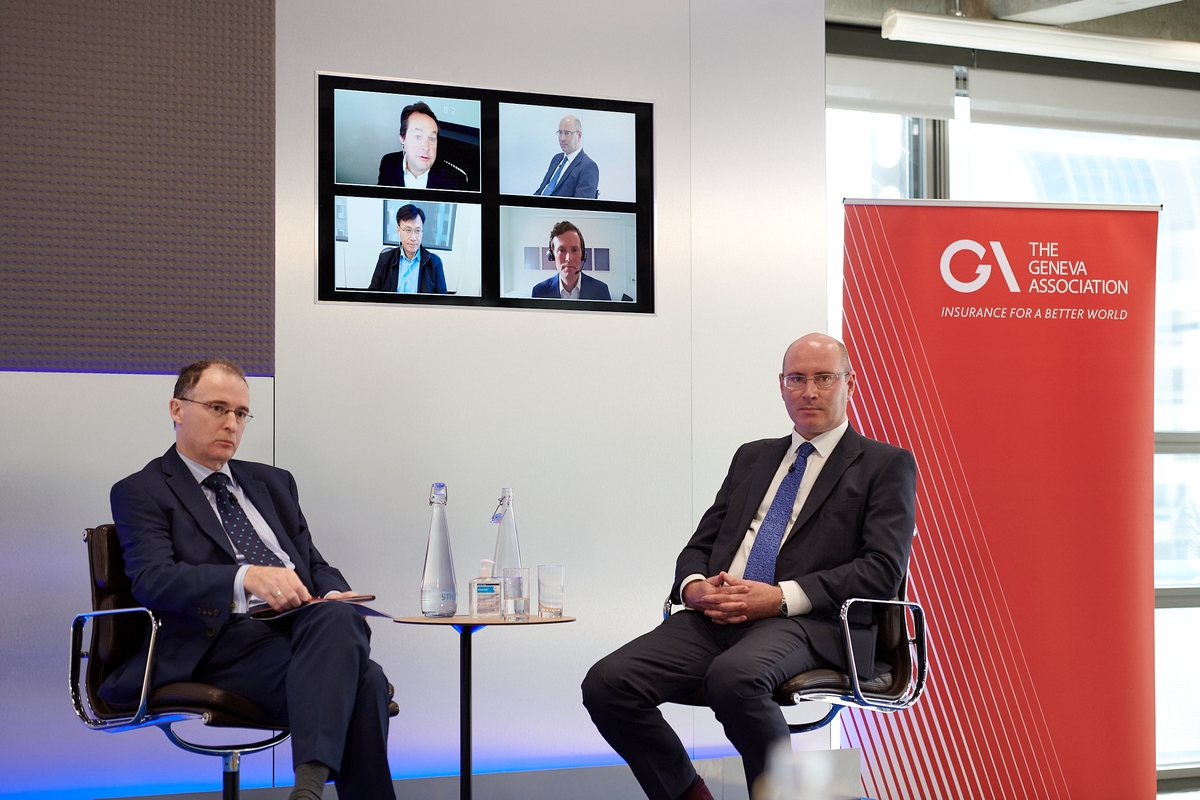
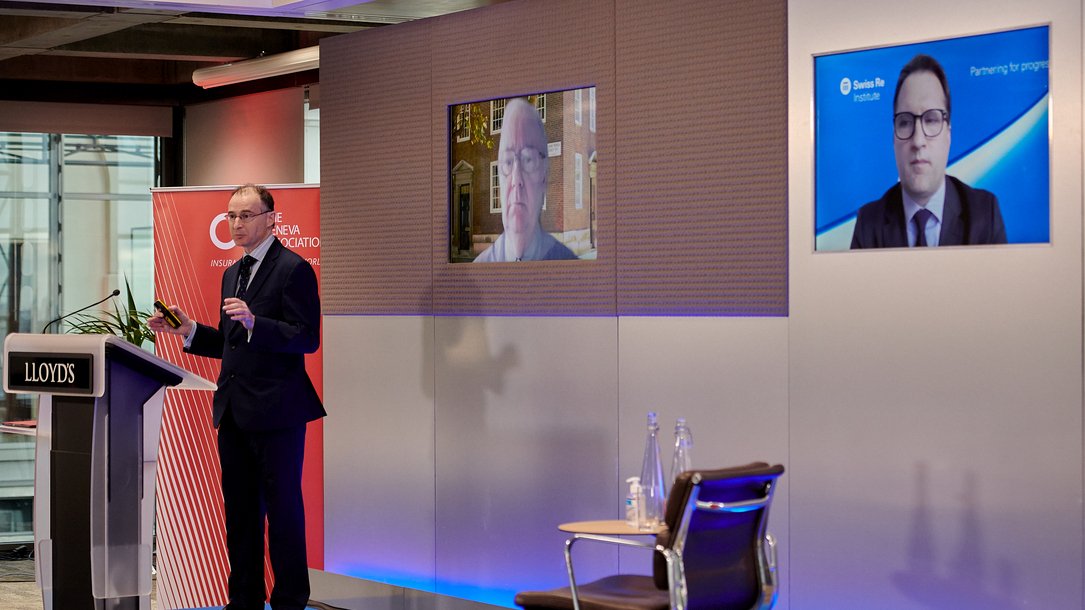
In person: Darren Pain, Director Evolving Liability, The Geneva Association (left); Clive Sherwood, Team Leader, Casualty Risk Consulting, AIG (right).
On-screen: Tim Fletcher (Chair), Senior Emerging Issues Specialist (top left), Gen Re; Luke Leung, Director, Sustainable Engineering Studio, SOM (bottom left); Chris Storer, Senior Executive Manager, Cyber Centre of Competence, Munich Re (bottom right).
The first session considered how the physical risk landscape might permanently shift as economies emerge from the pandemic and transition to a ‘new normal’.
Key messages:
In person: Darren Pain (Chair), Director Evolving Liability, The Geneva Association.
On-screen: Barry Naisbitt, Associate Research Director, Global Macroeconomics, NISER (left); Andrea Scascighini, Casualty R&D Head, Swiss Re (right).
Alongside changes in the physical risk environment, the pandemic could also affect the severity of future insurance payouts. This session reviewed how far COVID-19 might impact claims inflation trends through both macroeconomic and non-macroeconomic channels.
Key messages:
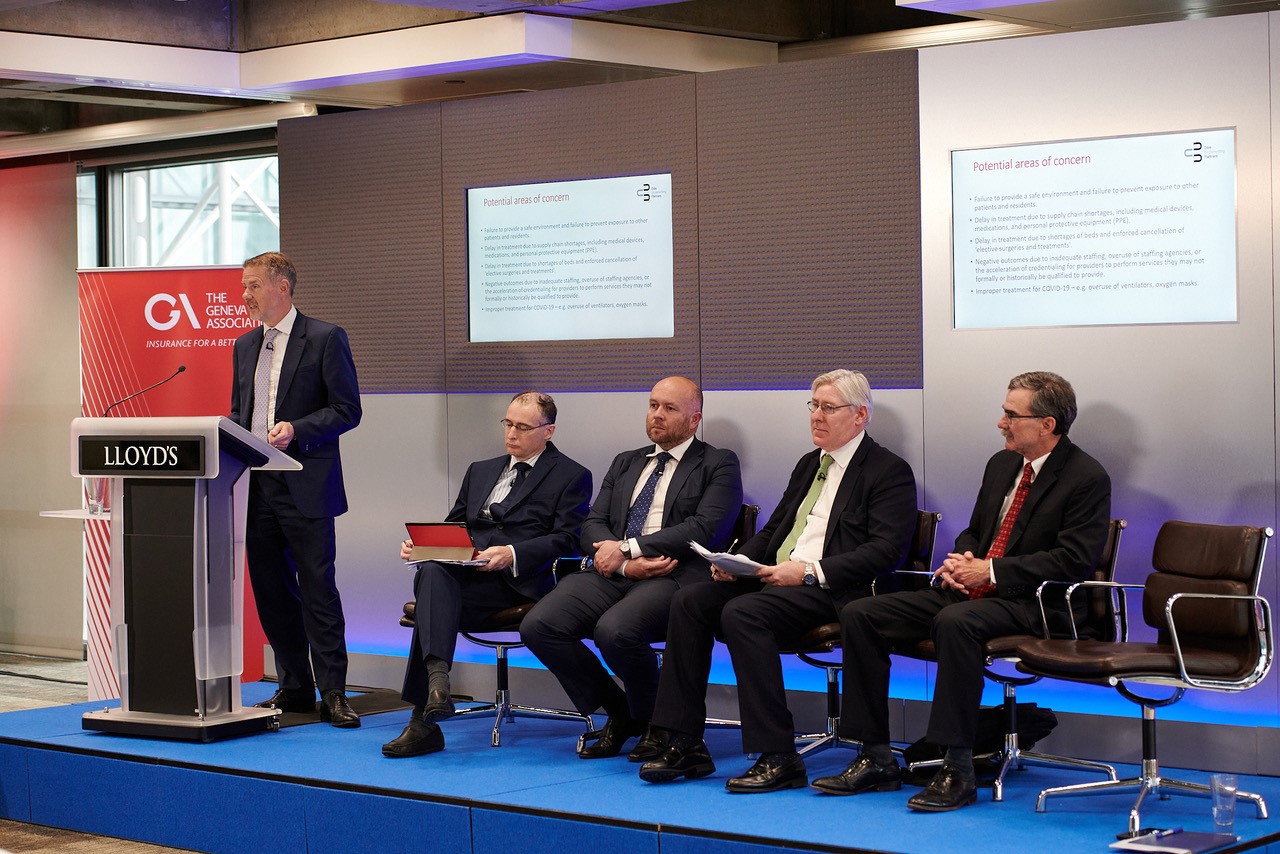
Andrew Hornsblow, Head of Healthcare, Dale Underwriting Partners; Darren Pain (Chair), Director Evolving Liability, The Geneva Association; Neil Beresford, Partner, Clyde & Co; John Pilkington, Executive Underwriter, Ascot Syndicate; Kevin M. LaCroix, Executive Vice President, RT Pro Exec, RT Specialty.
Damage caused by infectious diseases and associated business responses do not automatically justify claims for compensation. However, legal doctrines evolve over time as cases are filed and the associated judgements shape liability laws. Speakers in this session highlighted how, at this stage, pandemic-related liability trends remain difficult to discern.
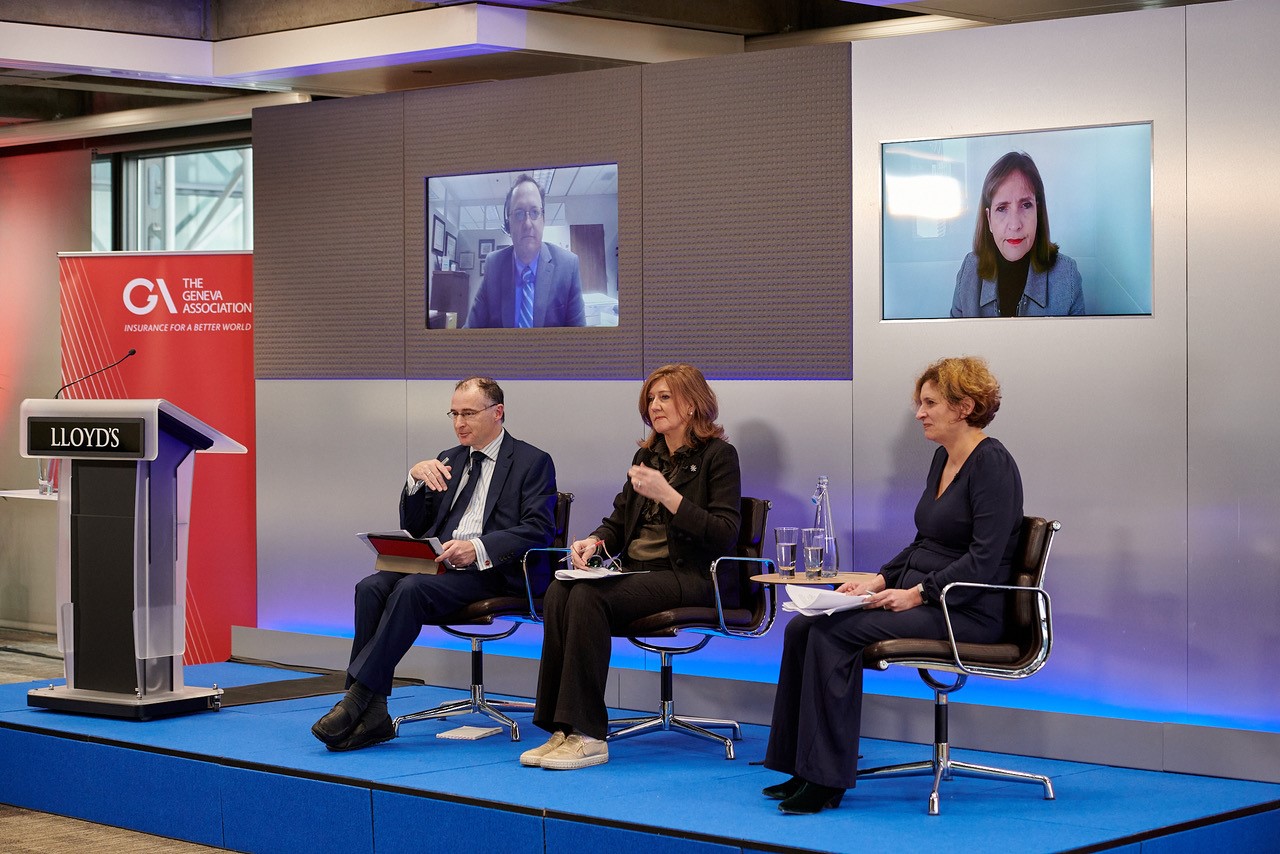
n person: Darren Pain (Chair), Director Evolving Liability, The Geneva Association; Ingrid Hobbs, Head of Complex Casualty Coverage, Kennedys Law; Kirsten Mitchell-Wallace, Head of Portfolio Risk Management, Lloyd’s.
On-screen: Mark Cavanaugh, Vice President – Counsel, State Farm; Corinne Vitrac, Head of Group P&C Risk Management, AXA.
The final panel discussion considered the pandemic-related claims experience thus far and the main takeaways from the COVID-19 pandemic for liability insurers.