
Climate Change & Environment

The Geneva Association. 2024.
Climate Tech for Industrial Decarbonisation: What role for insurers?
Author: Maryam Golnaraghi. January
Maryam Golnaraghi, Director Climate Change & Environment, The Geneva Association
Meeting global climate targets requires industries to adopt a range of new technologies and processes that accelerate their decarbonisation. Substantial efforts are underway to expedite the decarbonisation of heavy industries, such as steel, aluminium and aviation, which contribute to over 30% of global carbon emissions. As climate risks intensify and the window to cap global warming at 1.5°C above pre-industrial levels closes, the need to accelerate the deployment of climate technologies widely and at scale is becoming more acute.
Though significant progress has been made in developing innovative climate technologies, most remain in the pre-commercialisation stages. Reasons for this include huge funding gaps, challenges with scaling and scarcity of data on the risks.
Huge amounts of funding need to be deployed annually towards financing climate tech innovation and demonstration. But financing pilot projects from the demonstration and early deployment stages is capital and risk intensive. It is at this stage – the ‘Valley of Death’ – that many potentially viable technologies die and never make it to market. Closing this gap will require massive amounts of private capital; relying solely on public capital will not be sufficient.
Demonstrating and deploying emerging technologies at scale will also require new ways of doing business as well as changes to traditional commercialisation pathways – specifically, the Technology Readiness Level (TRL) framework (Figure 1), which does not capture many risks that hinder the market readiness of climate tech. Strong cross-sectoral collaboration will be needed to assess and manage risks from very early phases of projects to attract investors, expedite execution and achieve scale.
FIGURE 1: THE TRADITIONAL TECHNOLOGY READINESS LEVEL FRAMEWORK AND VALLEY OF DEATH
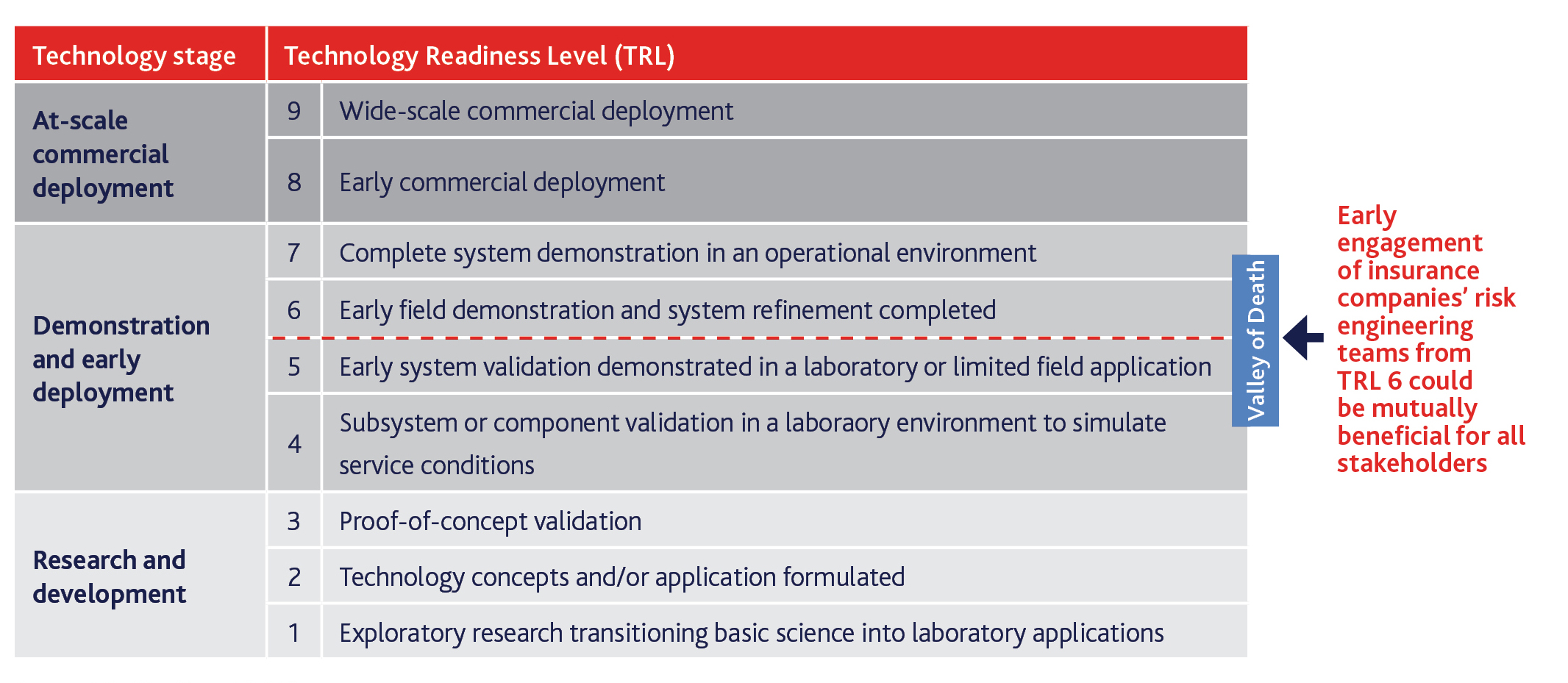
Source: Modified from NASA1
Re/insurers can play a key role in helping to accelerate the deployment of climate tech through the provision of risk engineering services. A Geneva Association survey of insurance C-level executives indicated that early engagement of re/insurers in climate tech projects – from the demonstration and early deployment stages – is critical.
At the industry level, this would enhance data sharing and allow re/insurers to increase their knowledge in this space; facilitate the identification of data needs and monitoring requirements for risk assessment; strengthen collaboration between re/insurers and climate tech stakeholders; give re/insurers exposure to more projects as technologies mature; allow the development of ‘pools of projects’ for better risk transfer and spreading; help with the identification of tech-specific insurance needs for product innovation; and expedite the development of risk management standards, guidelines and codes of practice.
At the project level, very early engagement of re/insurers would ensure that risks are considered, assessed and managed more holistically to enhance the project’s insurability and potentially shorten the due diligence period for obtaining insurance. By getting involved before the project site is selected and approved, re/insurers can provide important feedback on decisions such as where and how to build facilities and what risk mitigation strategies to consider to maximise insurability against extreme weather events.
TABLE 1: ADOPTION READINESS LEVEL FRAMEWORK WITH INSURANCE INCLUDED AS A KEY ELEMENT
Value proposition | Market acceptance | Resource maturity | License to operate |
|---|---|---|---|
1. Delivered cost 2. Functional performance 3. Ease of use/complexity | 4. Demand maturity/market openness 5. Market size 6. Downstream value chain | 7. Capital flow and availability 8. Project development, integration and management 9. Infrastructure 10. Manufacturing & supply chain 11. Materials sourcing 12. Workforce | 13. Regulatory environment 14. Policy environment 15. Permitting & siting 16. Environmental & safety 17. Community perception |
| 18. Insurability and availability of affordable insurance Risks associated with the lack of data and technical capacity to identify, frame and assess risks of new climate technologies and related insurability conditions; delays with the development of risk management frameworks, standards and codes of practice for project replication; addressing unique insurance needs on a techby-tech basis which could delay scaling; and the development and availability of a full range of insurance solutions to meet financing and market needs. |
Source: Modified from U.S. DoE2
Efforts are underway to enhance approaches to climate tech financing and deployment:
Affordable insurance solutions are essential for getting climate technologies market ready, securing financing and managing project liabilities. Assessing the insurability conditions and developing insurance solutions for new climate technologies is complex and time consuming. Greater risk sharing among stakeholders in the early stages could lead to the development of structured risk management solutions and better risk allocation among parties based on risk appetite and ability to bear risk, thereby attracting more capital and ensuring optimal risk financing. As technologies mature, deployment increases and standards are developed, insurability will increase, allowing insurers to take a greater share of the overall risk pool. Specific risks may not be insurable through the commercial insurance market and may require other interventions.
To help view the risks of climate tech projects from an insurance perspective, The Geneva Association developed a novel ‘Insurability Readiness Framework’ (IRF) through multi-stakeholder collaborations. The IRF breaks down risks into seven insurance-relevant categories and demonstrates how they relate to risks identified in the ARL framework (Table 1). These categories are: 1) technology risk; 2) project information and organisation risk; 3) legal, finance and compliance risk; 4) location-specific physical climate risks; 5) business interruption and supply chain risk; 6) long-term risk; and 7) environmental, social and governance risk.
For each of the seven categories, the IRF specifies key issues that need to be considered by climate tech stakeholders when framing risks in their dialogue with re/insurers as well as in the information project developers compile for risk and insurability assessment.
At the strategic level, the IRF will enable more informed conversations among climate tech stakeholders and re/insurers and help identify the most challenging risks from an insurability perspective. It can also help to pinpoint risks that may be uninsurable from a commercial insurance market perspective and therefore require different interventions, such as public-private partnerships or government backstops.
At the project level, transparency around insurance requirements will enable climate tech project developers, their partners and investors to identify and address project risks in a more targeted way to ensure that insurance considerations and risk mitigation strategies are reflected in project design.
U.S. DoE 2023.
Limiting the global average temperature rise – and avoiding a climate catastrophe – will require transformation of a magnitude far greater than any humankind has ever undertaken.
Individual behavior modifications to minimise one’s carbon footprint – such as reducing air travel – are important. But even the most successful version of these efforts will not be sufficient. Change is in the hands of big industries such as steel, cement, aluminum, aviation, shipping and trucking, which together contribute over 30% of global carbon emissions.
The transformation will require new technologies – and they will need to be deployed at scale. It is estimated that an annual investment of USD 7–9.2 trillion is needed to fund global decarbonisation.
What can insurers do? As this report lays out, through research findings and the results of a survey of C-level insurance executives, insurers have two main roles.
The first is risk management and underwriting: assessing project risks at an early stage and growing the body of data on climate tech risks are key to insuring them and to attracting the massive investment needed.
The second role of insurers is investing. Insurance companies have already become major investors in commercialised technologies like wind and solar power and green hydrogen. Increased investment is needed, however, in technologies which are at an earlier development phase as well.
Risk expertise and capital are not the only missing pieces. We also need policies that incentivise investment in and demand for low-carbon technologies. Regulatory frameworks and codes of practice will facilitate project replication. And, of course, collaboration – not only within transitioning industries, but also across stakeholder groups – will be essential to realising the unprecedented transformation needed for our resilient future.
Jad Ariss
Managing Director
In a series of recent reports, the Intergovernmental Panel on Climate Change detailed how close the world is to missing the 1.5°C global warming target and the need to reduce global emissions to achieve net zero by 2050. Surpassing the 1.5°C threshold could significantly increase the severity of climate-related impacts, highlighting the need for a well-planned, whole-of-economy approach to limiting the global average temperature increase over the next few decades.
This will require decarbonisation of the global economy within a short timeframe. While there has been some progress, the world has reached a critical moment for transformative action. Globally, substantial efforts are underway to expedite the decarbonisation of heavy industries, such as steel, aluminium, cement and aviation, which contribute to over 30% of global carbon emissions. Reducing greenhouse gas (GHG) emissions across sectors such as these requires the commercialisation and widescale deployment of a range of new climate technologies in the coming decade.
The annual investment gap between now and 2050 to fund this transition stands at USD 7–9.2 trillion. Closing this gap will require massive amounts of private capital; relying solely on public capital will not be sufficient. A significant portion of transition funding needs to be deployed towards financing climate tech innovation, commercialisation and market readiness.
Many of the climate technologies essential for industrial decarbonisation, such as green hydrogen, long-term energy storage and carbon removal (point source or direct air capture and storage), are still in the pre-commercialisation stages. Demonstrating and deploying these new technologies, which come with new, untested risks, is capital intensive. Their wide-scale commercial deployment also requires the development of standards and codes of practice for industry adoption and replication, which takes time.
Suitable risk management frameworks and related insurance solutions will be critical to mobilising the necessary capital for demonstration projects and ultimately enabling the commercial deployment of climate technologies.
To explore how re/insurers, as risk managers and investors, can help in this space, The Geneva Association launched the research project Accelerating Climate Technologies for Industrial Decarbonisation and the Insurance Industry. The outputs of this work are presented in two reports.
This first report sets the scene by describing the current climate tech landscape, and the challenges and opportunities associated with expediting the commercialisation and market readiness of new climate technologies, as well as the potential role of re/insurers. It offers perspectives from key stakeholders and insurance C-level executives on the benefits of and difficulties with engaging re/insurers in climate tech commercialisation from an early stage. The second report will address how such engagement can be achieved and present a novel ‘Insurability Readiness Framework’ (IRF), which provides a structured questionnaire for framing risks and related data needs through an insurance lens from the early phases of project development for any climate technology. The report will also demonstrate the use of the IRF for green hydrogen and carbon removal and storage projects.
Key findings of this report
Seven major developments are changing the climate tech commercialisation risk landscape:
1. The launch of an Adoption Readiness Level framework by the U.S. Department of Energy, which offers a cohesive framework to measure the market readiness of climate technologies for commercialscale deployment.
2. Growing concerns around energy security, which have led to the launch of national strategies aiming to regulate and expand the extraction of rare earth and other critical materials needed to scale up the production of climate technologies.
3. The emergence of government subsidies and transformative public policies, such as the Inflation Reduction Act in the U.S. and the New Green Industrial Deal in the EU, which are reshaping the economics and commercial viability of climate technologies for decarbonising heavy industries.
4. The emergence of market-focused alliances engaging governments and corporations, which aim to expedite tech-specific market developments by identifying early adopters.
5. Coordinated investment platforms that bring together philanthropic, private and public funding to provide more cohesive financial support to increase innovations and investment in first-of-a-kind operational pilots.
6. The emergence of sustainable finance frameworks, taxonomies, disclosure regulations and alliances of net-zero institutional investors, which aim to mobilise private capital for financing the transition.
7. Climate tech hubs that bring together technology developers and customers to leverage existing infrastructure systems, create a business marketplace and develop safety standards to expedite scaled deployment.
Rising greenhouse gas (GHG) emissions, primarily resulting from human activities, are significantly impacting the Earth’s climate system. The global average temperature has continued to rise compared to pre-industrial times, leading to biodiversity loss; changes in the frequency, severity and regional occurrences of extreme weather events; and trends such as sea-level rise and water scarcity, all of which can result in a wide range of health-related complications.1 A well-planned, whole-of-economy approach to curbing GHG emissions is needed to limit the global average temperature increase to 1.5°C compared to pre-industrial levels over the next few decades and meet the goals of the Paris Agreement.2
The world has reached a critical moment for transformative action. In 2018, the Intergovernmental Panel on Climate Change (IPCC) indicated that crossing the 1.5°C threshold could trigger far more severe climate-related impacts.3 The IPCC’s Sixth Assessment Report (AR6) presented scientific evidence on how close the world is to missing the 1.5°C target and the need to reduce global emissions by 45% by 2030 to achieve net zero by 2050.4 However, the world is currently on the path to a 2.5–2.9ºC temperature increase, though there are many uncertainties around this.5 Considering the urgent need to decarbonise the global economy over the next three decades, and the short timeframe in which to do it, it will be necessary to significantly scale up decarbonisation efforts in the coming 10 years.6
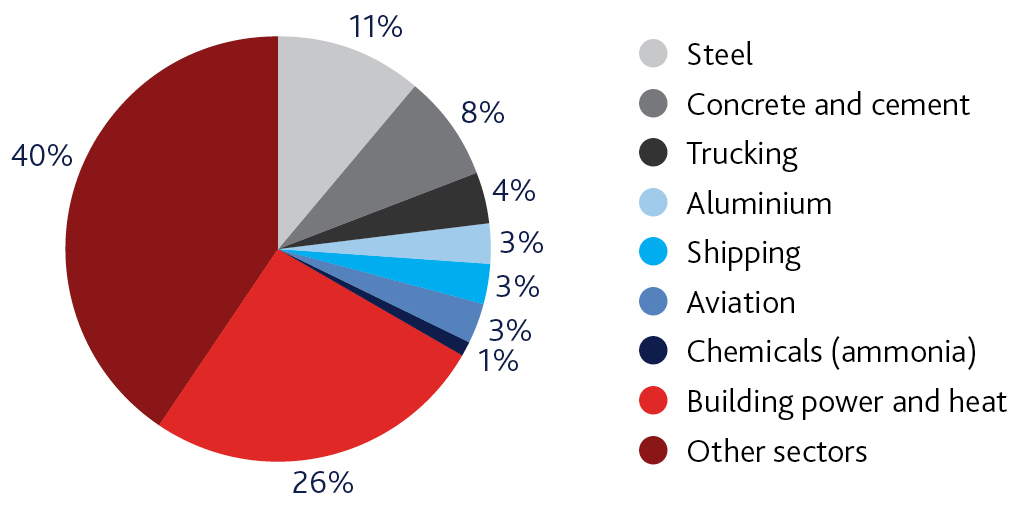
Expediting the commercialisation and wide-scale deployment of a wide range of new climate technologies will be central to achieving industrial decarbonisation. Some high-emitting sectors, such as power and transportation, are already taking some measures, such as integrating renewable energy and investing in electric vehicle (EV) infrastructure, to curb their GHG outputs. However, reducing the carbon footprint of heavy industries (steel, aluminium, cement and concrete, chemicals, shipping, trucking and aviation), which contribute over 30% of global carbon emissions (Figure 1), still poses significant difficulties. These sectors, often-termed ‘hard-to-abate’ sectors, are facing complex decarbonisation challenges due to their intense energy usage. They will ultimately rely on new technologies, such as green hydrogen, longenergy duration systems, small modular nuclear reactors (SMRs) and carbon removal (point source capture, direct air capture, utilisation and storage), which remain in the pre-commercialisation stages.7
Significant efforts are underway to expedite the decarbonisation of ‘hard-to-abate’ industries over the coming decades.8 To this end, Mission Possible Partnership (MPP)9 has developed targets that need to be achieved by these sectors by 2030, as well as the range of critical cross-cutting technologies that will be required, to have a shot at meeting the goals of the Paris Agreement (Table 1).10 This has highlighted the need to align priorities among public and private stakeholders to increase coordination to achieve these targets.
FIGURE 1: PERCENTAGE OF GLOBAL CARBON EMISSIONS FROM HARD-TO-ABATE INDUSTRIES
Source: Mission Possible Partnership11
TABLE 1: PROGRESS TOWARDS THE TECHNOLOGY ADOPTION NEEDED BY 2030 FOR HARD-TO-ABATE SECTORS
| Aviation | Trucking | Shipping | Steel | Aluminium | Concrete | Chemicals |
|---|---|---|---|---|---|---|
What is needed by 2030? | ||||||
| 300 Sustainable Aviation Fuel (SAF) plants | 7 million zero-emissions trucks (there are currently debates about hydrogenpowered trucks) | 200 ships using zero-emissions fuel | 70 (near) zeroemissions steel plants | 90 new low-carbon smelting and refinery plants | 20+ commercialscale carbon capture, usage and storage plants | 60 green and blue ammonia plants |
| 40 Mt of SAF (for 10-15% of SAF in aviation supply globally) | 1.6 million overnight depot chargers | 5% zero-emissions fuel in international shipping | 170 Mt of nearzero-emissions primary steel produced | 43% of aluminium production from recycling by 2030 | These would need to deliver 160 million m? concrete | 50 Mt of nearero-emissions ammonia produced |
| 600,000 public highspeed chargers for battery electric trucks | ||||||
| Situation as of September 2022 | ||||||
| 70 operational and in pipeline | 4,000 electric trucks | 0 operational12 | 1 demo plant13 | 50 operational plants | 0 operational | 2 operational plants |
This transition also requires a number of cross-cutting technologies for energy production and carbon removal to be scaled | ||||||
| Cross-cutting technologies | What is needed to support these sectors by 2030? | |||||
| Hydrogen | 100 Mt H, (hydrogen) produced (all production routes — with at least 6.5% green production) | 600 GW electrolysers producing green hydrogen | ||||
| Renewable electricity | 2TW - installed wind and solar (excludes cement and non-H2 chemical power consumption) | 20,000 new renewable development projects | ||||
| Carbon capture and removal | 700 Mt CO2 - global carbon captured and stored or utilised | 200 large-scale carbon capture and removal and storage projects (assumes project size of 3.5 Mt CO2 based on Northern Lights and Gorgon Project size) | ||||
| Sustainable biomass | ~50 Mt biofuel consumed (across aviation and trucking) | 500 biofuel production facilities | ||||
Source: Mission Possible Partnership14
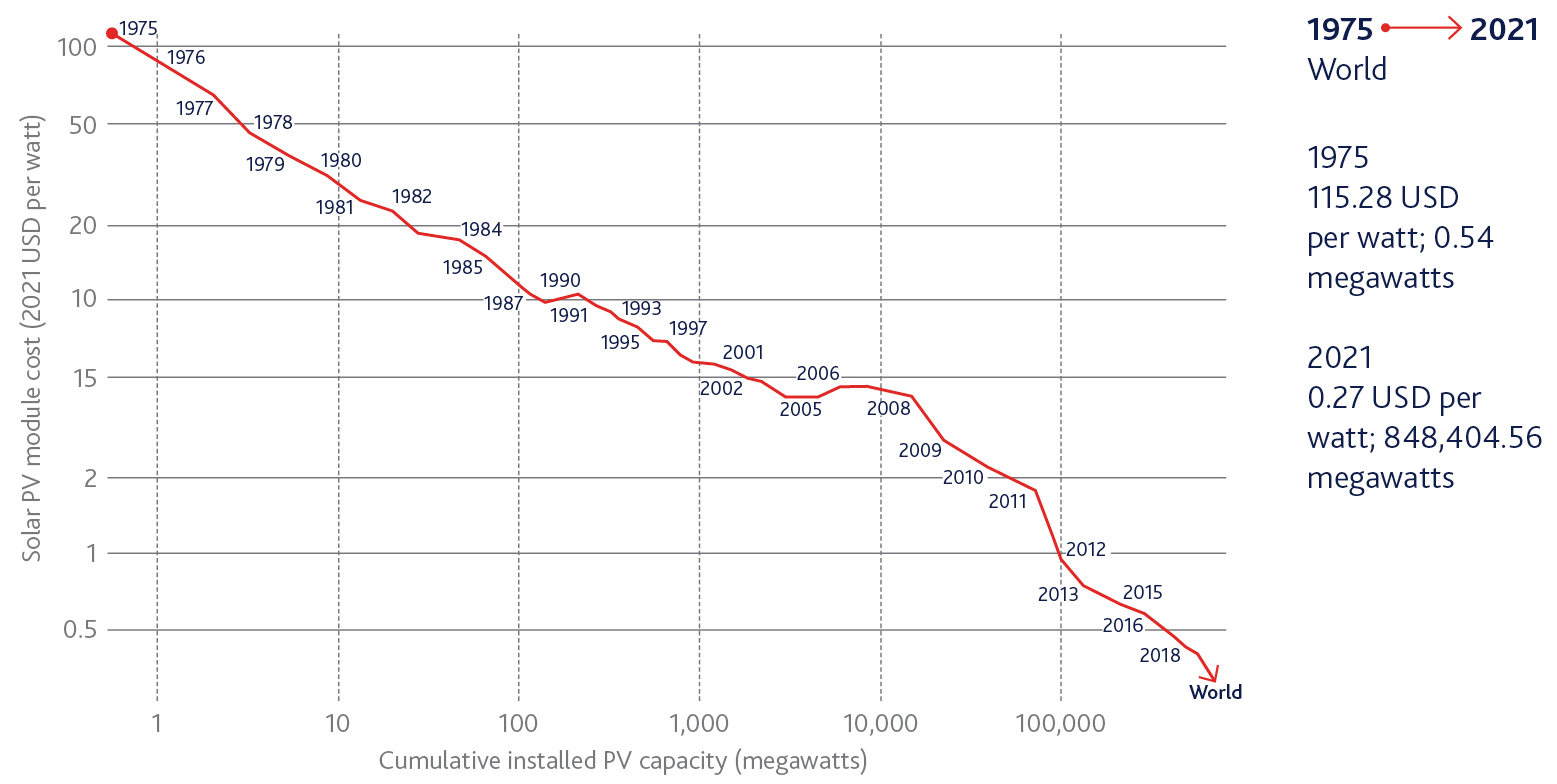
It has taken many decades for renewable energy sources such as solar and wind to become cost competitive with their fossil fuel counterparts. Figure 2 demonstrates the cost of solar photovoltaic (PV) module prices against cumulative installation capacity from 1975–2018. However, despite competitive costs, these technologies have not realised their full deployment potential. This is due to various reasons, such as the credit risk of the project developer or the off-taker(s) as well as issues with the manufacturing and supply chain of new modules.
Reducing GHG emissions across industrial sectors will require much more agility during the development, commercialisation and deployment phases of new climate technologies and infrastructure systems.15 New policies and regulatory frameworks as well as government subsidies will also be critical to incentivising action on the supply and demand sides.16 Institutional transformations and cross-sectoral partnerships will be needed to break through silos and overcome barriers, including those related to cost, regulation, finance, market factors, supply chains and other logistics, to reduce the high risk premiums of new climate technologies.
FIGURE 2: SOLAR PV MODULE PRICES VS. CUMULATIVE INSTALLED CAPACITY
Source: Our World in Data17
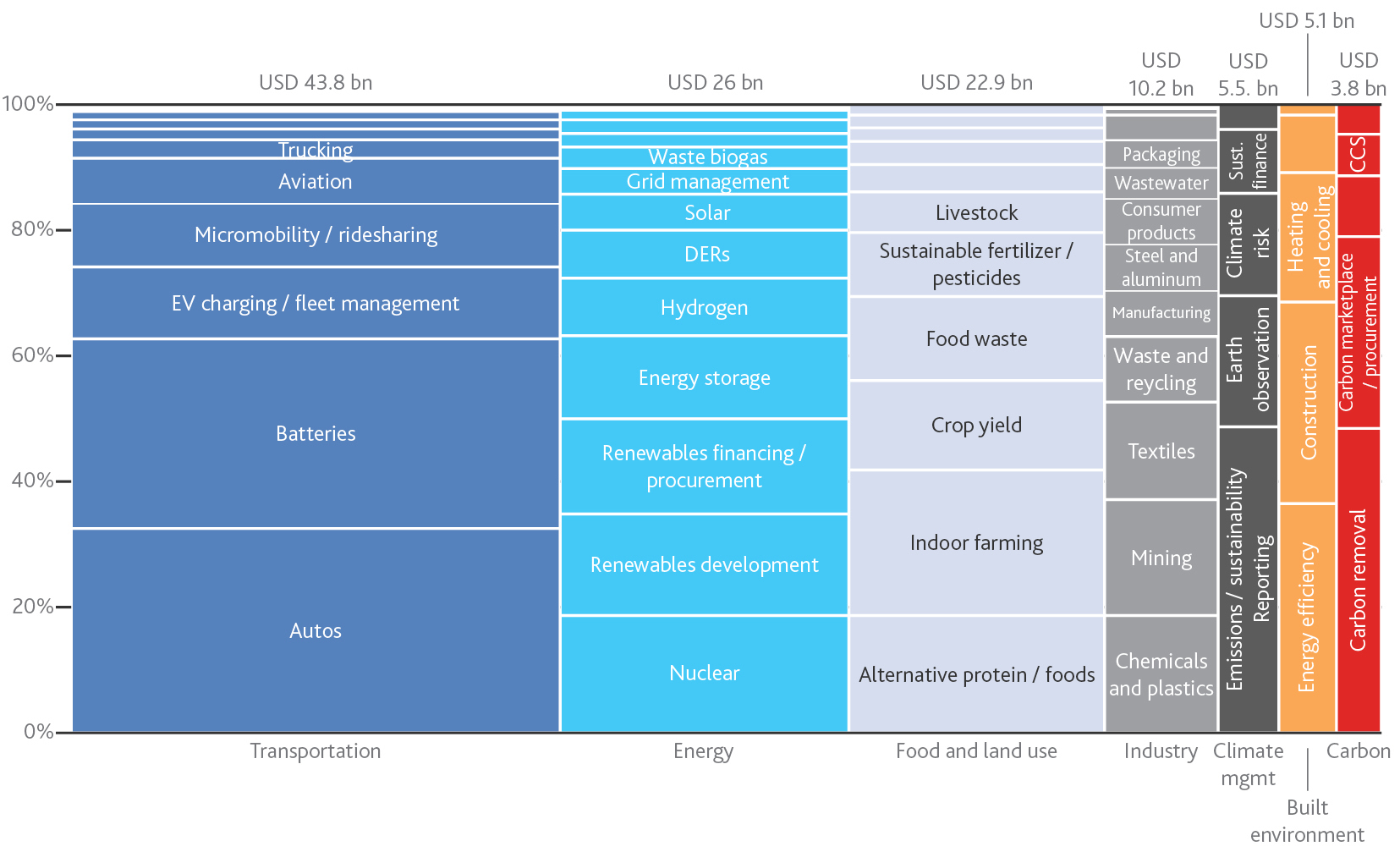
Over the last few years, there has been a steady rise in venture capital funding for climate technologies, from the innovation to the growth stages, around the world. In 2022, for example, total funds in this space were estimated at USD 70.1 billion.18, 19 Additionally, funding has expanded beyond traditional spending on renewable energy. Figure 3 illustrates the order of investments by sector since 2020 in technologies for transportation, energy, food and land use, industry, climate risk management, the built environment and carbon.
Despite this, the annual estimated total investment gap to fund the transition of the global economy stands at USD 7–9.2 trillion until 2050.20 A significant portion of transition funding needs to be deployed towards financing climate tech innovation, commercialisation and widescale deployment – for example, financing pilot projects currently in the pre-commercialisation stages right through to industrial-scale plants and infrastructure systems.
Given the scale of this gap, it is clear that no single entity can address this challenge alone. Relying solely on public capital will not be sufficient – massive amounts of private capital will also need to be mobilised. The public and private sectors need to align on priorities and work together to find solutions, and leverage capacities and resources with a long-term investment and planning mindset.21
FIGURE 3: EXPANSION OF VENTURE CAPITAL FUNDING FOR CLIMATE TECHNOLOGIES SINCE 2022
Source: Climate Tech VC22
Many breakthrough climate technologies for industrial decarbonisation remain in the pre-commercialisation stages and come with a range of new risks. Demonstrating, deploying and operationalising these technologies in the coming decade will require significant private capital.23 WEF has further stressed that unlocking private capital will require innovative risk management solutions and blending of public and private capital, which will necessitate collaboration among many stakeholders.24
The ecosystem of stakeholders engaged in climate tech commercialisation is complex, with different entities involved in different stages of the process, each with varying roles and priorities. Re/insurers, as risk management experts and institutional investors, have played an essential role in enabling the entrepreneurial pathways and deployment of many technologies in the past.25 WEF has emphasised the need for collaboration among stakeholders in the climate tech commercialisation ecosystem and highlighted the important role re/insurers could play in supporting the transition.26 Further investigation is required to explore this issue. A recent report by the London Market Group has also put focus on insurance as an essential tool to unlock the growth of green projects, in particular as an enabler to secure financing and offer protection against construction delays and overruns.27 However, the question remains: how and when should re/insurers engage? Re/insurers also motivate and engage with standard-setting and certification institutions to develop risk management frameworks, codes of practice, guidelines and standards for emerging technologies with a risk reduction and prevention lens. This facilitates industry adoption of new technologies as well as project replication.28
To explore these questions in more detail, The Geneva Association launched the research project, Accelerating Climate Technologies for Industrial Decarbonisation and the Insurance Industry, designed and implemented with the support of The Geneva Association’s Climate Tech Advisory Committee and partner organisations.29 This report, which summarises the first part of the project, describes the climate technology commercialisation landscape, as well as the challenges and opportunities associated with expedition and what re/insurers can offer if they are brought into the process earlier.30, 31 It also offers perspectives from key stakeholders and insurance C-level executives on the benefits of and challenges with engaging re/insurers with the climate tech commercialisation ecosystem from the pilot and early demonstration stages. It involved:
Section 2 describes the climate technology commercialisation landscape and highlights critical developments driving change in this space. Section 3 offers views from stakeholders that are shaping the climate tech landscape on the role re/insurers can play and the benefits of their early engagement for expediting climate tech commercialisation and deployment. The results of the Geneva Association Climate Tech Survey are provided in section 4, and section 5 offers conclusions and recommendations for the way forward.
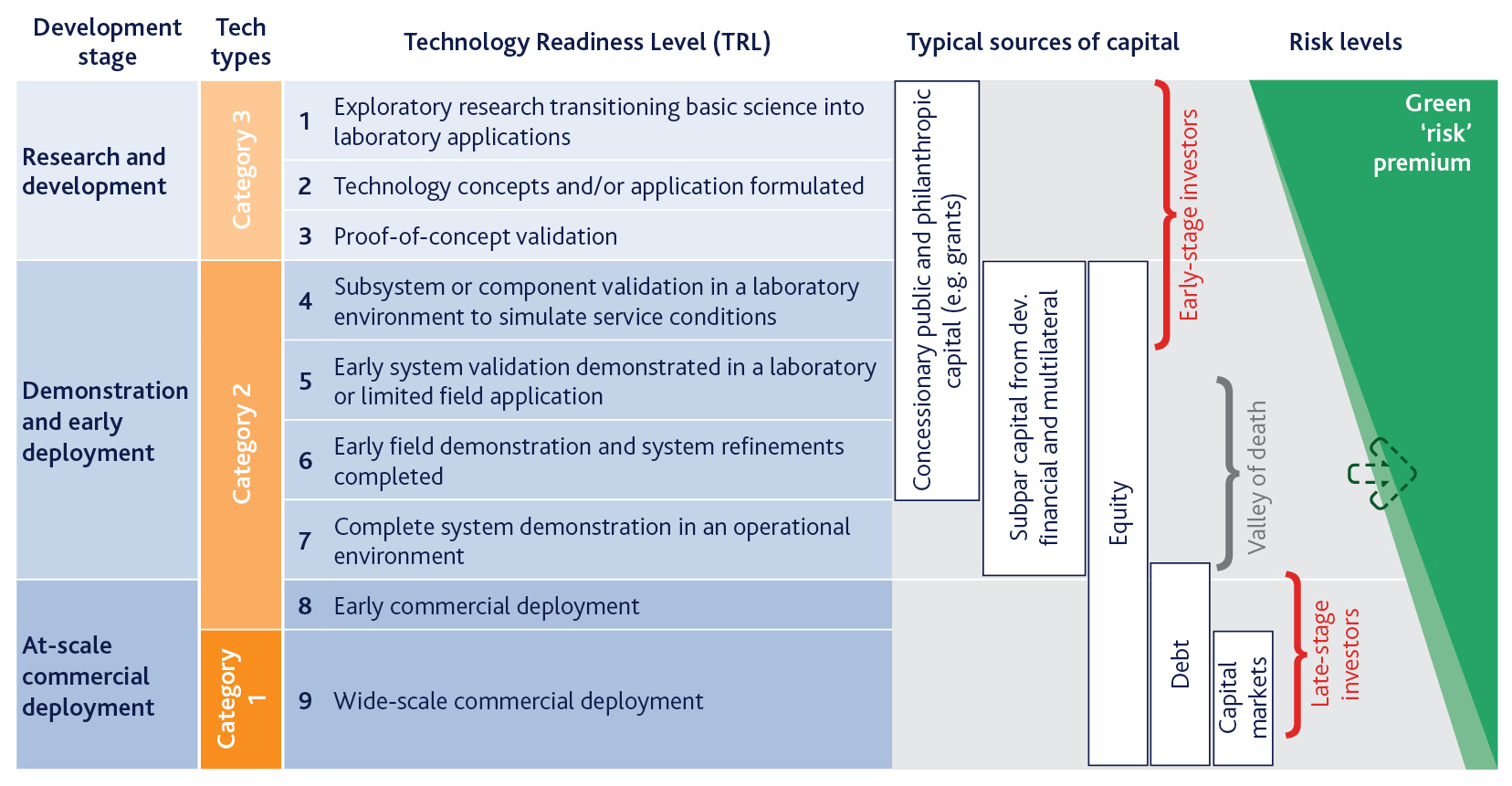
The commercialisation pathway of a technology is its advancement from an innovative idea in a lab to market adoption and full-scale deployment. This entails several stages: research and development, demonstration (pilot projects) and early deployment, and at-scale commercial deployment (Figure 4).
FIGURE 4: TECHNOLOGY READINESS LEVEL IN RELATION TO TECHNOLOGY MATURITY LEVELS AND SOURCES OF CAPITAL
Source: The Geneva Association (revised from WEF33)
Technology Readiness Level: A framework for measuring technological maturity along the commercialisation pathway
Traditionally, a ‘Technology Readiness Level’ (TRL) framework is used to assess the maturity of a technology along the different stages of the commercialisation pathway. The TRL was originally developed by the U.S. National Aeronautics and Space Administration (NASA) in 1974 and was formally defined in 1989. Over the years, modified versions of the TRL have been adopted by stakeholders involved in the technology commercialisation process in different sectors.34, 35
Figure 4 illustrates the nine typical levels of technology maturity along the technology commercialisation pathway.
The TRL framework does not address the maturity of the company or the industry that is behind the technology. In addition, it does not explicitly consider many other factors that could hinder a technology’s market readiness, for example, risks associated with a lack of demand, market size, the downstream value chain, the manufacturing process and supply chain, material sourcing or the policy and regulatory environment. These factors, if not dealt with concurrently as the technology reaches the early commercialisation stages, could significantly delay its deployment increase the risk premium.
Categorisation of climate technologies based on the Technology Readiness Level framework
Climate technologies that are essential for industrial decarbonisation can be split into three categories according to their technological maturity (Figure 4).
Category 1: Climate technologies that are already commercialised (TRL 9) and are cost competitive with their high-GHG-emitting counterpart but may not have realised their full market-deployment potential.
For example, solar and wind power (onshore and offshore) have been commercialised and their costs have fallen over the last decades (Figure 5). However, they continue to face a number of risks that hinder their widespread deployment, such as manufacturing and supply chain risks associated with new modules that may not have been tested sufficiently before being used in new projects, or the credit risk of project developers or off-takers.36
FIGURE 5: LEVELISED COSTS OF RENEWABLE ENERGY SOURCES BY TECHNOLOGY IN RECENT DECADES
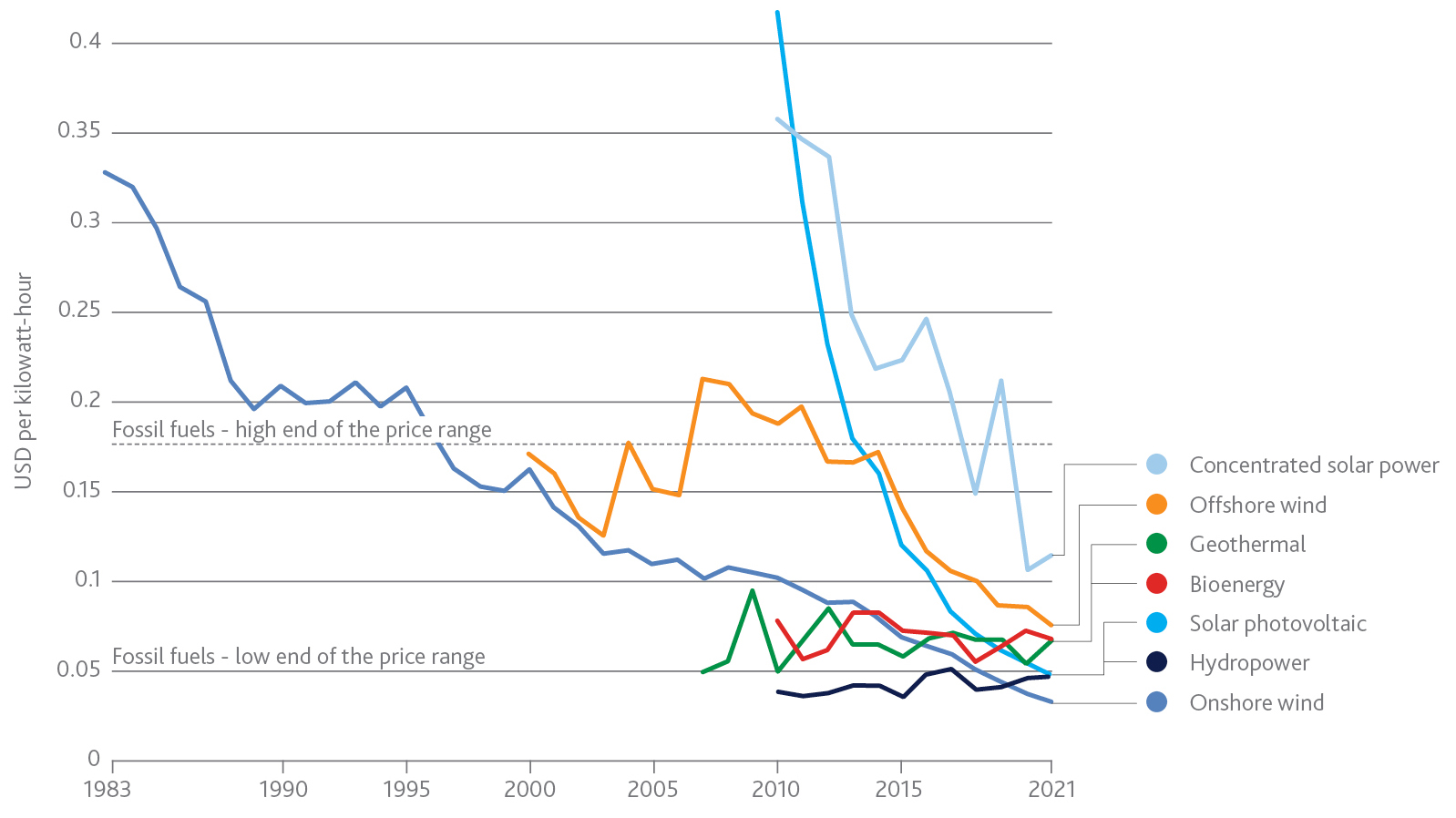
Note: Levelised cost of energy estimates the average cost per unit of energy generated across the lifetime of a new power plant.
Source: Our World in Data, based on data from the International Renewable Energy Agency (IRENA)37
Category 2: These climate technologies are understood, yet all or some aspects remain in the pre-commercialisation stages and need to be technologically demonstrated and refined in an operational environment.
Most technologies needed for industrial decarbonisation fall into this category (TRL 5–7). The aim is to become cost competitive for scaling and replication. Examples include carbon removal (point source and direct air capture and storage), green hydrogen (see Box 1), long-term energy storage, sustainable aviation fuel (SAF) and small modular nuclear reactors, to name a few.
Box 1: Commercialisation challenges of carbon storage and green hydrogen
The primary methods of carbon storage are geological sequestration in reservoirs like depleted oil and gas fields or saline formations, and mineralisation (or mineral carbonation). While geological sequestration has seen some commercial implementation globally, the wider adoption of carbon storage faces various challenges. These include concerns about induced seismicity, potential CO2 leakage, water contamination, environmental impacts and long-term liabilities associated with storing CO2, which have slowed the pace of wider commercial deployment.
Challenges associated with the commercialisation of green hydrogen include the need for large areas of land for solar and wind infrastructure, lack of available transportation and storage infrastructure, significant energy losses during the production and conversion processes, and the need for high-temperature hydrogen heating processes for hard-to-abate sectors like steel production.
Source: The Geneva Association, based on Boussidan, Capgemini, Swiss Re, IEA and IRENA38
Category 3: Promising technologies that are in the research and development stages (TRL 3–5), with potential for commercialisation in the next 10–20 years, for example, nuclear fusion.39 This category is not within the scope of this study.
Financing and the ‘Valley of Death’ in the demonstration and early-deployment stages
The technology commercialisation pathway is financed by various stakeholders such as wealthy individuals, philanthropic organisations, governments and the private sector (e.g. venture capital firms, corporations, institutional lenders and investors). Typically, the early phases (TRL 1–4) are financed by ‘early-stage investments’ such as concessionary public and philanthropic capital (mainly in the form of grants) and equity investments40 (mainly friends, angel investors and early venture capital).41 ‘Late-stage investors’ generally include industry and institutional investors, who prefer to invest when the technology has been demonstrated and technological risks related to operationalisation at scale have been addressed (TRL 7–9). Late-stage investments are in the form of equity, debt and capital market-financing tools (e.g. green bonds, indexed based funds).
Traditional resources available from the government and private sector fall significantly short in the demonstration and early-deployment stage, where significantly more resources are required for the financing of pilot projects in which critical risks such as functional performance, ease of use and operational safety issues for scaling of the technology are addressed. This funding gap is referred to as the ‘Valley of Death’, where many ‘potentially viable’ technologies ‘die’ and never make it to the market (Figure 6).
FIGURE 6: THE VALLEY OF DEATH – THE MAJOR INVESTMENT GAP IN THE COMMERCIALISATION PATHWAY OF NEW TECHNOLOGIES
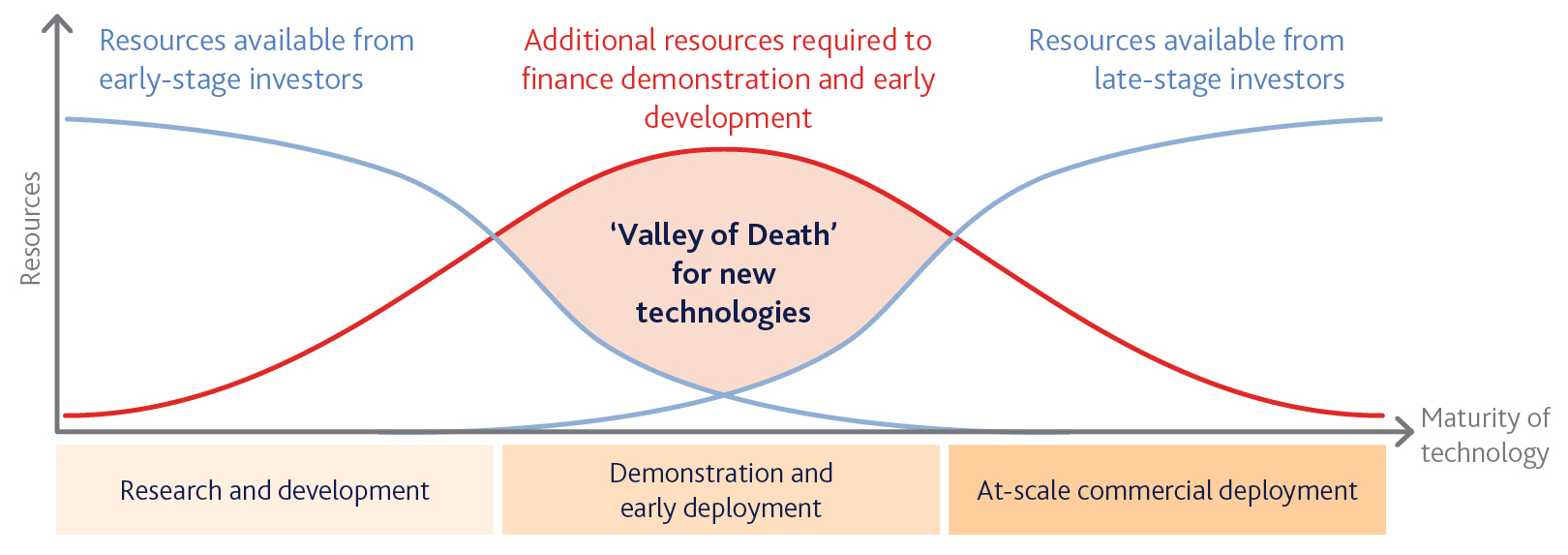
Source: The Geneva Association (revised from WEF)
Over the last two years, seven developments have significantly impacted the climate technology risk landscape, paving the way for expediting commercialisation and deployment. These are highlighted in Figure 7 and further described in this section.
FIGURE 7: SEVEN DEVELOPMENTS CHANGING THE CLIMATE TECH RISK LANDSCAPE
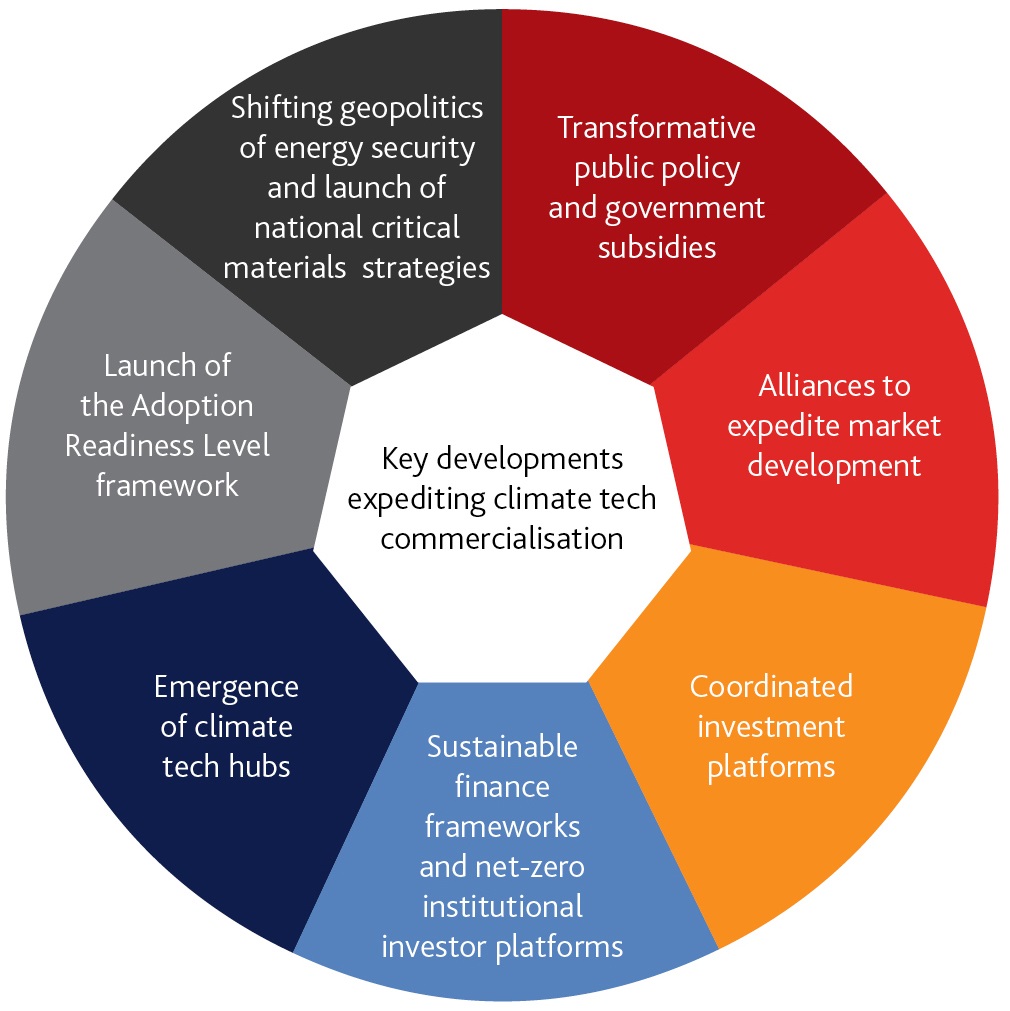
Source: The Geneva Association
Launch of the Adoption Readiness Level framework
In 2022, the ‘Adoption Readiness Level’ (ARL) framework was launched to enable project developers, investors and other key stakeholders to assess and address a wide range of risks hindering climate technology market readiness.42 Led by the U.S. Department of Energy (DoE),43 this framework was developed to supplement the traditional TRL framework. Commercialisation often fails or is significantly delayed, or full market potential is not realised because the economic aspects of the ecosystem needed for scaled deployment have not been addressed. Critical requirements, such as the manufacturing and supply chains of the technology or regulatory and permitting processes, may also not be ready. The ARL framework has been developed to assess the risks that hinder market adoption and translate this into a readiness score (Figure 8).
The ARL framework includes four risk categories, namely ‘Value Proposition’, ‘Market Acceptance’, ‘Resource Maturity’ and ‘License to Operate’, and 17 corresponding risk types, which are explained in Table 2. Different risks within the ARL are relevant at different stages of the commercialisation pathway. The market readiness score shines light on areas that need to be addressed to enable market adoption and robust market deployment. This framework is currently under consultation with various stakeholders. Discussions with the U.S. DoE have raised the question about the insurability of these risks and the role of the insurance industry. The second phase of this project will include a review of the ARL with the goal to enhance and further supplement the framework from an insurability and risk transfer perspective.44
FIGURE 8: ADOPTION READINESS LEVEL
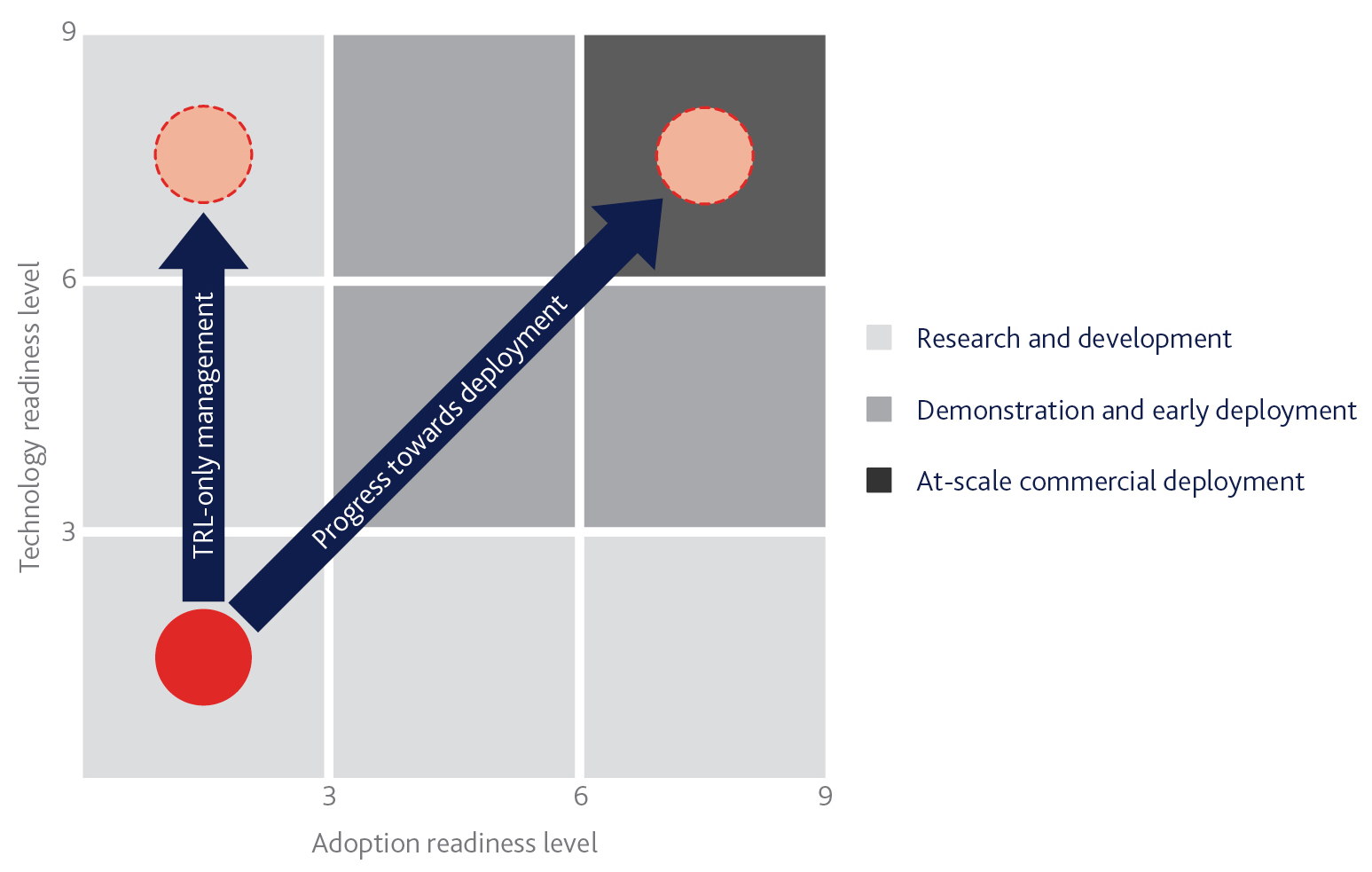
Source: U.S. DoE45
Designed to complement the Technology Readiness Level framework to enable climate tech market readiness
Launch of national critical materials strategies
Growing concerns around energy insecurity have led several governments to update or launch new national critical materials strategies, indicating growing interest in investing in the energy transition.46, 47 These strategies aim to build a competitive advantage in material sourcing to secure access to critical materials such as lithium, nickel, cobalt, manganese and graphite that are needed for the manufacturing of new climate technologies for domestic use and international trade purposes (risk 11 in Table 2). In December 2022, the Canadian government convened the governments of Australia, France, Germany, Japan, the U.K. and the U.S., leading to the ‘Sustainable Critical Minerals Alliance,’ to promote the global adoption of environmentally conscious, socially inclusive and responsible practices in the mining, processing and recycling of rare earth and critical metals (risks 13 and 16 in Table 2).48
Emergence of transformative public policy and government subsidies
Since 2022, transformative public policy and regulatory frameworks, along with substantial government subsidies, have been emerging, which create a more favourable and enabling environment for the development of climate technologies. The availability of government subsidies in particular is changing the economics and commercial profile of climate tech commercialisation. For example, there has been major legislative movement in the U.S. with the passage of the Bi-partisan Infrastructure Act, the Inflation Reduction Act and a series of executive orders issued by the U.S. Government, which provide nearly USD 1 trillion in government grants and subsidies.49 This led the EU parliament to expedite the passage of the New Green Industrial Deal on 1 February 2023, with over EUR 500 billion in financing to create a level playing field with the U.S.50 A number of other countries have followed suit, including Australia, Canada, Japan and the U.K.51 This avails capital to high-risk pilot projects during the demonstration and early-deployment stages to help expedite the assessment of functional performance and other technological risks associated with high-priority technologies (risks 1 and 2 in Table 2).
Among other important public policy and regulatory developments is the launch of carbon border adjustment mechanisms (CBAM) to promote greener manufacturing by imposing import fees on foreign products that cause more pollution during manufacturing than similar domestic products, to help shift market size (risk 5 in Table 2).52 However, there are concerns that border carbon taxes could potentially impact lowand medium-income economies that were not primarily responsible for anthropogenic climate change in the first place, and may not guarantee a fair transition for all nations.53
Finally, government programmes aim to mitigate marketrelated risks for specific technologies, such as the recent U.S. DoE initiative of USD 1 billion to boost demand for clean hydrogen. This initiative is designed to provide initial revenue for the first large-scale producers and provide certainty for potential buyers, helping to mitigate market-related risks for specific technologies (risks 4 and 5 in Table 2).54
TABLE 2: RISK CATEGORIES OF THE ADOPTION READINESS LEVEL FRAMEWORK
Value proposition | Market acceptance | Resource maturity | License to operate | ||
|---|---|---|---|---|---|
1. Delivered cost 2. Functional performance 3. Ease of use/complexity | 4. Demand maturity/market openness 5. Market size 6. Downstream value chain | 7. Capital flow and availability 8. Project development, integration and management 9. Infrastructure | 10. Manufacturing & supply chain 11. Materials sourcing 12. Workforce | 13. Regulatory environment 14. Policy environment 15. Permitting & siting | 16. Environmental & safety 17. Community perception |
Source: U.S. DoE55
Alliances to expedite market development and identify early adopters
Since 2021, there have been proactive efforts by governments, companies in the industrial and financial sectors and multi-lateral organisations to expedite market development and the emergence of early market adopters (particularly addressing risks 4 and 5 in Table 2). Examples include the First Mover Coalition (FMC), a collaboration between the U.S. State Department and WEF, which was launched at Glasgow Climate Change negotiations in 2021;56 the U.S., Canada and Mexico North American Hydrogen partnership established at the 2023 Three Amigos Conference held in Mexico;57 the U.S.–Japan Hydrogen Strategy;58 and the EU Clean Hydrogen Partnership.59
Coordinated investment platforms with philanthropic-private-public funding
Since 2017, there have been targeted efforts to coordinate philanthropic-private-public funding to scale up and offer more cohesive financing across the climate tech supply chain, particularly in the demonstration and earlydeployment stages to help get viable technologies over the ‘Valley of Death’ (risks 2 and 7 in Table 2). For example:
Sustainable finance frameworks and alliances of net-zero institutional investors
The development of sustainable finance frameworks along with taxonomies and regulations for disclosure and reporting68 are critical for institutional investors such as life re/insurers and pension funds to make informed investment decisions, particularly at the full commercialisation stages (addressing risk 7 in Table 2).69, 70, 71 Over the last few years, coalitions of institutional investors, such as the Net-Zero Asset Owner Alliance (NZAOA)72 and the Glasgow Financial Alliance for Net Zero (GFANZ),73 have been formed.
Climate-tech-specific hubs
Emerging climate-tech-specific regional hubs are bringing together producers and customers (public and private alike) to leverage existing infrastructure systems, provide a business marketplace, develop safety standards and promote the technology to expedite scaled deployment (risks 6, 9 and 10 in Table 2).74 Some examples are provided in Table 3.
TABLE 3: EXAMPLES OF CLIMATE-TECH-SPECIFIC HUBS
| Technology | Hubs |
|---|---|
| Hydrogen |
|
| Carbon management |
|
| Offshore wind | North Sea Wind Power Hub (https://northseawindpowerhub.eu/) |
Source: The Geneva Association
According to WEF, expediting the commercial deployment of climate technologies over the next decade will require new ways of doing business. There is a need to bring together relevant stakeholders across different sectors to work collaboratively to co-develop transformative risk management measures and innovative financing approaches to address the investment gap for climate technologies.76
The ecosystem of public and private stakeholders engaged in climate tech commercialisation and deployment is complex, with different touchpoints, roles and priorities for various parties at different phases of project development and financing (Box 2).77
Box 2: Stakeholders involved in various climate tech project stages
Technology, industry and related supply chains:
Financial institutions and re/insurance companies
Public sector
Source: The Geneva Association
This is particularly relevant for the demonstration and early-deployment stages (TRL 6–7), when there is a significant rise in resource needs for pilot projects, which come with untested risks (Figure 4). While some project owners may be large corporations with substantial balance sheets and extensive in-house risk management expertise, our consultations reveal that over 80% of projects are expected to be developed by small to mid-sized companies that do not have the same capacities or any previous demonstrated project success. The high risk/return profiles of pilot projects therefore neither meet the requirements of earlyor late-stage investors, and thus are at risk of falling into the ‘Valley of Death.’
If the technology successfully moves to early commercialisation stages (TRL 8–9), there are other technology-specific risks, for example related to manufacturing and the supply chain, underlying infrastructure, and permitting and siting, which need to be addressed. Furthermore, risk management frameworks, standards and codes of practice for project replication are needed for industry adoption, resulting in lower risk premiums (Figure 4). To this end, collective action is needed to:
There is rising recognition among stakeholders shaping the climate tech commercialisation landscape of the critical role re/insurers can play and the benefits of engaging them in projects from the pre-commercialisation stages.78, 79 Traditionally, P&C re/insurance companies are approached during the final financing and construction phases of projects. More recently, however, highly specialised MGAs have been engaging in the demonstration and early development stages by offering technology performance guarantees for pilot projects.80
Our consultations with representatives from various stakeholder groups have indicated significant benefits for project developers, EPC companies and investors if re/insurers get involved as early as the demonstration and early-deployment stage by offering risk engineering services (Figure 4). In this capacity, re/insurers can:
This could also benefit re/insurers, by exposing them to new technologies and helping them gain experience and expertise, which could be particularly useful given the current lack of data on new risks. However, mechanisms to bring re/insurers and other stakeholders together in the early phases of projects do not presently exist.
Feedback from stakeholders also suggests that as new climate technologies reach the early commercialisation stages, robust mechanisms are required to engage re/insurers with various technical, standard-setting bodies and certification entities for the co-development of risk management standards, guidelines and codes of practices for project replication and scaling.
In light of the feedback received from those shaping the climate tech commercialisation landscape (see section 3.2), The Geneva Association conducted a survey of insurance C-level executives to gain insight on the industry’s interest in and capacity to engage in climate tech projects from an early stage, as well as related barriers and drivers. The results shed light on companies’ strategies in this space and how to increase industry engagement in the pre-commercialisation stages of projects.
Eighty-eight C-level executives from 26 re/insurance companies responded to the GA Climate Tech Survey. Their companies collectively manage over USD 7 trillion in assets.82 Further details are provided in Box 3.
Box 3: Respondents to the GA Climate Tech Survey
| Company type | 22 primary insurers 3 reinsurers 1 re/insurance market place |
| Line of business | 5 P&Conly 8 life only 13 P&C and life |
| Regional coverage | 20 global 1 Europe, Middle East and Africa (EMEA only) 2 U.S., Canada, Latin America and the Caribbean (Americas only) 3 Asia-Pacific (APAC only) |
Source: The Geneva Association
All companies that responded to the survey are actively working on their decarbonisation strategy, targets and plans; of the 26 responding companies, 24 have already developed their strategy. Half of these entities are committed to addressing scope 1, 2 and 3 emissions over the next five years, while the remaining half is aiming to achieve these targets within the next five to 10 years.
More than 80% of CEOs (P&C and life) acknowledge that the development and wide-scale deployment of climate technologies are key to achieving the energy transition and industrial decarbonisation. Consequently, climate technologies are already being considered in companies’ decarbonisation strategies and informing their risk appetite. Furthermore, respondents indicated early signs of interest from clients, investors, governments and brokers, who are approaching their companies about risk engineering services and risk transfer solutions and investing in demonstrated climate technologies (category 1, e.g. solar or wind power) as well as some that are in the pre-commercialisation stage (category 2). The remaining 20%, primarily life re/insurance CEOs, cite the high risk/return ratio of investing in the pre-commercialisation stages as the primary reason for not considering category 2 technologies in their strategy.
Ninety-five percent of CEOs of P&C companies believe that re/insurers can play a strategic role by engaging in projects from the pre-commercialisation stages. Furthermore, nearly 70% recognise the benefits of getting involved as early as the pilot and early-deployment stages (Figure 4). Engaging early with risk engineering and consulting functions allows companies to build expertise in identifying, understanding and pricing untested risks and estimating potential loss impacts, given that historical loss information does not exist. It also offers first-mover advantages, such as the opportunity to build relationships with other stakeholders, gain a competitive edge through market access, take on a leadership position and improve understanding of the scaling approach through involvement in hands-on projects. As the technology moves on to early commercialisation, re/insurers engaged from earlier stages would have a head start with, for example, working with standard-setting bodies to develop technology-specific risk management frameworks, codes of practice and safety standards. Early engagement could facilitate congruent understanding of brokers of the appropriate risk-sharing balance for such projects, which could avoid unrealistic expectations around coverage and pricing.
However, CEOs also highlighted a number of factors that hinder re/insurers from engaging in the pre-commercialisation stages, including the lack of data on untested technological risks, profitability concerns and insufficient decarbonisation planning of companies in industrial sectors, which could impact clients’ demand for these technologies and the speed of their adoption.
As this area gains in importance, discussions about strategic engagement and investments in building internal capacity are taking place at different levels within companies, taking into account the status of the climate technology, and the company’s size, line of business and risk appetite. For example, for category 2 technologies, 80% of the 18 companies with P&C business lines are actively discussing these issues on a technical level within business units and executive committees, with 60% also having brought these matters to the Board of Directors, and nearly 30% describing their engagement in their shareholder meetings and documentation.
More than 75% of CEOs (particularly those with life business lines) indicated that the insurance industry could play a role by investing in the commercial deployment stages of climate technologies, for example through investing in industrial-scale projects and infrastructure systems. Seventy percent of respondents also indicated that investments in the early-deployment stages could lead to long-term benefits and opportunities for their companies, for example by helping shape their future climate investment strategies by giving them a view of the pipeline for the next five to 10 years, identifying highopportunity areas in the energy and industrial sectors, enhancing internal expertise within their investment teams and achieving the company’s own decarbonisation goals. Ten percent of respondents state that investing in emerging technologies is a high priority, 20% indicate that this is becoming a priority area, and 26% indicate that they are considering investments on a case-by-case basis.
Responses from CUOs and heads of risk engineering provided more details on the benefits and challenges of expanding services to the pre-commercialisation stages. Benefits include the opportunity to gain valuable insight into the operations of pilot projects through access to risk surveys, better understanding of client needs and strengthened collaboration with academic institutions and technologists. The challenges associated with category 1 and category 2 climate technologies are outlined in Box 4.
Expansion of risk engineering and underwriting capacities
Larger re/insurers are investing to expand their risk engineering services, data and analytics services and underwriting solutions for category 1 and a growing list of category 2 technologies such as green hydrogen. They are also engaged in a wide range of research and development initiatives, for example through internal innovation hubs, centres of excellence and partnerships, to further understand and model the risks of new climate technologies, develop risk mitigation solutions, advance scientific and engineering research, and fund early-stage ventures that are developing innovative solutions.
Box 4: Factors hindering re/insurers’ engagement through risk engineering and risk transfer services
| Category 1 technologies |
|
| Category 2 technologies |
|
Source: The Geneva Association
Factors hindering re/insurers’ direct engagement in the pre-commercialisation stages
Regarding the role of insurance industry intermediaries (brokers and MGAs), re/insurers highlight the importance of better understanding market needs for risk engineering services, data and analytics services and insurance products and services on a tech-by-tech basis.
There is clear agreement among respondents that intermediaries can offer benefits in the at-scale commercialisation stages, when technology-specific risks are understood and insurance products and services have been developed. Specifically, intermediaries play a key role in convening clients and re/insurers, educating clients, getting on-the-shelf products into the market and helping re/insurers expand their new products and services.
The survey results indicate that the emergence of innovative MGAs with extensive expertise in modelling certain risks associated with new climate technologies is improving the understanding of insurance needs for these technologies. Examples of such MGAs include New Energy Risk, Energetic Capital, kWh Analytics and Kita.
The survey responses also revealed several factors that may hinder the effectiveness of industry brokers in the demonstration and early-deployment stages of new climate technologies. Respondents stressed the need for direct engagement of re/insurers with customers for the development of innovative risk management and risk transfer products.83 However, the transactional approach of brokers and the need for technical expertise with new climate tech as well as research and development capabilities to identify clients’ needs and accurately capture their data, hinder such innovation.
Collaboration and partnerships to step up re/insurers’ engagement
The survey results revealed six ways industry-level collaboration and cross-sectoral partnerships can help step up the insurance industry’s contributions:
Re/insurers invest in a wide range of equity, debt and capital market financing tools for their long-term investments (particularly life re/insurers). With respect to climate technologies, current investments are primarily directed towards the wide-scale commercial deployment of category 1 technologies and related infrastructure systems. This includes as solar power, onshore and offshore wind energy, hydropower, green buildings and electric vehicle infrastructure.
In general, large-scale investment in the pre-commercialisation stages for category 2 technologies are currently very limited. Reasons for this include the risk profiles of these technologies; companies' risk appetite, resources and expertise; regulatory constraints such as cost of capital for investing in risky projects; the need for clear and stable public policies; accessibility to investable-grade projects; and commitment to fiduciary responsibility.
Some companies have expanded their investments in areas such as long-duration energy storage, sustainable biomass and geothermal energy, and are considering expanding their investment in carbon removal and storage,86 green hydrogen and eventually sustainable trucking, shipping and aviation. In general, respondents indicated lower appetite for investing in modular nuclear.
As assessing the feasibility of new climate tech is complex, re/insurers primarily invest in active partnerships with third-party venture capital firms (VCs) or in climate tech funds with diversified portfolios. Some re/insurers are also using their philanthropic funding to finance academic research to help expand innovations in this space.
CIOs have suggested that innovative financing approaches for new climate tech projects could help mobilise private capital investment. For example, the use of blended finance, government provision of umbrella protection and guarantees, and structured risk management solutions to allocate the risk to enhance risk-adjusted returns could be instrumental in attracting private capital into the pre-commercialisation stages.
Seventy percent of the CIOs surveyed highlighted the fundamental role that MDBs play in enabling institutional investors' engagement in climate tech projects within middleand low-income economies. MDBs help to source and structure investable-grade projects; can enhance projects through public-private partnerships and blended finance structures; issue guaranteed bonds to attract investments; back the credit worthiness of the project counterparts; offer investment platforms; and help identify and mitigate uncertainties associated with on-the-ground project management. In addition, MDBs could eliminate or minimise downgrade and foreign exchange risk, and offer expertise in conducting due diligence, further supporting the successful deployment of climate tech projects.
The time window to decarbonise the global economy is narrow and closing rapidly. Transformative action across all sectors, particularly hard-to-abate, high-emitting industrial sectors, is needed. The current annual investment gap to fund the transition to a net-zero economy by 2050 stands at USD 7–9.2 trillion. A significant portion of this funding needs to be deployed to expedite the wide-scale commercial deployment of a range of new climate technologies.
Many of these technologies are in the pre-commercialisation stages and come with a wide range of new risks that need to be tested. A number of factors also hinder their market readiness. However, major efforts are underway to address the risks that obstruct market adoption and deployment.
The commercialisation and deployment of new climate technologies over the next decade will require new ways of doing business. Stakeholders from across different sectors will need to come together to develop risk management measures and innovative financing approaches to address the aforementioned investment gap and other barriers.
The research conducted for this report has revealed that, on one hand, there is clear evidence that recognition of the important role re/insurers can play in this space is increasing. The survey results confirmed interest and receptivity, particularly from larger P&C re/insurers, to engage in projects from an early stage, initially through their risk engineering services. Re/insurers can help to frame risks; aid in co-designing innovative, multi-stakeholder risk management solutions; define insurability conditions for technology-specific risks; and identify insurance needs to mobilise capital. The survey responses also highlighted the need to develop mechanisms that enable re/insurers to engage directly with key stakeholders at the project level. Exactly how and when re/insurers should engage in this context needs to be more clearly defined. Furthermore, as technologies reach the early commercialisation stages, re/insurers will need to cooperate with technical, standard-setting and certification entities to develop risk management frameworks, codes of practice, guidelines and standards with a focus on risk prevention for industry adoption. These processes will be foundational for expediting deployment and project replication but, again, still need to be outlined.
Re/insurers also contribute to the development of climate technologies by investing in the commercial deployment stages. The survey results shed light on the factors that limit large-scale investment in the pre-commercialisation stages but also reveal that some companies are expanding their investments in category 2 technologies through activepartnerships with third-party VCs or investments in climate tech funds with diversified portfolios. Some re/insurers are also using their philanthropic funding to finance academic research to help expand innovations in this space. The CIOs surveyed for this report also confirmed the need for innovative financing approaches for new climate tech projects to help mobilise private capital investment.
Industry-level collaboration and cross-sectoral partnerships will ultimately be essential for addressing the challenges associated with accelerating the commercialisation and wide-scale deployment of climate technologies outlined in this report.
The second report of this two-part series will focus on how to achieve some of these solutions. It will:
Breakthrough Energy 2022.
Breakthrough Energy 2023.
MPP 2022.
Saiyid 2023.
U.S. DoE 2023a.