










  The Geneva Association
  • About us
    • Who We Are
    • Team
    • Board
    • History
    • Careers
    • Contact
  • Research topics
    • Climate Change & Environment
    • Health & Demography
    • Financial Inclusion
    • Digital Technologies
    • Cyber
    • Macro & Geoeconomic Shifts
    • Public Policy & Regulation
    • Evolving Liability
  • Publications
    • Research reports
    • The Geneva Papers
    • Articles
    • Annual reports
  • Events
    • Upcoming events
    • Summaries & Recordings
  • Awards
    • Women in Insurance Award
    • Ernst Meyer Prize
  • News & Media
Search
Subscribe
My Account Logout Subscribe
LinkedIn YouTube Instagram
Popular searches
Gen AI
Reports
Events
Financial Inclusion Conference
Women in Insurance Award
Geneva Papers
Webinar

Breadcrumb

  1. Home
  2. Events
  3. Programme On Regulation and Supervision 2025

Programme on Regulation and Supervision 2025

Sep 16, 2025 - Sep 17, 2025
  • Twitter
  • Linkedin
  • Email
  • Facebook

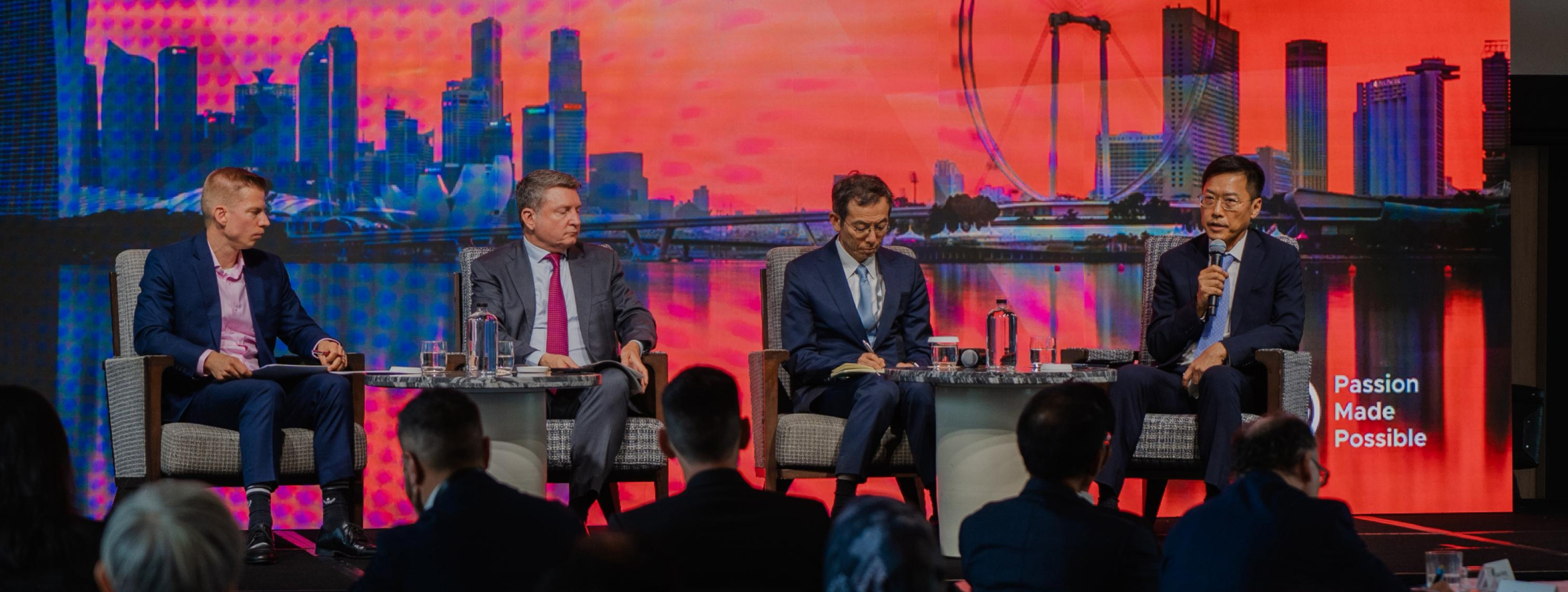
The Geneva Association’s 2025 Programme on Regulation and Supervision (PROGRES) conference took place on 16–17 September 2025 in Singapore, organised in partnership with the Global Asia Insurance Partnership (GAIP). This annual event brings together insurers, policymakers, regulators and supervisors to discuss emerging issues in insurance regulation and supervision and their implications for customers and society. The 2025 edition focused on the theme “Closing Protection Gaps and Enhancing Inclusive Insurance Through Regulation.”

Strengthening Dialogue and Collaboration Towards Resilience

Dennis Noordhoek, Geneva Association; Jonathan Dixon, Secretary General, IAIS; Yoshihiro Kawai, Chairman, GAIP; Lee Yuan Siong, Chairman, Geneva Association; Group Chief Executive & President, AIA

This joint GAIP-Geneva Association session, which bridged the organisations’ respective events, examined practical ways to narrow protection gaps. Three levers must work together: risk reduction, deeper insurance penetration and enabling conditions such as data sharing and predictable policy frameworks. Protection gaps are not only a development issue but also affect financial stability and consumer protection through spillover to households, banks and the wider economy. 

In Asia, spending on healthcare and medical inflation outpaces GDP growth, due in particular to provider-side drivers like overtreatment and fragmented care pathways. Funding pressures on public schemes and low private health insurance penetration leaves patients with increasing out-of-pocket expenses and a wideningn protection gap. Necessary responses include stronger incentives for private cover, regulatory space for product and service innovation, and the digitisation of care pathways to generate usable data for sustainable pricing and benefits, particularly for older- age populations. 

More generally, supervisors can enable proportionate, risk-based oversight that encourages responsible innovation, including parametric solutions, and can play a stronger role in measuring gaps and sharing risk data. At the same time, building risk awareness and trust can nurture demand. Insurers should prioritise accessible and affordable products that incentivise risk reduction. Public-private partnerships are a mechanism to help move from dialogue to delivery, supported by regional platforms. 

Keynote Speech

Alvin Tan, Minister of State, Ministry of National Development and Ministry of Trade and Industry, Republic of Singapore 


There are three priorities for Asia’s resilience agenda: ageing, climate risk and a more fragmented global economy. 

Demographic change is accelerating across the region, with longer lifespans and lower birth rates reshaping retirement, healthcare and social protection needs. Prevention, active ageing and long-term care coverage, as well as simpler onboarding and claims handling, can improve inclusion for seniors. 

On climate, Asia is warming faster than the global average and faces widening protection gaps. Insurance and public-private mechanisms can incentivise risk reduction. Examples include partnership models for crop and catastrophe cover, flood modelling developed with academic partners and early-stage risk frameworks that help de-risk emerging climate technologies and mobilise capital. Regulatory initiatives to calibrate capital for qualifying green infrastructure investments can enable transition finance. 

Finally, persistent trade frictions, tariffs and supply-chain adjustments are raising inflation, creating Asset-Liability Management (ALM) challenges for insurers. A renewed commitment to open markets and multilateral cooperation, and collaboration between insurers, policymakers and supervisors, can keep people protected from geoeconomic headwinds. 

Opening remarks

Darren Pain, Director of Resesarch, Geneva Association

The Geneva Association’s own recent research has explored the policy and regulatory angles of some of today’s most important themes: 

  • Managing a fragmented world economy while maintaining international regulatory coordination;
  • Safeguarding home insurance through local resilience measures, risk-based pricing and improved valuation and mortgage practices;
  • Aligning health, wealth and life spans to address longevity challenges;
  • Advancing inclusive insurance in advanced economies, especially for low-income households, younger generations and migrants;
  • Navigating generative AI by creating space for insurers to innovate and aligning on risk boundaries; and
  • Building capacity to absorb cyber risk by attracting alternative capital and enabling efficient risk transfer through flexible, forward-looking regimes.

The overarching message: innovation, resilience and inclusion, underpinned by practical public-private cooperation, will define the sector’s ability to keep people protected. 

Session 1: Converting Demographic Shifts into Economic Opportunity

Brandon Lee, Workforce Singapore; Sanchit Maini, Prudential plc; Patrick Tay Teck Guan, National Trades Union Congress; Adrita Bhattacharya-Craven, Geneva Association

The panel explored how rapid ageing is reshaping labour markets, household finances and insurance, using Singapore as a case study for productive longevity. Panellists highlighted Singapore’s tripartite approach between government, unions and employers, ongoing since the 1970s, which has supported higher labour-force participation among seniors through re-employment laws, flexible work options and targeted incentives for firms. Attitudes have shifted markedly over the past two decades as longer life expectancy, lower fertility and rising caregiving needs push demand for longer, more adaptable careers. Managing multi-generational teams, accessing affordable health cover and realising practical workplace arrangements remain central challenges. 

From an insurance perspective, demographic change is exposing gaps in products and distribution. In response, insurers should prioritise simple, affordable and flexible solutions for different generations of customers, e.g. retirement ecosystems and income products that insure the longevity ‘tail’, alongside better bancassurance access. Upcoming policy and collaboration initiatives will pilot lengthening the work span, aligning health and wealth spans, and keeping protection inclusive as societies age. 

Keynote speech – Supervision of AI: Finding the right balance

Petra Hielkema, Chairperson, EIOPA; 
Vice-Chair, IAIS Executive Committee 

AI adoption is rising across underwriting, claims and service, bringing efficiency gains and faster payouts. Yet there are consumer concerns, including standardised interactions that miss individual circumstances, data privacy and the risk of granular pricing weakening mutualisation. Public confidence should be a central focus, ensuring that AI supports access and avoids exclusion, especially for vulnerable customers. Evidence-based dialogue on how data is used can help reconcile fairness with effective risk pooling. 

Regulatory priorities are risk-based and proportionate supervision, strong data governance and clear accountability for outcomes, regardless of whether firms use traditional models or advanced AI. The EU AI Act is largely consistent with existing insurance regulation, with most use cases classified as ‘minimal risk’ (i.e. low in the four-tiered risk classification) except AI applications in life and health insurance, which are classified as high-risk. Supervisors are building practical toolkits, benchmarking value for money, monitoring outsourcing and technology concentration, and sharing cases internationally to develop common practices. Work is also being done to assess the potential systemic dimensions of AI adoption. The overarching aim is to foster innovation that keeps people protected, preserves fair pricing and strengthens resilience across the sector. 

Session 2: Public-Private Partnerships for Disaster Risk

Elton Chang, Taiwan Residential Earthquake Insurance Fund; Mina Kajiyama, Tokio Marine; Paola Matanguihan, Financial Examination Insurance Commission, Philippines; Emiko Todoroki, The World Bank; Hélène Schernberg, Geneva Association

The panel explored when public–private partnerships (PPPs) are the right tool to narrow protection gaps and how to design them for long-term resilience. Speakers emphasised that PPPs emerge where there is political will, clear public objectives and alignment with private-sector capabilities. Case studies included residential earthquake schemes in Asia that blend voluntary take-up, basic ‘restart’ cover and commercial top-ups, supported by domestic pools, state backstops and international reinsurance; penetration rose significantly once programmes delivered swift, reliable claims. 

An enabling environment matters: national strategies that assign roles across sovereign, local and household levels, and regulatory frameworks that allow pooling, coinsurance and access to alternative capital. Risk layering allows retaining frequent, smaller losses while transferring severe layers via reinsurance. There are proven examples of solidarity funds and parametric covers protecting vulnerable groups and social programmes. 

Keynote speech – The Expanding Societal Role of Life Insurers and Importance of Public-Private Collaboration

Hiroshi Shimizu, Chairman, Nippon Life

In Japan, nearly a third of citizens are already over 65, and healthy lifespans lag overall life expectancy by close to a decade. In this context there are three main priorities for the insurance sector: deliver the right protection for seniors, redesign services around customer needs, and extend solutions beyond traditional insurance in collaboration with the public sector. Proportionate regulation and targeted deregulation enable needed innovation.

Product responses include higher entry ages, simplified or guaranteed-issue options, and coverage that goes beyond classic critical illness to earlier stages of lifestyle diseases, dementia and long-term care. Service innovations range from inheritance-oriented insurance trusts to prevention programmes that combine data insights, devices and coaching, as well as cancer-screening outreach and municipal partnerships informed by medical-expense analytics. A dedicated phone line and family-supported procedures help customers with hearing or cognitive challenges. Nippon Life is also building adjacent capabilities in asset management, nursing care and childcare, acting as a platform to connect local authorities, businesses and residents. 

Keynote speech – Public–private Partnerships: The role of collaboration in closing protection gaps

Roberto Leonardi, Asia Regional Officer, Generali

Health and climate risks in Asia are rising. Scalable solutions, such as parametric covers for rapid post-disaster payouts, are emerging, but local innovation challenges stand in the way of surfacing new products for underserved communities. Partnerships with development agencies are helping map needs, convene stakeholders and strengthen resilience among micro, small and medium enterprises. 

Enabling regulatory frameworks can unlock inclusion – for example, city-level supplemental medical schemes in China; India’s national push for insurance for all supported by digital infrastructure and state-level penetration goals; and Malaysia’s financial inclusion strategy which prioritises simple, affordable offerings for low-income groups. Stable, predictable rules are important for allowing time to gather data, refine pricing and build sustainable programmes – avoiding a race to the bottom on premiums. 

Distribution remains a constraint. Potential exists in regulator-supported marketplaces and public touchpoints, such as vehicle licensing for standardised cover, with private channels upselling broader protection. With clear public objectives, proportionate supervision and sustained co-creation, insurers can crowd in capital, expand access and improve community resilience across the region. 

Session 3: Harmonising Regulation in a Fragmented World

Daniel Wang, Monetary Authority of Singapore; Hitesh Kotak, Munich Re; Gregory Hingston, Great Eastern Holdings; Doug Ommen, Iowa Insurance Division; Conor Donaldson, IAIS

Collaboration remains indispensable to achieving smarter, more coherent insurance regulation amid growing geoeconomic fragmentation. Supervisory colleges, bilateral dialogues and global standards provide the common language needed to build trust. International capital standards offer a baseline for comparability while allowing domestic flexibility. 

Given the region’s diverse market realities, full harmonisation across Asia is unrealistic in the short term. A proportionate, outcomes-focused approach over prescriptive rules is therefore more appropriate. Practical tools such as sandboxes, mutual recognition, passporting and regional convergence can cut duplication, though sandboxes become less effective at scale. 

Divergent capital, accounting and ESG reporting requirements impose high costs, while data localisation rules can hinder innovation and cross-border pooling, particularly for reinsurers. Addressing protection gaps will require fewer frictions for simple, affordable products, more efficient distribution and clearer cross-border data rules – all with a continued emphasis on consumer outcomes and fair dealing.

Session 4: Insurance Supervision in an Era of Change

Michael Consedine, Athene; Ricardo Garcia, Bermuda Monetary Authority; Fiona Larnach, QBE; Dieter Hendrickx, National Bank of Belgium; Bryan Pickel, Prudential Financial

Insurance regulation and supervision can play a key role in supporting ambitious growth and development objectives while maintaining financial resilience. As societies face challenges such as ageing populations, climate risks, cyber threats and fiscal constraints, insurers are increasingly expected to contribute more to societal resilience. In this context, developments such as the growth of private credit and asset-intensive reinsurance highlight both opportunities for managing long-dated liabilities and the importance of calibrating regulatory requirements to actual risk rather than perceived risk based on ‘labels’. 

Practical tools, such as enhanced stress testing, stronger governance and liquidity oversight, prior approvals for complex transactions, and more transparent disclosures on illiquid assets, can help supervisors keep pace with structural shifts. Innovation should be enabled through sandboxes and dedicated classes, alongside operational resilience to avoid single points of failure. Addressing protection gaps requires pragmatic public-private collaboration, simpler products and more accessible distribution, including digital channels, while ensuring fair outcomes for customers. On AI, the message was to seize efficiency and inclusion opportunities with robust model governance, explainability and data safeguards. Continued collaboration between supervisors, industry and policymakers is essential to meet growth objectives without compromising policyholder protection. 

Keynote speech – Geopolitical Fault Lines, Risk and the Insurance Response

Parag Khanna, Founder & CEO, AlphaGeo

Today’s world is a ‘geopolitical marketplace’ characterised by multiple centres of power, fluid coalitions and states practising multi-alignment to maximise their interests. Russia is deepening its ties to Asia and rapidly growing intra-Asian trade and infrastructure links. A new growth triangle spanning the Gulf, ASEAN and Central Asia is gaining strategic weight. Expanding, open networks among the United States, Europe, Japan, India and others provide alternative finance, technology and supply-chain security. Experiments in currency settlement outside the US dollar are advancing through regional arrangements and central-bank cooperation. 

The implications for insurers include persistent fragmentation across rules, currencies and data regimes, more frequent supply-chain reconfiguration and elevated geopolitical risk. Rather than a single systemic rupture, the outlook points to prolonged, localised tensions and proxy conflicts, requiring rigorous scenario analysis. The insurance sector should prioritise stress testing portfolios for shifting trade corridors and technology controls, strengthening operational resilience, and engaging standard-setting bodies where practical rules are being shaped. 

Session 5: The Vital Role of Insurance for Financial Inclusion in Emerging Economies

Vafa Anvari, South African Reserve Bank; Lorenzo Chan, Pioneer; Nurul Izza Idris, Bank Negara Malaysia; Jamie Ko, Grab; Kai-Uwe Schanz, Geneva Association

Insurance plays a unique role in protecting low-income households from shocks that erase years of progress, complementing the savings, credit and payments features within national financial inclusion strategies. Practical models include daily, or per-trip covers for gig workers, simple, bundled micro-policies, and hybrid “tech and touch” distribution through trusted partners such as microfinance institutions, dealers and remittance networks. Paying claims quickly – leveraging onsite verification, for example – is the decisive trust builder. 

Regulatory enablers include proportionate, outcomes-focused regimes, faster approvals for simple products, clearer conduct rules, and scope to relax KYC (‘Know Your Customer’) requirements for low-risk covers. South Africa and the Philippines provide case studies of dedicated microinsurance licences, calibrated benefit limits, simplified agent accreditation and faster product filing. Public infrastructure, from death registries to QR-based hospital claims and digital IDs, can help unlock scale. The priorities ahead include co-creating value-for-money products, crowding in partners and capital, embedding insurance in inclusion policies, and measuring success by real customer outcomes. 

Related Content

Cyber Conference 2026

Cyber Conference 2026

Nov 17, 2026
Conferences
Climate Change & Environment Conference 2026

Climate Change & Environment Conference 2026

Oct 27, 2026
Conferences
Programme on Regulation and Supervision (PROGRES) 2026

Programme on Regulation and Supervision (PROGRES) 2026

Sep 02, 2026
Conferences
Financial Inclusion Conference 2026

Financial Inclusion Conference 2026

Mar 25, 2026
Conferences
Climate Change & Environment Conference 2025

Climate Change & Environment Conference 2025

Oct 29, 2025
Conferences
Programme on Regulation and Supervision 2025

Programme on Regulation and Supervision 2025

Sep 16, 2025
Conferences

Related Content

Cyber Conference 2026

Cyber Conference 2026

Nov 17, 2026
Conferences
Climate Change & Environment Conference 2026

Climate Change & Environment Conference 2026

Oct 27, 2026
Conferences
Programme on Regulation and Supervision (PROGRES) 2026

Programme on Regulation and Supervision (PROGRES) 2026

Sep 02, 2026
Conferences
Financial Inclusion Conference 2026

Financial Inclusion Conference 2026

Mar 25, 2026
Conferences
Climate Change & Environment Conference 2025

Climate Change & Environment Conference 2025

Oct 29, 2025
Conferences
Programme on Regulation and Supervision 2025

Programme on Regulation and Supervision 2025

Sep 16, 2025
Conferences
The Geneva Association

Subscribe to our updates

About us

Research topics

Publications

Events

Awards

News & Media

Contact us

Terms & Conditions

Follow us on social media

LinkedIn Instagram YouTube

© Geneva Association

Admin

INSURANCE FOR A BETTER WORLD