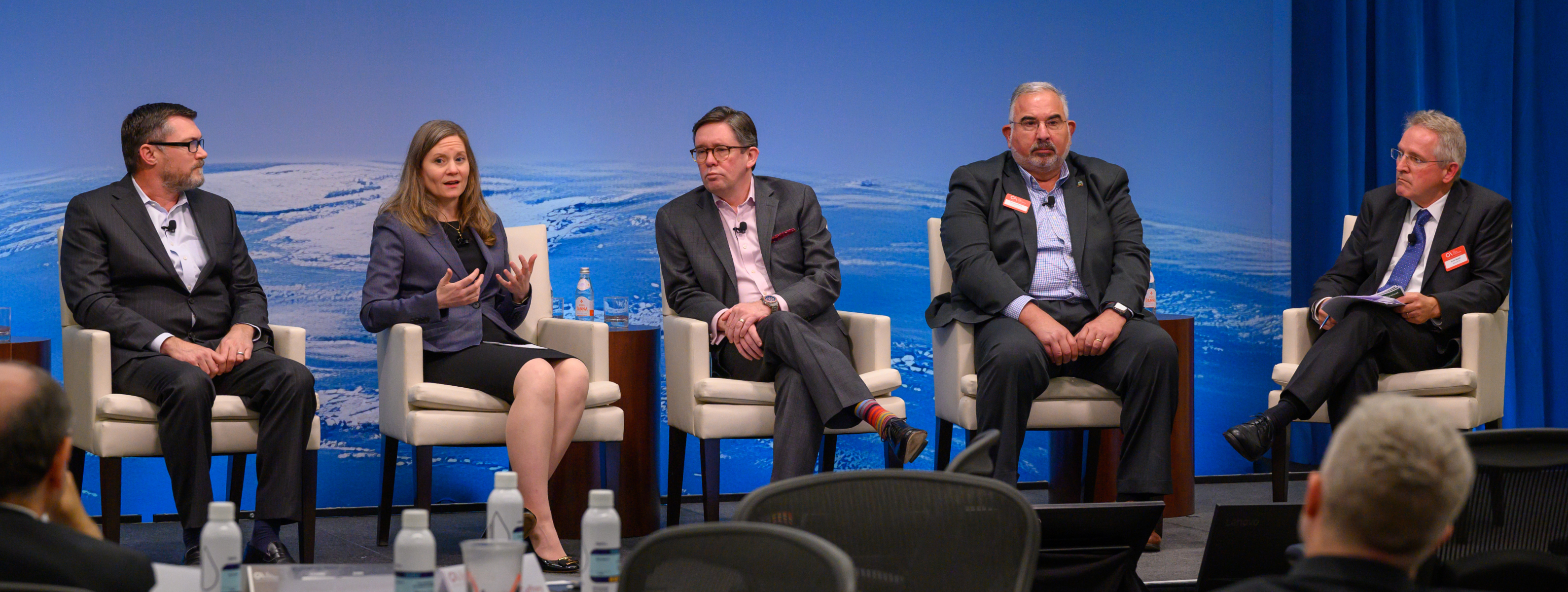
William Keithler, AIG; Raghuveer Vinukollu, Munich Re US
This session examined the need for climate risk information to support decision making in the insurance industry, as well as how to vet the next generation of climate risk analytics tools.
A shift is underway in the use of model outputs. Forward-looking climate risk modelling should be stochastic, offering a range of scenarios
Explaining the changes to these models and the assumptions they make is hard, particularly when their outputs result in a financial statement adjustment. Decision makers need to be educated to interpret the results properly.
Collaboration across the industry promotes learning and the advancement of the next generation of risk models. Larger companies can invest in their own models, while smaller firms use third-party software.
Models will be used differently on the liability and asset sides, but the data needs are similar and assumptions should be consistent. Models should also allow users to customise their assumptions, which allows for mid-cycle updates.
Data availability and standardisation, particularly when it comes to property, e.g. when a home was built or the location of critical infrastructure, is essential.
Public access to risk information could lead to a significant and widespread repricing of property insurance and generate a decline in the value of real-estate assets in insurers’ investment portfolios.