

Public Policy & Regulation

The Geneva Association. 2023.
Regulation of Artificial Intelligence in Insurance: Balancing consumer protection and innovation.
Author: Dennis Noordhoek. September.
Dennis Noordhoek, Director Public Policy & Regulation
Business across sectors are embracing artificial intelligence (AI) as an important tool. In insurance, AI is reshaping business processes, from underwriting to claims management and customer engagement. Benefits include its potential to help reduce protection gaps by improving the availability, affordability and accessibility of insurance1 on the back of increased personalisation and improved cost-efficiency.2
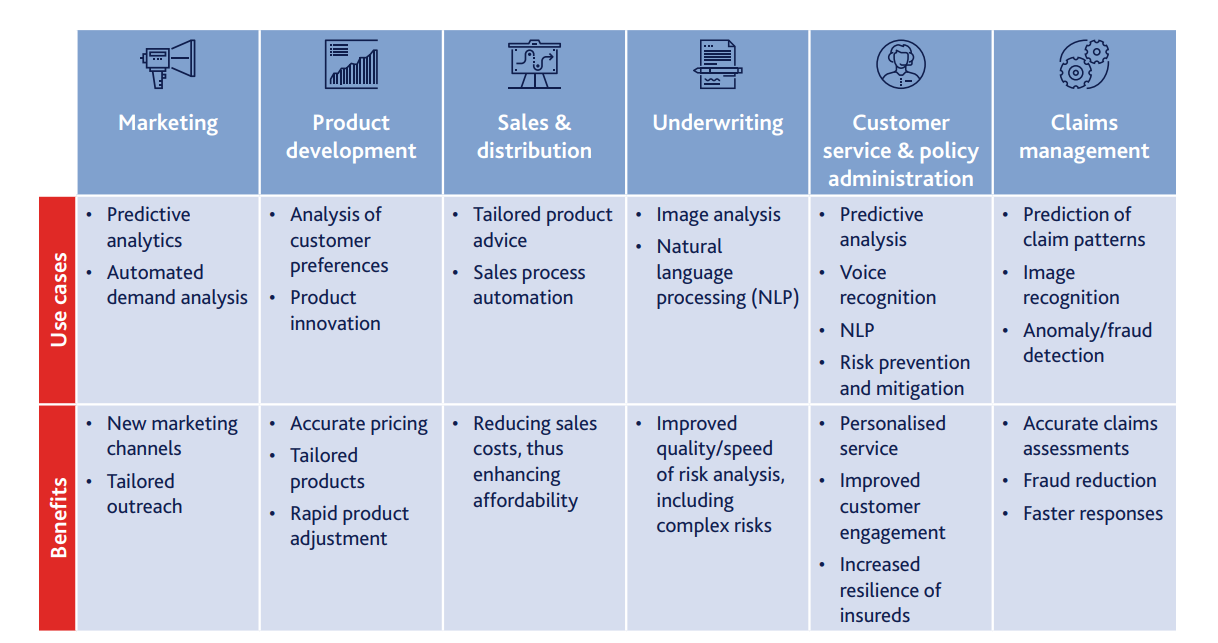
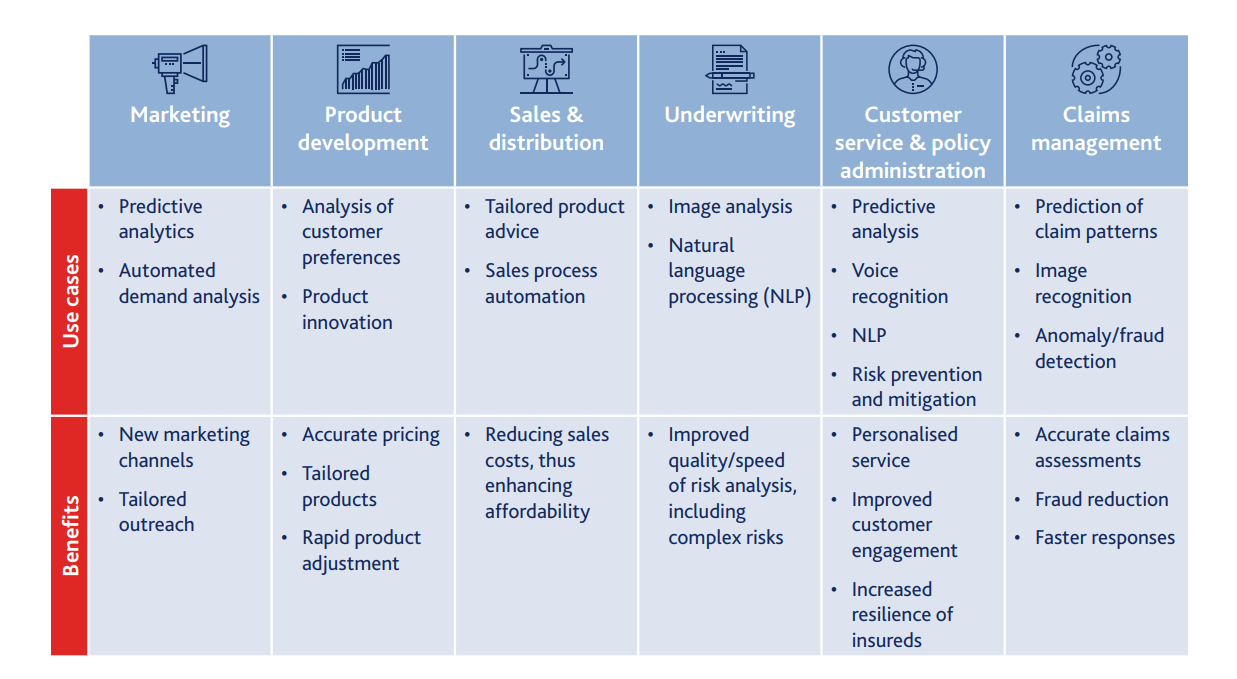
FIGURE 1: AI USE CASES ACROSS THE INSURANCE VALUE CHAIN
Source: The Geneva Association, adapted from Eling et al. and Accenture
AI can be applied across the insurance value chain. Specific use cases include speech recognition, pattern and image recognition and data-driven decision making. Depending on the area it is used, it provides customers with an enhanced and more tailored experience, innovative products, such as use-based insurance, and fast and efficient claims processing. It allows insurers to enhance their value proposition,3 by being able to predict and prevent risks,4 and thus helps societies become more resilient, improve fraud detection, and have a more granular view on risks.5
While AI helps insurers getting better at their core business, AI as such is not changing the core business of insurance. Underwriting is a core process and involves assessing and pricing risks, a process that is based on data,6 such as those related to past experiences. AI strengthens this process, by allowing rapid data processing and analysis capabilities, finding correlations, tapping new sources of data, and allow underwriters to make more accurate risk assessments.7 Interviews with experts from the insurance firms have shown that insurers not blindly rely on AI outcomes, but that AI augments human decision making.
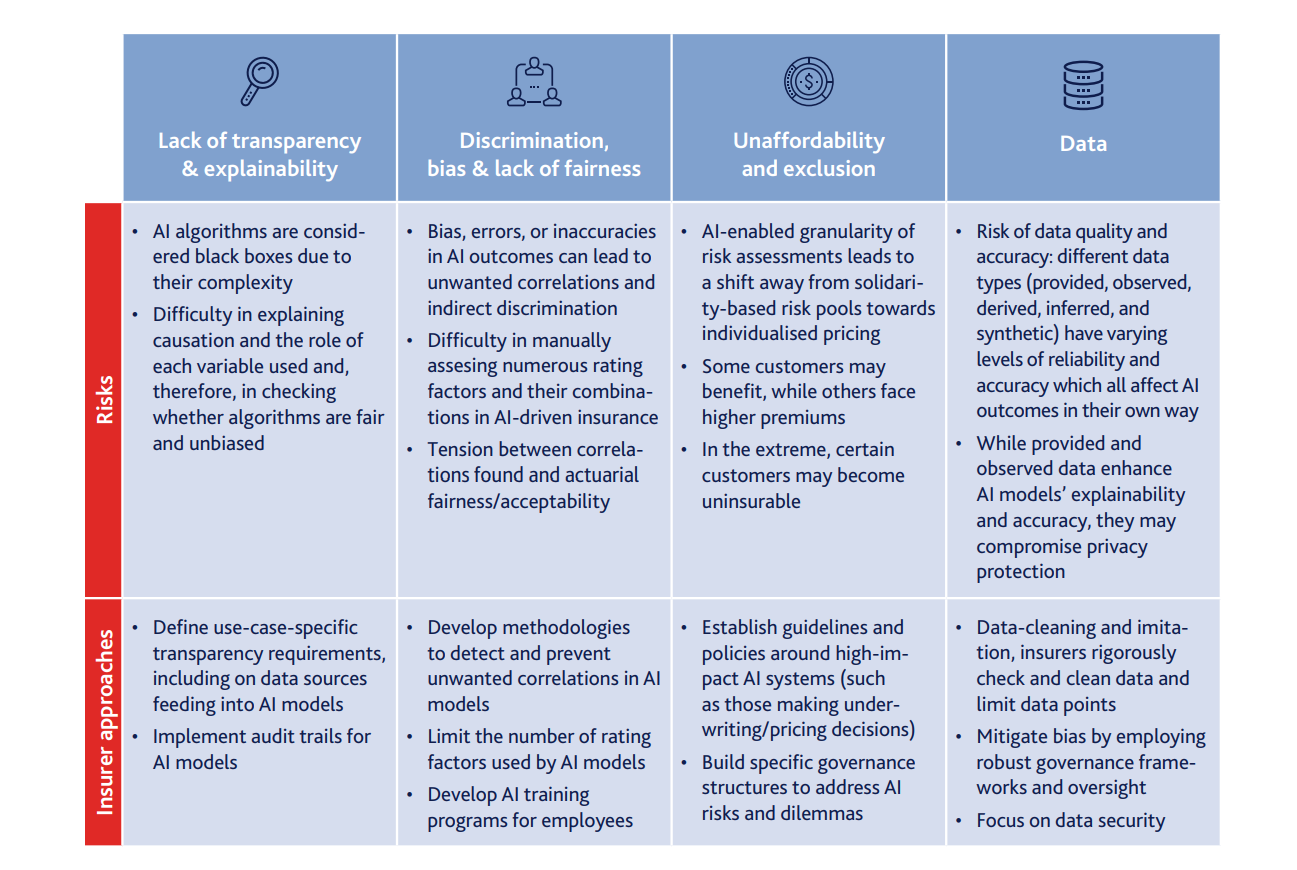
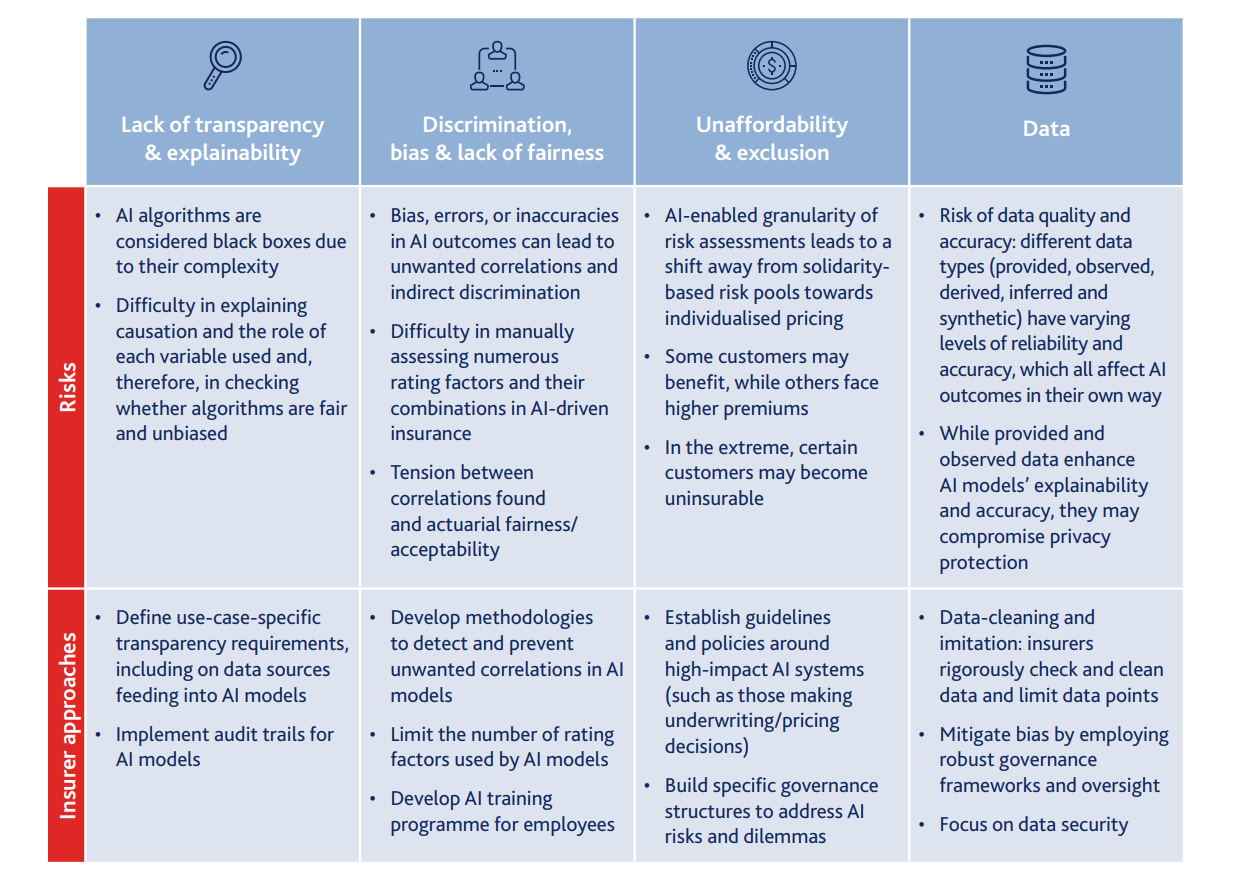
Recently, the rise of generative AI tools like ChatGPT has brought the risks and challenges of AI into the spotlight. Within the insurance industry, key concerns include a lack of transparency and explainability, discrimination, bias, unfairness, unaffordability, exclusion, and data-related issues.8 These issues are not necessarily new to insurance, but emerge through a different channel as a result of the use of AI. Insurers are adopting various measures to address these AI-specific risks, such as methodologies for detecting and preventing unwanted correlations in AI models, following AI governance principles such as those issued by EIOPA,9 self-imposed limitations on the number of rating factors used in underwriting, and governance structures tailored to manage AI-related risks. Importantly, the reversible nature of AI decisions in insurance means that the associated risks differ significantly from those in other domains.
FIGURE 2: ADDRESSING AI RISKS AND CONCERNS
Source: The Geneva Association
Public concerns about the risks and downsides of AI have put pressure on policymakers and regulators worldwide to take action. This has led to a variety of regulatory initiatives, some specific to insurance and others that are cross-sectoral, particularly in the European Union. The latter could stifle innovation in insurance, as it does not consider the unique characteristics of the insurance business model and existing regulatory frameworks. In contrast, some jurisdictions have adopted a principles-based approach, issuing guidelines on how existing, technology-neutral regulations can be applied to manage AI-specific risks in insurance. Crafting specific and prescriptive AI regulations is like trying to hit a moving target, given the rapid pace of AI developments. This poses the risk of regulations becoming quickly outdated, while limiting innovation. The key challenge for policymakers is to strike a balance between minimising AI risks to protect consumers and citizens, while also allowing enough room for innovation to benefit society at large.
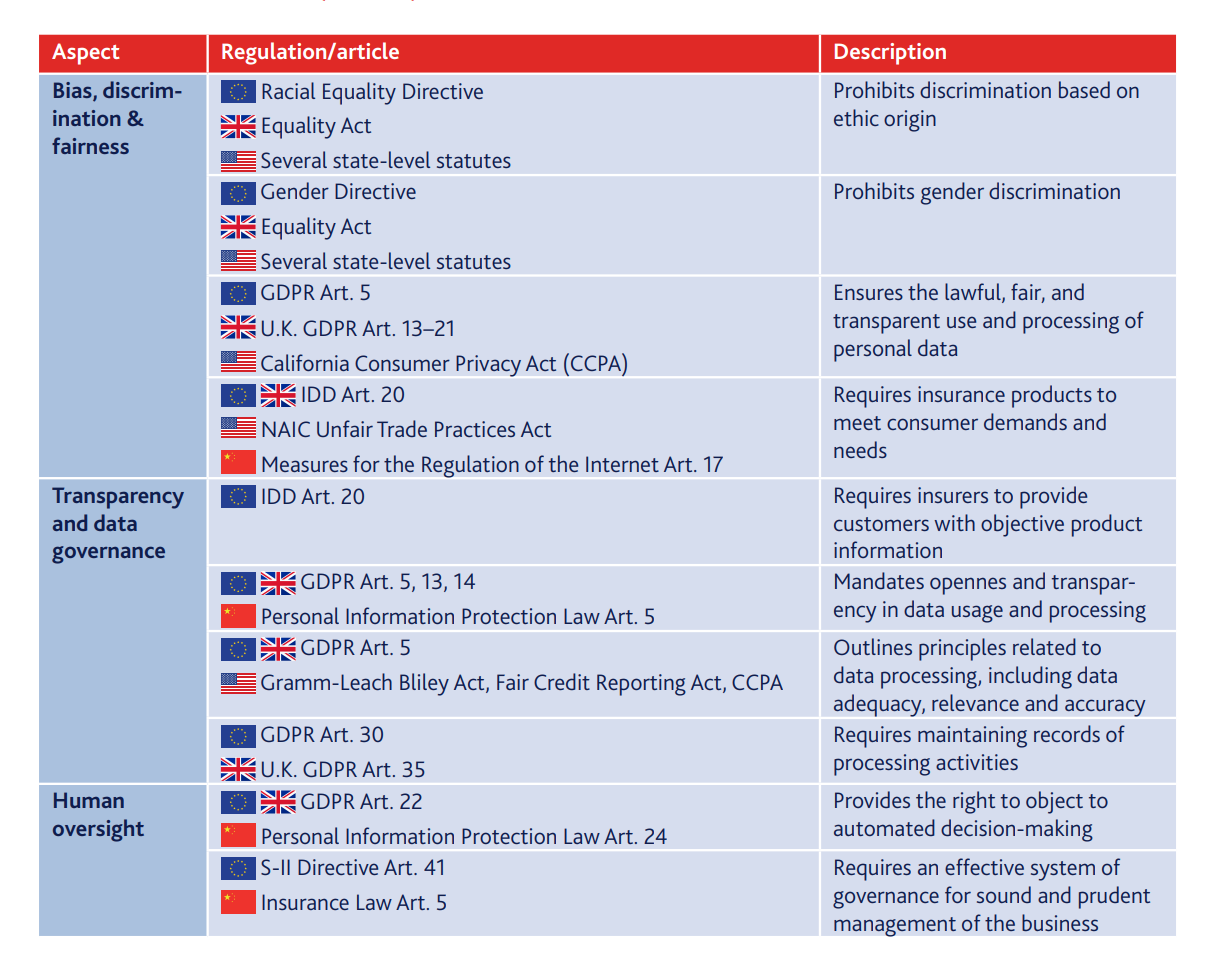
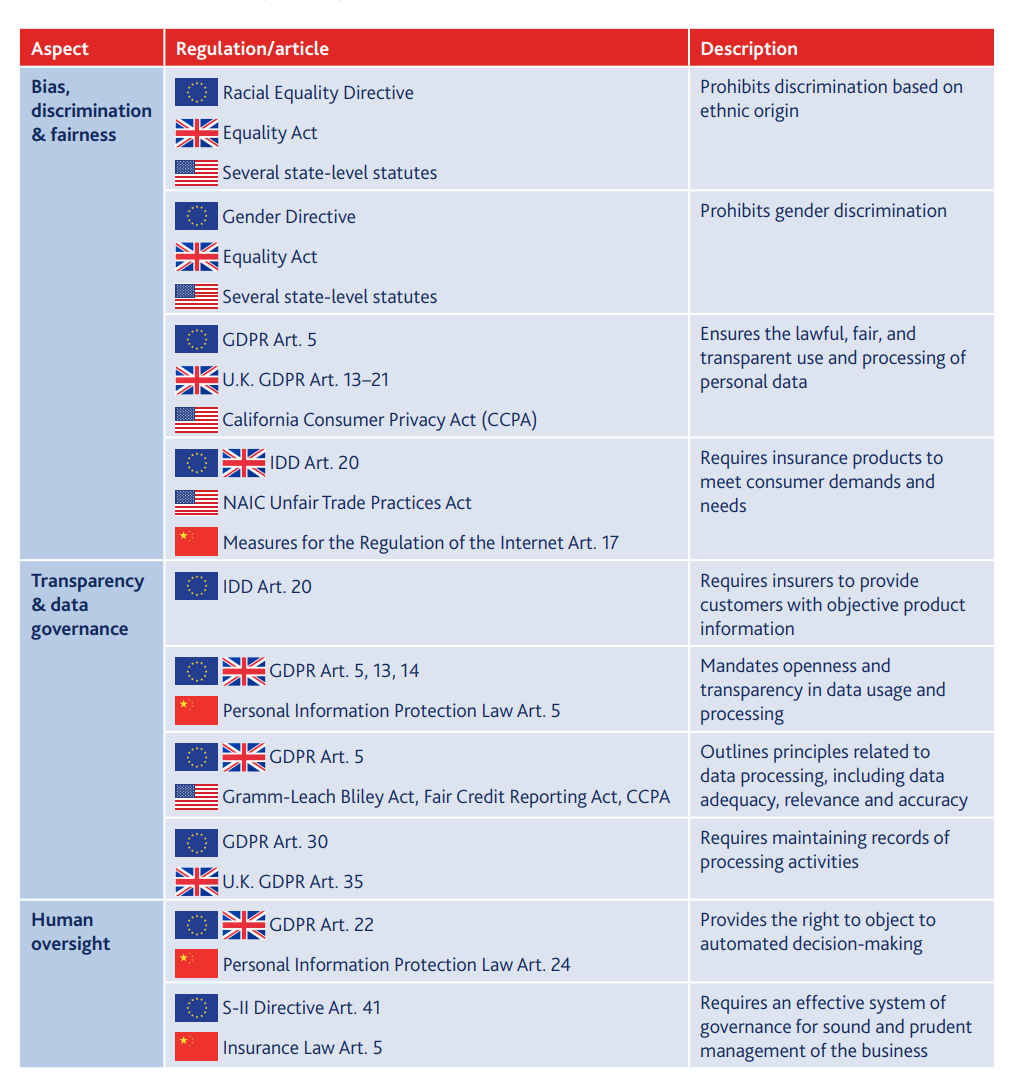
AI in insurance is already subject to rules such as data protection and insurance distribution regulation. In particular, risks and concerns around the use of AI in insurance such as bias and discrimination are well captured by existing sectoral and cross-sectoral regulation. Regulatory frameworks in key insurance markets such as the EU, U.K., U.S., and China include laws and regulation addressing anti-discrimination, gender equality protection, and consumer protection provisions. They also emphasise transparency in data usage and processing, as well as the necessity for human oversight in automated decision-making. These existing, technology-neutral regulations are often not fully understood by policymakers who are tasked with developing AI regulation in today’s context, yet they offer a robust foundation for managing AI-related risks in the insurance sector.
FIGURE 3: HOW AI-RELATED RISKS ARE CAPTURED BY EXISTING REGULATORY AND LEGAL FRAMEWORKS IN THE EU, CHINA, U.K. AND U.S.
Source: The Geneva Association
Risks such as bias, discrimination and exclusion existed in insurance long before the emergence of AI. Novel risks associated with the use of AI in insurance are the speed at which effects of AI can propagate as well as the scope of the potential consequences of their misuse.
Even in the absence of AI-specific regulation, AI in insurance is not in a vacuum; for example, it is already subject to data-protection and insurance-distribution regulation. When developing their approach to AI in insurance, policymakers and regulators should leverage and build on these regulations in order to strike the right balance between protecting consumers and enabling innovation.
Considering this, we present the following recommendations for policymakers and regulators:
Insurers also have a major role to play in building trust around the responsible use of AI. They should take the concerns that exist around the use of AI seriously; for example, by embracing transparency and by clearly communicating the way AI is used in consumer-facing areas of their business such as underwriting and claims handling. In addition, it is important for insurers to monitor the outcomes of AI models. While it is currently challenging to test outcomes for bias, insurers could work with stakeholders such as regulators, supervisors and consumer organisations to develop testing methods and address broader concerns related to the use of AI in insurance.
The expansion of the use of artificial intelligence (AI) in insurance is emblematic of the broader digital revolution sweeping across industries worldwide. AI has the potential to profoundly transform the insurance industry, as AI algorithms factor into risk assessment, claims processing and customer interactions.
There are unprecedented opportunities emerging, such as more affordable insurance products and more satisfied insurance customers – and an overall enhanced value proposition for the insurance industry.
However, AI also poses challenges to upholding the core principles of fairness, transparency and accountability.
In navigating this territory, it is essential to approach the regulation of AI in insurance with a commitment to both enabling innovation and safeguarding the interests of all stakeholders. This report places insurers’ use of AI and its potential risks in the broader, dynamic landscape of regulatory frameworks across different jurisdictions. It further assesses if and how regulation addresses risks such as bias and discrimination.
The regulation of AI in insurance is about more than creating rules and standards. It is about fostering a culture of responsible innovation; it is about promoting inclusivity, empowering customers and preserving trust. We hope the guidance we offer to regulators, policymakers and insurers supports the collaboration and alignment required for AI to benefit all who rely on insurance for peace of mind and financial security.
We look forward, at The Geneva Association, to continuing the dialogue on the responsible and equitable integration of AI into the insurance sector, so that AI in insurance – like insurance itself – serves as a force for good.
Jad Ariss
Managing Director
Artificial intelligence (AI) is increasingly transforming how people live and work. In insurance, AI has significant potential to help reduce protection gaps by improving the availability, affordability and accessibility of insurance on the back of increased personalisation and improved cost-efficiency. While there are risks linked to the use of AI by insurers, including potential bias, discrimination and exclusion, the largely reversible nature of AI decisions in insurance mean they are of a very different nature to those in other domains. In addition, many of these risks existed in insurance prior to the emergence of AI.
The rise of generative AI tools such as ChatGPT has led current public debate to focus on the downsides and risks of AI, pressuring policymakers and regulators globally to respond. This pressure has resulted in various regulatory initiatives, some insurance-specific and others cross-sectoral. The latter in particular could hinder innovation in insurance as they do not consider the unique characteristics of the insurance business model or take existing regulatory frameworks into account. The fast pace of AI developments makes formulating corresponding regulation tantamount to capturing a moving target. The major challenge for policymakers is to find a balance between minimising the risks of AI to protect customers and citizens and allowing sufficient room for innovation to the benefit of society at large.
AI in insurance is already subject to rules such as data protection and insurance distribution regulation. In particular, risks and concerns around the use of AI in insurance such as bias and discrimination are well captured by existing sectoral regulation. This report is primarily targeted at policymakers who are in the process of developing AI-specific laws and regulations. It analyses the use of AI in insurance and assesses the aspects of AI that are truly novel from an insurance perspective. On this basis, the report discusses the perceived opportunities and risks associated with its application, and investigates AI regulatory initiatives across various jurisdictions as well as their impact on the insurance sector. The report also evaluates how existing regulations address some of the perceived risks.
Based on insights from interviews with executives from the regulatory community and the insurance industry as well as findings from a literature review, the report provides the following recommendations for policymakers and regulators:
AI is a vital component of the digital transformation of the insurance industry. It has the potential to provide significant benefits to consumers, firms and society as a whole, and contributes to improving the availability, affordability and accessibility of insurance. By allowing insurers to gain a more granular view on risks, AI can facilitate the coverage of risks that were previously deemed difficult to insure, and thus contribute to reducing protection gaps. AI also enables insurers to transform their business model from one that focuses on paying claims to one that emphasises risk prevention and mitigation.1 It furthermore boosts efficiency and enables a more tailored interaction between insurers and customers.2
These benefits, however, also come with risks. In insurance, these include heightened risk of bias (caused by training algorithms on biased data, leading to biased decisions), unfair discrimination, exclusion, as well as data security and liability risks.3 As a result, AI is subject to legislative and regulatory scrutiny.
Against this backdrop, this report focuses on the regulation of AI in insurance and aims to contribute to ongoing legislative and regulatory discussions on how to balance consumer protection and innovation. The report is based on an extensive literature review and an examination of recent legislative and regulatory developments, complemented with information gathered through expert interviews with representatives of the insurance industry, consumer organisations and the regulatory community.
As a debate on regulation requires clarity on what is to be regulated, section 2 of the report lays out the relevant definitions. Section 3 examines the benefits of AI for customers, insurers and society. Section 4 details how AI is changing the insurance business model, with a focus on underwriting due to its prominence in public discourse. AI-related risks specific to insurance, and the way insurers are managing them, are analysed in section 5. Section 6 takes a deep dive into AI regulation, assesses how existing sectoral regulation already addresses AI-related risks in insurance and provides an overview of legislative and regulatory initiatives in key insurance markets. Conclusions and recommendations for regulators and policymakers are provided in section 7.
The definition of AI is subject to ambiguity. It is an umbrella term encompassing a wide range of concepts and applications, and means different things to different people – from statistical models and software in general to self-learning applications.4 In the context of the EU AI Act, the definition of AI has been subject to discussion for a very long time.5
For the purpose of this report, we define AI as the ability of machines to conduct tasks requiring human intelligence, including learning, reasoning, problem-solving and natural language processing (NLP),6 based on the processing of vast amounts of data for decision-making while learning and adapting through pattern recognition and analysis.
Advanced analytics and AI are often used interchangeably, but they have distinctive characteristics and functions, particularly in an insurance context. Insurers have been using advanced analytics for quite some time, including techniques and tools to analyse data with the purpose of extracting valuable insights. Methods used include data mining and statistical analysis.7 In insurance, advanced analytics can be used for tasks such as predictive modelling, e.g. identifying risk factors and estimating potential losses. A key distinguishing factor is that, in advanced analytics, the main creating actor is a human rather than a machine.8
AI, on the other hand, refers to computer systems that can perform tasks that require human intelligence. Breeds of AI include machine learning (see below), NLP – a branch of AI that gives computers the ability to understand text and spoken words in much the same way as humans – and computer vision, which enables computers to derive meaningful information from digital images, video and other visual input.9 In insurance, AI is used in underwriting, claims processing, customer service and fraud detection.10
The terms machine learning (ML) and AI are frequently used interchangeably but they are not synonymous.11 ML is a specific subset of AI. It involves the use of algorithms that enable machines to learn from data and iteratively improve their performance on a task without being explicitly programmed.12 The cybernetic feedback loop is a critical element of ML, allowing machines to adjust their internal parameters based on the comparison of their output with the desired outcome, and thus refine their performance over time.13 In summary, ML is a key component of AI, focused on the development of systems that can autonomously enhance their abilities through data-driven learning processes. This is important as it allows for the distinction between AI and other types of advanced analytics or software in general.
While this report does not intend to provide yet another definition of AI, it aims to contribute to the discussion by suggesting what elements should and should not be part of a definition for insurance regulatory considerations.
The precise definition may be subject to debate, but the primary distinctive feature of AI is its ability to mimic aspects of human intelligence.14 AI should not be conflated with the practice of collecting and analysing numerical data or using traditional mathematical models.
Some of the experts interviewed for the report pointed out that focus should be on the decision-making applications of AI rather than on AI as a technology. For regulatory purposes, it is therefore essential to concentrate on the data sources used as well as the outcome of decisions rather than on algorithms, which could encompass all software that may fall under a broader definition of AI.15 When a definition of AI for regulatory purposes is deemed necessary by policymakers, it will be crucial to distinguish self-learning applications from traditional analytics to prevent over-regulation of established practices in the insurance industry.
“An AI definition would be most useful if it focuses on what makes AI new compared to other mathematical models, such as machine learning approaches and the ‘black box dimension’.”
Julian Arevalo, EIOPA
Benefits of AI in insurance
This section, primarily targeted at policymakers not necessarily familiar with insurance, examines the use of AI across the insurance value chain as well as its benefits to customers, insurers and societies more broadly.
AI can help insurers to change their value proposition and contribute to increasing societal resilience. The socioeconomic benefits of the use of AI in insurance can be summarised as follows:
1) Expanded scope for risk pooling:
Through enhanced risk assessments, insurers have a better view on risks. This can allow them to offer insurance coverage for previously difficult-to-insure risks (such as cyber) as well as reach previously uninsured segments of the population.16
2) Prevention and mitigation of risks:
Insights provided by AI can be shared with insureds to reduce and mitigate risks.17
3) Reduced cost of risk pooling:
AI allows for (partial) automation of many processes, e.g. risk assessment, underwriting and claims handling, which improves efficiency and reduces costs. Through enhanced risk prevention and mitigation, AI also has the potential to reduce claims.
Although AI is relatively new, the use of data by insurers is not. For decades, data processing and models have been central to the insurance business, including for underwriting and pricing risks, determining claims and supporting product development. AI, however, allows insurers to use existing and new data more efficiently.
The use of AI and digitalisation of processes in insurance are strongly connected. The initial wave of digitalisation in the insurance industry was primarily focused on the distribution of products through online sales channels18 and improved information and enhanced choice for customers,19 and the amount of data generated by these processes gradually expanded. Today, the widespread use of interconnected mobile and Internet of Things (IoT)20 devices such as wearables, and the increasing amounts of data generated by them, have paved the way for innovation and the use of AI applications by insurers.21 These applications can be divided into three broad categories: 1) conversion of language or text; 2) recognition of images, patterns, trends and preferences; and 3) contentbased processing of information and data-driven decision making.22 The first type (text and language conversion) includes speech recognition and text analytics, NLP and sentiment detection. The second type of applications can analyse data sets, texts and images for patterns and anomalies and provide recommendations. The third set executes tasks based on data-driven decisions and include automated underwriting decisions.23
AI applications offer benefits to both customers and insurers.24
Benefits for customers
Benefits for insurers
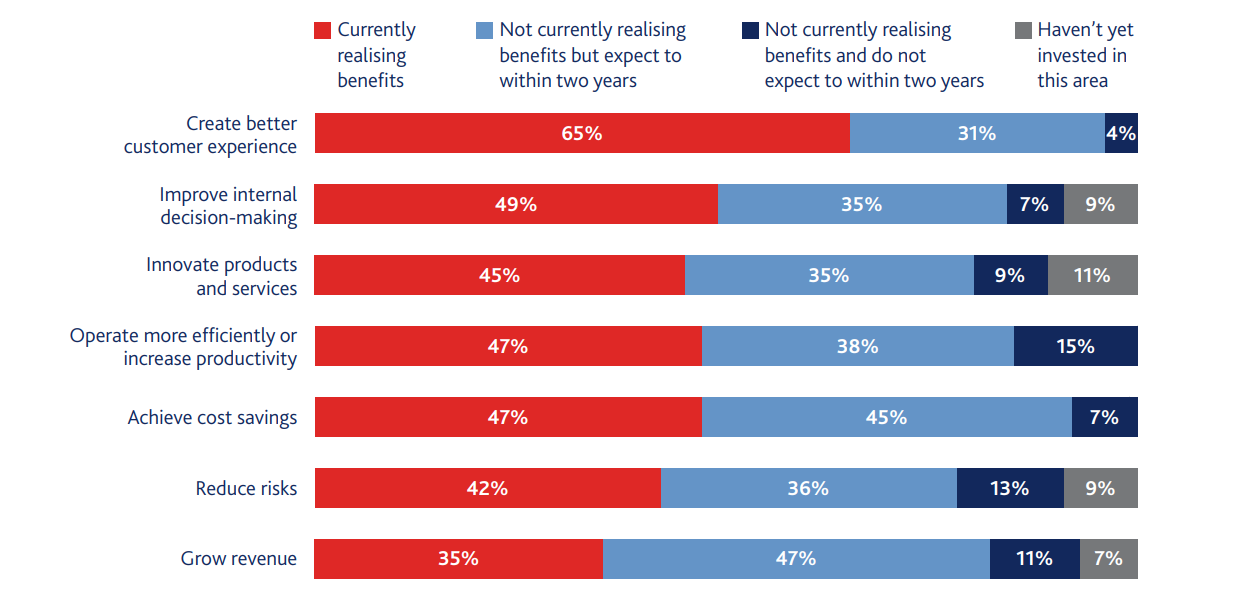
Figure 1 illustrates the areas in which insurers are benefiting from investments in AI, based on a 2022 survey of 1,000 participants.
FIGURE 1: WHERE AI INVESTMENTS ARE PAYING OFF FOR INSURANCE COMPANIES
Source: PwC28
AI applications in the insurance value chain
AI applications are used right along the insurance value chain (see Table 1).
TABLE 1: AI USE CASES ACROSS THE INSURANCE VALUE CHAIN
Source: The Geneva Association, adapted from Eling et al. and Accenture29
The table highlights the wide variety of AI applications and use cases in insurance. For example, predictive analysis supports marketing strategies with personalised outreach through new channels; real-time analysis and big data analytics enhance product development and enable usagebased insurance and risk detection services;30 automated processes and tailored product recommendations enhance sales and distribution; enhanced engagement improves customer service and policy administration; and expedited assessment and settlement of claims, as well as improved fraud detection, lead to fairer and more cost-effective insurance.31
These processes ultimately lead to greater customer satisfaction, increased efficiency and potentially new revenue streams.
This section explores the transformative impact of AI on decision-making in insurance underwriting. The use of AI in underwriting significantly influences consumer outcomes, leading to heightened public discourse.
Underwriting is a core process of insurance that involves assessing and pricing risks presented by applicants seeking insurance coverage.32 Underwriters analyse various factors that are relevant for the risk to be insured, such as the object to be insured (car, house, etc.), its location, as well as the nature of the risk itself. Actuarial methods are employed to assess the probability of claims occurrence and the potential magnitude of losses.33 Based on these assessments, underwriters determine the appropriate premium for a given risk, ensuring that it is sufficient to cover potential claims as well as the cost of capital and operations.34
AI is transforming the underwriting process in various ways.35 It can rapidly process and analyse vast amounts of data, enabling underwriters to make more accurate and efficient risk assessments.36 ML algorithms can identify patterns and relationships within the data, which can help to refine rating factors and improve the accuracy of pricing models. While the underlying fundamentals of the underwriting process remain unchanged, AI is spurring a shift from causation to correlation.37
Where there is a causal relationship between variables, a change in one variable is responsible for changes in the other. A classical (non-AI) underwriting situation is the underwriter that assesses the link between an individual’s smoking habits (cause) and their likelihood of developing lung cancer (effect).38
Correlation, on the other hand, implies that two or more variables move together but that there is no causal relationship between them. An underwriter might notice a correlation between the dietary habits and frequency of health insurance claims of certain customers, for example. This does not mean, however, that having a poor diet is the direct cause of all health-related issues as part of those claims.39
Traditional underwriting practices rely on establishing causal relationships. The above-mentioned example shows that someone’s lifestyle, in this case smoking, can increase the likelihood of lung cancer which, in turn, influences the insurance premium. Underwriters use knowledge of these causal factors to assess risk and determine premiums.
AI is very efficient at finding correlations, particularly in large data sets that are too complex for humans to analyse. While there may not be a causal link between the correlations found, their predictive value is precise and powerful. Underwriting based on AI is thus able to take more variables and the complex interactions between them into account.40
It is important to recognise the distinction between causality and correlation as both have benefits and limitations. Relying on correlation without proper checks and balances may lead to spurious relationships, but methods based only on causality do not leverage the predictive information that data can provide.
Most regulatory frameworks, particularly in the areas of conduct and risk-based pricing, are developed around causality, allowing insurers to adjust premiums based on factors that are proven to increase the risk of the insured event materialising. Existing insurance-specific regulation therefore limits the way insurers can use AI in more complex situations. While AI can be applied for automated underwriting for more standardised forms of cover, the interviews with insurance experts revealed that human judgment, expertise and experience are still indispensable for assessing the outcomes of AI decisions, particularly to detect the identification of spurious relationships and ensure compliance with existing regulation.
While it should not make a difference whether insurers’ decisions are made by humans or AI systems, it is important to recognise that humans and machines have different approaches to decision-making,41 each with their own strengths and weaknesses. Understanding these differences is important for mitigating AI-related risks in underwriting. Humans possess reasoning and judgement skills, allowing them to accurately handle a variety of situations; machines lack inherent moral judgement and perform well in a limited (but expanding) set of pre-defined domains. Humans are prone to cognitive biases, emotions, fatigue and selfinterest; in contrast, machines strictly follow instructions, can be reprogrammed,42 and do not suffer from exhaustion.
These differing characteristics mean that automated and human decision-making are subject to different types of failures. There are therefore concerns that governance, principles and guidelines in place today may prove to be inadequate in the context of automated decisions.43
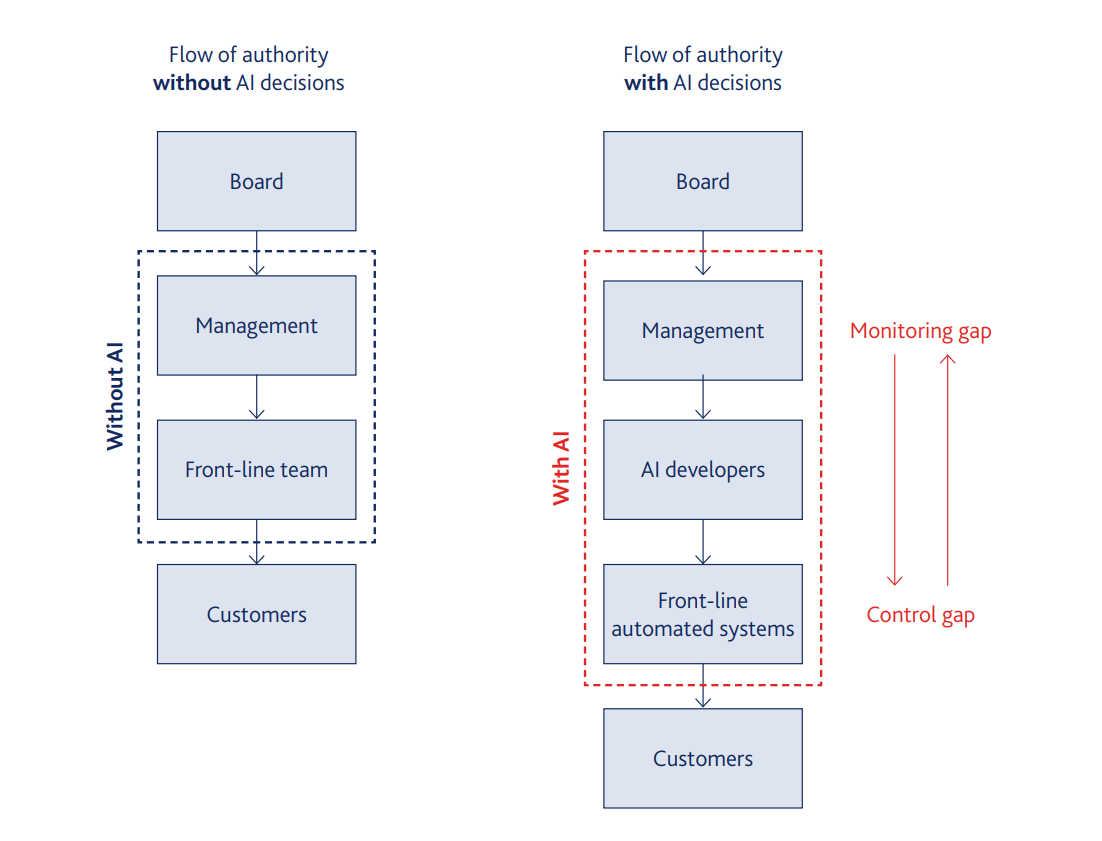
Research shows that AI-based decision-making has an impact on organisational authority and control systems, and thus its governance.44 In a traditional human-to-human hierarchy, the board sets an organisation’s overall strategy, which is translated into business objectives and policies by the management team. These are delegated to the frontline team (the business). Incorporating AI decision-making changes the flow of authority, as the front-line team now includes AI developers and machines making automated decisions. Existing human-to-human control structures may create control gaps, as management might struggle to define AI objectives with adequate granularity. Additionally, discrepancies can occur between objectives and developers, particularly if developers are unfamiliar with the business. This implies that modifications to governance may be needed to bridge monitoring and control gaps and to capture aspects of AI decision-making that differ from human (organisational) decision-making flows. This could involve an AI oversight committee and algorithmic catalogues, which keep track of how AI is used and how algorithms are changing over time. Such record keeping would allow for transparency and facilitate assessment of the outcomes of AI-taken decisions, such as checking for bias in underwriting.
Considering the impact AI has on organisational decisionmaking, hybrid models in which AI and humans collaborate should be considered. In an underwriting context, such an approach would leverage AI’s efficiency in handling more routine cases but flag ‘exceptions’ for human review, such as cases where the system proposes unusually high premiums or where applications are denied. Governance and authority flows can be adapted so that flagged cases are handed to human underwriters. An approach that finds a balance between using human skills and AI capabilities could bridge the machine-human gap, maintaining control and transparency.
FIGURE 2: FLOW OF AUTHORITY IN ORGANISATIONS WITH AND WITHOUT AI DECISION-MAKING
Source: Gradient Institute45
To assess the regulatory landscape and determine the extent to which existing insurance regulation captures AI-related risks, this section first explores the risks associated with AI adoption in insurance and evaluates whether they differ from those associated with traditional insurance. While AI applications are used in many processes in insurance, our focus will be on the risks and issues arising from their usage in underwriting.
Transparency and explainability are important for building trust with customers as they help those affected by AI decisions to understand the underlying the reasons as well as how the decisions affect them.46 According to the OECD, transparency around AI means clearly indicating when it is being used, such as for predictions or user interactions. Explainability means providing understandable information about how an AI system made its decisions.
Issues around transparency and explainability are not new to the insurance industry. Existing insurance and other regulations in many jurisdictions mandate clear communication of financial products to consumers (see Table 2 for examples). The increased use of AI, combined with input from new data sources and data types, have further highlighted their importance, however. Advanced AI systems, particularly ML models, offer precise predictions of loss probabilities and patterns but are also considered ‘black boxes’ due to their complex algorithms, which are difficult to explain to customers.47 This may hinder insurers in ‘justifying’ decisions on premiums, denials or claim determinations. The limited explainability of AI also increases model risk (inadequate performance of the model).
This section draws upon insights on the risks AI poses in terms of bias, discrimination and fairness. A strength of AI systems is their ability to identify patterns in data. Correlations found in training data are applied to new data to make predictions. Bias, errors or inaccuracies in the training data of an AI model, whether intended or not, will present themselves in the model’s output. It is generally believed that algorithms and their predictions become increasingly accurate with the amount of data they process. While a more extensive data set likely reveals numerous correlations, not all correlations imply causality. The data set is also only a snapshot of reality, no matter how large.48 Some identified correlations may even be unwanted as they constitute indirect discrimination arising from proxies.
While AI tools are neutral, their application in an insurance context can raise concerns about discrimination. Importantly, it is the underlying data and methodologies used in AI systems, not the technology itself, that cause these issues. Discrimination, prohibited by law in many jurisdictions, occurs if differentiation takes place using protected classes or characteristics, such as gender, sexual orientation or religion. Indirect or proxy discrimination occurs when differentiation takes place using attributes that (unintentionally) serve as proxies for protected groups,49 e.g. car colour as a proxy for gender. Importantly, discrimination and biased decision-making can also occur in processes performed by humans due to their inherent biases (conscious or unconscious), which can be difficult to detect. Considering this, the use of technology (including AI) can reduce potential inherent bias in human-only processes.
To avoid indirect discrimination, rating factors can be subjected to a three-pronged test. This checks whether the factors used are necessary, appropriate and legitimate in relation to the risk they are assessing.50 However, while classical actuarial methods allow rating factors to undergo this test, manual assessment becomes challenging when using AI with numerous rating factors and their many combinations.
Fairness is a dynamic, subjective construct that varies over time and across geographies and cultures, making it difficult to define.51 For example, the EU prohibits the use of gender as a rating factor, despite its correlation with risks in certain lines of business. AI’s increasingly granular and accurate risk predictions raise concerns about the accessibility and affordability of insurance for higher-risk individuals, which could lead to the exclusion of certain groups.52
Discrimination and fairness need to be distinguished from differentiation, a fundamental aspect of the insurance business model, which involves charging risk-commensurate premiums to policyholders.53 A key element of this practice is actuarial fairness, which ensures that customers bearing the same risk are charged the same price.54 Differentiation is based on risk factors over which the insured, to some extent, has some influence, such as driving behaviour.
In an insurance context, differentiation is often mistaken for discrimination, but there is a fundamental difference between the two. Discrimination occurs when differentiation is based on factors prohibited by law, like ethnic origin, sex or sexual orientation – factors beyond the insured’s control. As AI has the potential to enhance the underwriting process by uncovering previously unavailable information and correlations, it is important to highlight that such activities are subject to anti-discrimination laws and regulations that govern the conduct of insurers in this regard. An unintended tension between actuarial fairness and societal acceptability could emerge if AI finds certain associations. For example, AI might reveal that there is a link between eating vegetarian food and certain diseases. Interestingly, while humans will likely not ask this question or assume such a link, one of the strengths of AI lies in its ability to ‘ask’ all sorts of questions in a systematic way.55
Data is the ‘fuel’ of both traditional underwriting and AI.56 Different types of data perform different functions in the operation of algorithms. Provided data refers to information consciously shared by individuals, such as in an insurance application. Observed data consists of information obtained by sensors or devices (a smart phone or wearable, for example). Derived data is generated by processing or transforming existing (provided and observed) data, while inferred data is produced by applying statistical or computational procedures to provided or observed data for predictive purposes. Lastly, synthetic data is artificially generated based on models and simulations.57
Each of these data categories comes with opportunities and downsides in terms of reliability, accuracy and the level of privacy protection they bring to an AI model. Provided and observed data come directly from the source (shared by customers or gathered via sensors and devices), which enhances explainability and the accuracy of AI model outcomes but may compromise the privacy protection of the data subjects. Inferred and synthetic data are the result of statistical and computational procedures that transform source data. The added complexity of these data types reduces the extent to which outcomes based on them can be explained. As this data is not provided by the source, however, these types enhance privacy protection.
The effectiveness of AI applications is dependent on the quality and accuracy of the data they are fed, so the outcomes of AI systems may be flawed if based on incomplete or incorrect data. It is therefore important to consider the balance between explainability and accuracy on the one hand and privacy protection on the other when determining the data type to be used.
Insurance involves pooling risks among a large number of policyholders. Assigning premiums to these policyholders can occur along the ‘solidarity continuum’: a single rate for the entire risk pool (a form of social insurance); individual rates for each member; or a select number of different rates known as rate classes.58
AI allows for more detailed and individual risk assessments, and thus a shift away from solidarity-based risk pools. This has sparked debate on how far individualisation should go. It can be argued that individualisation is most fair in situations where the insured party can influence their risk level, for example by adopting safer behaviours. AI in personal insurance allows for a more distinct separation between unchangeable risk factors that are covered under the principle of solidarity and risk factors that can be influenced by behaviour, such as reckless driving in motor insurance or high-risk activities in life insurance. By creating a clear understanding of intentional adverse behaviour, AI can actually safeguard the principle of solidarity.
In a recent report, the Dutch Financial Market Authority (AFM) concluded that, while some groups of customers might face higher premiums or become uninsurable, individual risk assessments are generally considered fair and offer opportunities for risk reduction and mitigation. They also determined that governments have a role in supporting those customers who become uninsurable due to individualised pricing.59 This highlights that AI lays bare issues that would otherwise not be visible and potentially merit a societal discussion.
Closely related to individualised pricing is the concept of automated decision-making by AI – the idea that prices are adjusted in ‘real time’ in response to market changes.60 In some jurisdictions, the law stipulates that customers should be made aware if they are subject to individualised pricing driven by AI algorithms.61
Transparency and explainability
Transparency and explainability of AI models are key, particularly for building trust. They are especially vital when a decision greatly impacts an individual. The degree of explainability, however, depends on the context and the severity of the consequences of any incorrect output.62 There is a trade-off between accuracy and explainability in terms of model output.63 More complex models, such as neural networks, are more accurate but less explainable.64 The expert interviews indicate that the interests of insurers and other stakeholders, such as consumers, are broadly aligned when it comes to the explainability of AI models. Both customers and insurers want to understand the way a model functions, for the latter particularly where AI use cases affect core parts of the business, as a lack of understanding would constitute an operational risk.
Transparency about the data sources being fed into AI models would mark a significant step forward. By providing clarity on the data used, insurers can help stakeholders to better understand the rationale behind AI-driven decisions and establish trust in AI systems more easily.
Transparency and explainability can also be strengthened by implementing an audit trail for AI models, such as the ‘model catalogues’ used by several insurers. All models within a company are registered in such a catalogue, and changes to existing models or the use of a new model are documented there. Such catalogues form a powerful risk management tool.
Bias, discrimination and fairness
While addressing direct discrimination, i.e. abiding by the law, seems straightforward, addressing inadvertent discrimination through the use of variables that unintentionally serve as a proxy for protected classes (indirect discrimination) is more of a challenge. The main issue is the prevention of unwanted correlations.
Traditionally, rating factors used for underwriting have to pass a ‘three-way test’ of necessity, appropriateness and legitimacy. With AI, subjecting hundreds or thousands of variables (and combinations of them) to this test in the same way as for traditional underwriting is impossible. However, methodologies are being developed that detect unwanted correlations and help to prevent indirect discrimination while still allowing insurers to leverage the accuracy and additional predictive value AI offers.
A specific approach highlighted by several insurers is to examine, ex-post, whether the outcomes of AI models are discriminatory. For instance, insurers can check if customers of protected classes pay higher prices on average or if their claims are denied more frequently. This, along with other ex-post approaches, requires collecting sensitive information from customers voluntarily or using proxy data such as surnames, first names and addresses as proxies for ethnicity.65 While such approaches could be helpful, however, they are not foolproof.
Appropriate governance for AI, such as ensuring that data is accurate, complete and appropriate for the purpose used, can also mitigate bias and discrimination. This can be delegated to an existing framework, such as risk management, compliance or IT governance, or a newly established, dedicated oversight body.66 AI itself is also increasingly being used to control the underwriting algorithm and test its own outcomes for bias or discrimination.
A possible approach would also be to limit the number of rating factors or data points. While this approach offers some certainty that the data used by the model is free of protected classes, potentially reducing biased and discriminatory outcomes, it could prevent insurers from leveraging AI’s full potential.
The preferred approach depends on the specific AI use case and the supervisory environment. The interviews with regulators and supervisors made clear that many are increasingly interested in the outcomes of AI models rather than their inner mechanics.
Unaffordability and exclusion
Increased granularity in risk assessments facilitated by AI enables a shift from solidarity-based risk pools to a system that assesses risks on a more individual level. The transition to individualised pricing can be a double-edged sword: while some customers will benefit from lower premiums, others could face the prospect of significantly higher premiums.
Insurers are well aware of these potential side effects and are taking proactive steps to avoid excessive price differentiation. These include establishing robust guidelines and policies specifically targeted at high-impact AI systems, such as those involved in underwriting and pricing decisions. Further, they are also setting up dedicated governance structures, specifically designed to address the unique risks and ethical dilemmas posed by the application of AI in the insurance sector. By adopting these measures, insurers are striving to strike a balance between leveraging AI’s capabilities and ensuring fair and inclusive access to insurance for all customers.
Data
Insurance companies are implementing several measures to mitigate data-related issues. Interviewed insurers indicated that they are rigorously checking and cleaning data to ensure accuracy and completeness. Some are limiting the data points they input to AI algorithms and reducing bias by checking whether data points represent a protected class and filtering out information that could be discriminatory. While pre-data-processing methods can be effective in preventing direct discrimination, they are less effective in combating indirect discrimination (inadvertent discrimination based on variables that serve as a proxy for a protected class).67 Insurers are therefore also adopting robust data governance frameworks and assigning oversight responsibilities and accountabilities to specific people within the organisation.68
Ensuring fairness and avoiding discrimination are central to maintaining customer trust. It is therefore essential that insurers communicate clearly about how they use data and adequately protect the data they collect. Key elements for the responsible use of data include:69
FIGURE 3: ADDRESSING AI RISKS AND CONCERNS
Source: The Geneva Association
In contrast to many other industries, AI (-supported) decisions in insurance are reversible. If customers are denied coverage or disagree with a claims settlement, they have multiple redress opportunities. The fact that a decision was made by an automated system rather than a human does not make a difference in this regard. This is not the case with AI applications in other industries, where decisions are more definite and hence come with potentially irreversible consequences; for example, if AI is used to control machinery or vehicles.
There is also the ‘human in the loop’, which forms part of the industry’s tight risk management frameworks. Insurers need to ensure that AI-generated risk assessments and premiums are actuarially sound, which means that the algorithms and their outcomes are subject to human scrutiny and oversight. The human in the loop is a vital component of the extensive redress mechanisms that exist within the insurance sector, either internally or through external entities like an ombudsman.
“Differentiating between risks through risk assessments is at the core of the insurance business model. AI helps us to do this in a more precise way.”
Julia Perl, Hannover Re
The risks and concerns discussed in this section need to be placed in the specific context of the insurance business model: which risks are new and arise as a result of AI? Exploring these questions is also essential to finding an appropriate and balanced regulatory approach to AI in insurance (discussed in section 6).
Responses from the regulators, supervisors, insurers and other stakeholders interviewed for this report provide the following conclusions:
Although the underlying insurance business model remains the same, there are some key differences between AI-driven and non-AI-driven insurance models. These can be summarised as follows:
Not only is the data feeding into AI models more granular than that originally used for actuarial models, it also has a wider scope. Data sources can be external, including IoT devices such as wearables. The second major difference is the ability of algorithms to affect more people in a short period of time. In a non-AI world, a flawed underwriting guideline might affect numerous people over a certain period; a biased algorithm can impact many more people within a much shorter timeframe, depending on the scale of its use.
While there are differences between AI and non-AI insurance models, the main concerns surrounding AI are not new. These concerns can be addressed by enhancing transparency and governance frameworks around the use of data by AI in consumer-facing applications.
The rapid evolution and application of AI technologies and tools have placed the concerns discussed in the previous section into the regulatory spotlight and triggered several legislative and regulatory initiatives, such as the European Commission’s proposed EU AI Act. While the EU AI Act is horizontal (applying across sectors and industries) in nature, other developments are more specific to the insurance industry, such as the recent bills in the U.S. state of Colorado. This section provides a snapshot of recent AI regulatory developments in the following key insurance markets:
We will assess how existing insurance-specific regulation addresses AI-related risks and explore the implications of new regulatory developments for insurers, with particular focus on the EU AI Act.
Australia
While there is currently no AI-specific regulation like the EU AI Act in Australia, existing legislation, such as the Competition and Consumer Act 2010 and the Consumer Data Right Bill 2019, indirectly regulates the use of AI in insurance as it governs the use and sharing of data in the financial services sector.
The Australian government is currently developing its national AI strategy. A government paper published in March 2022 outlined the country’s vision to become a top 10 digital economy and society by 2030.70 The government is also closely monitoring developments in the EU and using the publication to seek input on its regulatory approach, including the regulation of high-stake AI decisions.
The Australian Actuaries Institute has responded to these consultations, stating that high-stake decisions are already addressed by existing regulation.71 Insurers’ pricing models are governed by fairness requirements under current financial services laws, which do not differentiate between human or computer-generated decisions.
China
The use of AI by non-governmental entities in China is increasingly subject to regulation. The Chinese personal information protection law (PIPL), which entered into force on 1 November 2021, includes data portability provisions72 and prohibits automated decision-making for price discrimination. The Chinese government is also developing regulation focused on AI ethics.73 New legislation is set to be implemented later in 2023, which will cover all AI applications involving human interaction and grant regulators the right to request companies’ source code for explanation and documentation. Ethical principles in the proposed legislation include human centricity, human autonomy, security, controllability, fairness and justice.74 Although the draft legislation is not yet public, it is expected to be horizontal, applying to multiple sectors.
European Union
The EU is among the most ambitious jurisdictions when it comes to AI regulation. It is currently developing regulation across various industries through the EU AI Act, proposed by the European Commission in 2021.75 The Act aims to ensure the safety of AI systems and their compliance with existing laws on fundamental rights and EU values. It seeks to provide legal certainty to facilitate investment and innovation in AI, enhance governance and effective enforcement of existing laws, and facilitate the development of a single market for lawful, safe and trustworthy AI applications.76 The EU AI Act is considered ‘horizontal’ because it applies across sectors and industries. It follows a risk-based approach, differentiating between AI applications that potentially have low, limited, high or unacceptable risks.77
Insurance is one of the industries affected by the AI Act, particularly applications deemed as ‘high risk’. While the original proposal did not explicitly include AI applications in insurance, an updated version added AI applications used for risk assessment and pricing decisions in life and health insurance as high risk, purportedly in response to pressure from several stakeholders.
High-risk AI applications in insurance would be subject to specific regulatory requirements for a risk management system, data governance and management practices, technical documentation and record keeping (e.g. setting up automated logging capabilities to monitor system operation and risk occurrence, and record the duration of use, the reference databases checked by the AI system and the identity of the people involved), as well as requirements pertaining to transparency and information, human oversight, accuracy, robustness and cybersecurity.78
The definition of AI provided in the Act’s annex plays a key role in determining its scope. The original proposal defined AI as software developed with techniques and approaches that generate outputs such as content, predictions, recommendations or decisions influencing the environments with which they interact.79 Annex I of the Act includes ML approaches, logicand knowledge-based approaches, and statistical approaches.
The broad scope of the original definition could potentially encompass analytical methods that insurers have used for a long time. An updated draft of the Act published in May 2023 provided a narrower definition: ‘a machine-based system that is designed to operate with varying levels of autonomy and that can, for explicit or implicit objectives, generate outputs such as predictions, recommendations, or decisions that influence physical or virtual environments’.80
While the geographical scope of the AI Act is limited to AI applications used within the EU, the so-called ‘Brussels effect’ is not to be underestimated. For example, the General Data Protection Regulation (GDPR) has influenced similar approaches in other countries, and the Australian government is currently contemplating whether to follow a similar approach to the AI Act. China is also working on implementing a framework that includes cross-sectoral elements.
Considering the unique characteristics of insurance and its well-established regulatory frameworks, stakeholders within the industry, such as the European Insurance and Occupational Pensions Authority (EIOPA), have emphasised the importance of sector-specific rather than cross-sectoral regulation. EIOPA also advocates for the regulation of AI according to the proportionality principle, focusing on features distinct from traditional mathematical models and their impact on fundamental rights.81
Members of the supervisory community and representatives of the insurance industry interviewed for this report did not consider any AI application within any line of business as high risk. This is attributed to the fact that insurance is already tightly regulated, with extensive governance and risk management requirements to ensure fair treatment of customers. Additionally, data processing is already regulated under GDPR, including a provision on automated decisions, thus covering AI. There were also concerns that the newly formed European Artificial Intelligence Board may not have specific expertise in insurance. There was consensus among interviewees that the regulation and supervision of AI in insurance should remain under the responsibility of insurance regulatory and supervisory bodies.
“EIOPA’s position is that none of the AI applications in insurance should be considered high risk.”
Julian Arevalo, EIOPA
Japan
Japan does not have specific legislative and regulatory provisions that directly govern the use of AI in insurance or other industries.82 Instead, existing laws and regulations apply, such as the Civil Code (governing contracts and agreements) and the Act on the Protection of Personal Information (APPI), which covers data utilised for AI applications.
Although the Japanese government has not issued specific binding laws and regulations pertaining to AI, several ministries have published non-binding guidelines for AI use. In 2019, the ‘Social Principles of Human-Centric AI’ were published,83 focusing on principles such as human-centricity, privacy protection, security, fairness, transparency and accountability. Following these, the Ministry of Economy, Trade and Industry (METI) issued a guideline on their implementation.84
Singapore
Rather than developing specific regulatory requirements for the use of AI in insurance, Singapore’s approach is focused on providing principles and guidance. The Monetary Authority of Singapore (MAS) developed the Fairness, Ethics, Accountability and Transparency (FEAT) principles in 2018 in collaboration with the insurance industry. These principles serve as high-level guidance for the responsible use of AI in the financial sector, including insurance.85
To provide practical guidance on the implementation of the FEAT principles, MAS created the Veritas consortium, which includes over 30 representatives from various sectors, including insurance, banking and tech.86 The consortium aims to develop actionable methodologies for financial institutions to implement the FEAT principles, and to launch an open-source toolkit to evaluate the fairness and transparency of AI systems.87 AI inspections have shown that the FEAT principles have been well adopted by the insurance industry. This demonstrates that insurers can collaborate with the regulatory community to tackle emerging risks using set of principles instead of additional regulation.
Looking ahead, MAS seeks to promote international cooperation on use-case-specific guidance for the insurance industry across different countries. This would help internationally active insurers comply with one set of guidelines rather than with varying ethical and governance principles.
U.K.
There is currently no AI-specific regulation in the U.K. However, like Australia, the U.K. government is developing a national AI strategy, with a 10-year plan to become a global AI leader. As part of this strategy, the government aims for ‘clear, innovation-friendly and flexible approaches to regulating AI […] to unleash growth and innovation while safeguarding fundamental values’.88 The government also proposed a set of principles to govern AI deployment. These include fairness, explainability and transparency.
Late in 2022, the Financial Conduct Authority (FCA) and the Bank of England published a discussion paper exploring the interaction between the use of AI in U.K. financial services and regulatory objectives.89 The document included a number of questions for stakeholders, including whether a sectoral definition of AI is needed to help financial services firms adopt it safely and responsibly. Feedback was also sought on a suitable approach to address the novel risks of AI.
In response to this paper, industry participants have suggested that potential AI-related issues should be addressed within existing, technology-neutral insurance regulatory frameworks, focusing on transparency, explainability, fairness, accessibility and accountability. Examples of existing regulatory frameworks with applicability to AI include the Data Protection Act, Equality Act and the new FCA Consumer Duty, which is coming into force on a phased basis from summer 2023.90
U.S.
In the U.S., the regulation of AI in insurance is mainly shaped by existing anti-discrimination laws – at both the federal and state levels – existing state-based insurance regulation, and, increasingly, by state regulatory initiatives specifically targeting the use of AI. The White House Office of Science and Technology Policy has issued a ‘blueprint for an AI Bill of Rights’, outlining five principles for the responsible use of AI, including safety, algorithmic discrimination protection, data privacy, notice and explanation, and human alternatives.91
Insurance regulation in the U.S. is state-based, with the National Association of Insurance Commissioners (NAIC) providing a convening platform for state insurance regulators. The NAIC’s Innovation Cybersecurity and Technology Committee, also known as the ‘H Committee’, serves as a forum for state regulators to discuss technological developments in insurance, including AI. The NAIC has developed and adopted regulatory principles on AI applications in insurance, emphasising fairness, accountability, compliance, transparency and safety.92
The H Committee recently addressed the question as to whether existing insurance regulatory frameworks capture the (new) risks associated with AI in insurance, concluding that the best approach is not to develop a model regulation or law, but rather regulatory guidance (bulletins). These bulletins would issue expectations on how insurers should govern and address the risks of their use of AI in decisionmaking, based on existing laws and regulations.
State regulators and legislators are also developing their own AI requirements for insurers, with significant developments in Colorado. The Colorado Senate Bill 21-169, signed into law in 2021, restricts insurers’ use of external data and prohibits unfair discrimination based on an individual’s protected status.93 The new law also prohibits the use of data that has no causal relationship to the risk. While discriminating against someone based on their protected status has long been prohibited by federal and state laws, Colorado has also included disability. This is considered far reaching in an insurance context, as it could potentially restrict insurers’ service offerings to this group. In response to this law, the Colorado Division of Insurance released the draft Algorithm and Predictive Model Governance Regulation in February 2023, outlining requirements for life insurance companies’ governance of AI and external data use.94
“We as insurance regulators should not be prescriptive. But we can expect companies to establish a responsible programme that is in writing and has certain components to it that address specific issues (governance frameworks, governance body with clearly defined responsibilities, etc.). We are not going to tell them how to draft algorithms, but we can expect them to have an inventory of algorithms.”
Commissioner Kathleen A. Birrane, Maryland Insurance Administration
“There is already a lot of existing regulation in place that would also apply to the use of AI in insurance. The problem is that many of those involved in the EU AI Act are unaware of these requirements and the particularities of the insurance business model.”
Danilo Gattullu & Arthur Hilliard, Insurance Europe
This section explores the extent to which current laws and regulations capture the use of AI in insurance. Focusing on a select number of key insurance markets, we consider risks related to bias and discrimination, transparency, human oversight and data privacy.
Bias, discrimination and fairness
An examination of current regulatory provisions within the EU, U.K., U.S. and China reveals that there are several regulatory and statutory measures – both within and beyond the insurance sector – that adequately address these risks. Key provisions include:
Transparency and data governance
Issues around discrimination and fairness in AI applications have come under the spotlight due to a perceived lack of transparency in AI systems, coupled with concerns over the nature and quality of the data used as input for AI models. Several regulatory frameworks underscore the importance of transparency, and numerous existing data governance regulations apply to data use in the insurance industry. Key provisions include:
Human oversight
While not inherently a risk, perceived insufficiencies in human oversight can contribute to concerns about fairness and the potential for AI-induced discrimination. This notion – that humans may be subject to the unchecked control of algorithmic decision-making – is a significant concern regarding AI usage. In the insurance markets examined, several regulatory requirements address the use of automated decision-making and necessitate appropriate governance and oversight. Notable provisions include:
While not intended to be complete, these examples of insurance and non-insurance laws and regulations demonstrate that many aspects of AI are already well-covered by existing, technology-neutral frameworks. Table 2 summarises how AI is captured by existing regulation.
TABLE 2: HOW AI-RELATED RISKS ARE CAPTURED BY EXISTING REGULATORY AND LEGAL FRAMEWORKS IN THE EU, CHINA, U.K. AND U.S.
Source: The Geneva Association
Policymakers around the world are grappling with how best to regulate AI while balancing innovation and consumer protection. Many countries have set themselves ambitious AI goals (aiming to be leaders in innovation); however, the translation of these ambitions into policy varies significantly. Some jurisdictions have developed a ‘lighttouch’ regulatory approach, while others have opted for a more regulated path. The rapid emergence of generative AI applications, such as ChatGPT, has intensified the urgency among policymakers and regulators to address the challenge associated with AI.113
The most far-reaching initiative currently on the table, the EU AI Act, can provide insights into the potential implications of regulatory developments for insurers. Within this draft legislation, AI applications that are deemed high risk would only be permitted on the market following a pre-market conformity assessment. In addition, continuous, post-market monitoring would be required.114 While this approach may be suitable for industries not currently subject to regulation, it is unsuitable for heavily regulated sectors like insurance.
It is essential for policymakers to adopt an innovationfriendly approach when addressing any concerns related to the use of AI in the insurance sector. In many cases, existing regulations are technology-neutral, allowing for the seamless integration of AI without necessitating specific new rules.115 However, in certain areas, fostering strong collaboration among insurers, regulators, supervisors and policymakers is crucial to gain a comprehensive understanding of how to effectively apply existing regulations to harness the full potential of AI within insurance to benefit consumers, society and insurers alike.
Finally, yet importantly, though the growing use of AI means that correlation increasingly substitutes causality, existing insurance regulatory practices in pricing and conduct remain rooted in the latter. This limits the use of rating factors to only those that demonstrably influence the risk. This by itself limits the extent to which AI can be used by insurers and supports the main argument of this report – that crosssectoral regulation that covers the use of AI in insurance is less effective than insurance-specific regulation.
This report argues that risks such as bias, discrimination and exclusion existed in insurance long before the emergence of AI. Novel risks associated with the use of AI in insurance are the speed at which the effects of AI can propagate as well as the scope of the potential consequences of their misuse.
Even in the absence of AI-specific regulation, AI in insurance is not in a vacuum; for example, it is already subject to data-protection and insurance-distribution regulation. When developing their approach to AI in insurance, policymakers and regulators should leverage and build on these regulations in order to strike the right balance between protecting consumers and enabling innovation.
Considering this, we present the following recommendations for policymakers and regulators:
Insurers also have a major role to play in building trust around the responsible use of AI. They should take the concerns that exist around the use of AI seriously; for example, by embracing transparency and by clearly communicating the way AI is used in consumer-facing areas of their business such as underwriting and claims handling. In addition, it is important for insurers to monitor the outcomes of AI models. While it is currently challenging to test outcomes for bias, insurers could work with stakeholders such as regulators, supervisors and consumer organisations to develop testing methods and address broader concerns related to the use of AI in insurance.
Accenture 2018.
Balasubramanian 2021.
Columbia Engineering n.d.
Data Protection Act 2018.
Equality Act 2010.
European Commission 2021c.
FCA 2016.
IMD 2022.
Russell and Norvig 2020.
The Geneva Association 2022.